

Reviewed · SAVANNAH SQUARES & HISTORIC WALKING TOURS
Savannah: Civil War Walking Tour
Generals’ houses can teach you a lot. This walk turns Savannah’s streets into a living Civil War lesson, with strategy talk and the moral messiness of a war fought between neighbors. I especially like how you’ll stop at generals’ houses and connect that architecture to real command decisions, then end up at Field Order #14 and its famous promise. One thing to consider: this is a walking-and-talking tour, so it may feel like a lot if you hate spending time on uneven sidewalks.
You meet at Warren Square (22 Habersham St, enclosed by Congress and Habersham), right in the historical core. At 105 minutes, it’s long enough to build a clear narrative, but short enough that you can still enjoy the rest of your day in Savannah—just note that tips aren’t included and you’re responsible for getting to the meeting spot yourself.
In This Review
- Key things that make this tour worth your time
- Starting at Warren Square: setting the Civil War map fast
- Generals’ homes you’ll see: Hardee, Bartow, and Joseph E. Johnston
- Sherman’s headquarters pass-by and Field Order #14’s 40 acres and a mule
- Strategies, intrigue, and the horror of brother vs. brother
- How 105 minutes feels on your feet
- Guides bring the story to life: Cathy and Zack, with Brad coordinating
- Price and value: $20 for a guided Civil War walk
- Who this Savannah Civil War walk suits best
- Should you book the Savannah Civil War Walking Tour?
- FAQ
- How long is the Savannah Civil War walking tour?
- What does the tour cost?
- Where do we meet for the tour?
- Is transportation included?
- Is the tour offered in English?
- What’s included in the price?
- Are tips included?
- Can I cancel and get a refund?
- What should I wear?
Key things that make this tour worth your time
- Sherman’s pass-by moment tied to field order #14, with the 40 acres and a mule promise for freed people
- Generals’ homes you’ll see up close, including William Hardee, James Bartow, and Gen. Joseph E. Johnston
- Military strategy explained in plain language, not just dates and uniforms
- A guide-led narrative that highlights intrigue and the human cost of the conflict
- A tight 105-minute format, so you get more meaning per block than with slower sightseeing
Starting at Warren Square: setting the Civil War map fast

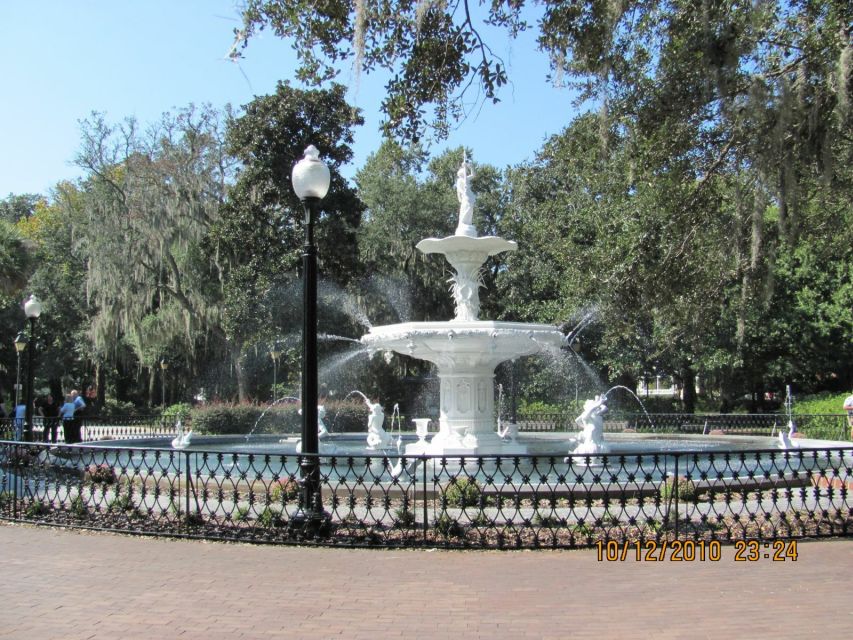
The tour begins at Warren Square, at 22 Habersham St (right between Congress and Habersham Streets). This is a smart choice. You’re already in a place that feels like Savannah’s “center of gravity,” and it helps the guide orient you before you start moving.
If you’re driving, plan simple. There are metered spots nearby, and there’s a newer city parking garage within about a block of Reynolds Square (corner of Drayton and E. Bryan, with entrances on Drayton and Abercorn). The posted rate is $1.00 for the first hour and $0.50 for each additional hour, up to $4.00 per day—useful if you’re pairing this with other downtown stops.
Arrive a few minutes early so you can get your bearings fast. This tour is timed to last about 105 minutes, so being late doesn’t help anyone. Once you’re lined up, you’ll get the big-picture story of Savannah’s role early, which makes the later stops click.
We have more walks through Savannah's historic squares and old district to wander



Generals’ homes you’ll see: Hardee, Bartow, and Joseph E. Johnston
One of the most rewarding parts of this tour is that it doesn’t just point at battlefields. It brings you to the residential spaces connected to command-level figures—homes tied to the people making calls that affected thousands.
You’ll see houses associated with prominent Confederate leaders, including William Hardee, James Bartow, and Gen. Joseph E. Johnston. Standing in front of these buildings changes how you absorb the war. It’s harder to treat it like a distant textbook conflict when the physical setting is right there. You start noticing how leadership and everyday life sat side by side in the same city—until the war pulled everything apart.
What I like about this approach is that it gives you context for why strategy mattered. Generals weren’t floating above events. They were making decisions while living in a world with families, politics, and local realities. Even if you know the broad outlines of the Civil War, these stops tend to sharpen your understanding of the “how” behind the “what.”
Practical note: these are walking stops. So wear shoes with grip and plan for uneven historic sidewalks. If you’re relying on a stroller, it can be awkward—some sidewalks aren’t smooth.
Sherman’s headquarters pass-by and Field Order #14’s 40 acres and a mule
Another high point is the moment you pass by Gen. Sherman’s headquarters. The tour uses that location to shift from Confederate leadership to the Union side of Savannah’s story—specifically the policies that followed military action.
Here’s the standout detail: you’ll discuss the issuance of Field Order #14, first decreed in Savannah. The order promised 40 acres of good land and a mule to every freed slave in the area. This is one of those facts that sticks because it’s both concrete and heartbreaking. It represents a real attempt to change lives quickly after emancipation, and it also sets up the larger question of what happened next when plans met politics and power.
This section is valuable because it keeps the tour from becoming a one-sided parade of commanders. You get the shock of freedom being promised on paper, then you’re guided to think about the consequences—socially, economically, and politically. And since the tour is framed to address how the conflict echoed long after, you come away with a clearer sense of why Civil War history never really stayed in the past.
Strategies, intrigue, and the horror of brother vs. brother
The tour’s promise is more than sightseeing. You’re there to learn how Savannah factored into the American Civil War, with attention to strategies, intrigue, and the moral weight of the fight.
The guide emphasizes the reality that the war pitted brother against brother. That line matters, because it changes the lens. Instead of treating the conflict like a movie with clean heroes and villains, you’re nudged toward the uncomfortable truth: families, communities, and loyalties were split. That tension becomes a theme as you walk from place to place.
You’ll also hear about the political ramifications that continued to trouble the country long after the war ended. That’s one of the reasons this tour can feel memorable. It doesn’t stop at the dramatic moment of conflict. It connects decisions made in the war years to the lingering fallout people still wrestle with.
And yes, you’ll get military strategy explained. The goal is not to turn you into a map-and-tactics expert. It’s to help you understand why certain moves mattered, and how leadership decisions shaped the civilian experience—something you can easily miss if you only focus on battles.
How 105 minutes feels on your feet
105 minutes is a good length for this kind of tour. It’s long enough to build a storyline—starting with Savannah’s broader role, then narrowing into key figures and policy—without dragging you through the afternoon.
The pace matters. On past tours like this, guides tend to keep things moving while still covering a lot of ground. That’s helpful in historic districts where you don’t want to lose time to congestion or slow starts.
Plan your day around this walking time rather than stacking it with two other long activities. Think of it as one “anchor” block in your Savannah day, where you return home with a more accurate mental map of what happened here and why.
Weather matters too. Dress for sun, shade, heat, or rain, since you’ll be outside for most of the experience.
We have more Civil War and Southern-history tours across Savannah to follow




Guides bring the story to life: Cathy and Zack, with Brad coordinating
A tour lives or dies by the guide. This one has a track record of guides who combine structure with personality. You might encounter educators or first-rate storytellers depending on the day.
For example, Cathy has been described as friendly, fun, and even possessing an educator’s background that helped frame Savannah’s founding context in a way that affects Civil War perspectives. Another guide, Zack, has been noted for bringing humor and for adding architectural history. In at least one case, the tour felt like it pulled in other nearby eras too, including Revolution-era context, which can be a plus if you like “connect-the-dots” history.
There’s also mention of Brad as a tour coordinator who communicated well before the tour and kept things updated. That doesn’t affect the facts you learn, but it does affect your stress level on a trip—always worth something.
Bottom line: if you like history explained with energy and room for questions, this format fits.
Price and value: $20 for a guided Civil War walk
At $20 per person for about 105 minutes, this is a solid value if you want more than a casual stroll. You’re paying for a living narrative led by a guide, not just access to the streets.
What you get is simple: the guide is included. What you don’t get is also clear: transportation isn’t included, and tips aren’t included in the price. That means you’re investing mostly in time and storytelling—and you’ll get more out of it if you show up ready to listen and walk.
For $20, the biggest value is focus. A guided walking tour is ideal when you want a clear arc. You’re not trying to research every stop while hungry, tired, and distracted by a busy day. The guide does that work for you, and you walk away with names, turning points, and why-they-mattered context.
If you’re trying to choose between this and general sightseeing, I’d pick the tour when your priority is understanding Savannah’s wartime role. If your priority is purely views and photos, you might find this less satisfying.
Who this Savannah Civil War walk suits best
I’d put this tour at the top of the list for you if you’re a history lover visiting Savannah for the first time. It’s also a great choice if you’ve already done other city tours and want something with more narrative depth.
It’s especially good if you like history that includes both sides and doesn’t dodge the hard parts—like policies affecting freed people, and the tension between public plans and real-world outcomes.
If you’re traveling with kids, it can work in many cases, but expect uneven sidewalks. And if you want zero walking and only seated content, this one may test your patience.
Should you book the Savannah Civil War Walking Tour?
Book it if you want a focused, guided way to understand why Savannah mattered in the Civil War—and how that role connects to key figures and policies. The combo of generals’ homes plus the Sherman headquarters / Field Order #14 discussion is a strong pairing for anyone who wants strategy and consequences, not just names.
Skip it if you’re looking for a hands-on museum experience or you can’t handle a 105-minute outdoor walk. Also consider it carefully if you prefer your history strictly chronological and battle-only; this tour can touch on wider context and how the story reverberated later.
If you do book, show up rested, wear good shoes, and come ready with a few questions. You’ll get more from the stops when you can talk back and connect what you see to what you learned.
FAQ
How long is the Savannah Civil War walking tour?
The tour lasts about 105 minutes (about 1.75 hours).
What does the tour cost?
It costs $20 per person.
Where do we meet for the tour?
The tour departs from Warren Square at 22 Habersham St, Savannah, GA 31401, enclosed by Congress and Habersham Street.
Is transportation included?
No. Transportation is not included, so you’ll need to get yourself to the meeting point.
Is the tour offered in English?
Yes, it’s a live tour guide in English.
What’s included in the price?
The price includes a knowledgeable live guide.
Are tips included?
No. Tips are not included in the price.
Can I cancel and get a refund?
Yes. You can cancel up to 24 hours in advance for a full refund.
What should I wear?
Wear comfortable walking shoes and dress for the weather.
More Tour Reviews in Savannah



More Savannah Civil War and Southern History Tours

More Savannah Squares and Historic Walking Tours



Not quite your thing? Here is more to see and do around Savannah












Savannah Squares & Historic Walking Tours, compared.
 ★ 5.0Savannah History and Haunts Candlelit Ghost Walking TourFrom $393,235 reviews
 ★ 5.0Savannah First Squares Culinary & Cultural Walking Food TourFrom $963,229 reviews
 ★ 5.0Historic Savannah Guided Walking TourFrom $302,918 reviews
 ★ 4.5Savannah’s Ghost City “Dead of Night” Walking Night TourFrom $342,482 reviews
 ★ 4.5Narrated Historic Savannah Sightseeing Trolley TourFrom $352,375 reviews
 ★ 4.5Southern Flavors Food, Pub Crawl, and History Walking TourFrom $601,623 reviews
 ★ 5.0Genteel and Bard’s Savannah Dark History and Ghost Encounter Walking TourFrom $391,546 reviews
 ★ 5.0Bonaventure Cemetery Walking Tour with TransportationFrom $481,467 reviews
Browse the lists this tour appears in