
Reviewed · SAVANNAH SQUARES & HISTORIC WALKING TOURS
Guided Savannah Civil War History Walking Tour
A Civil War story starts on a quiet square. This guided Savannah walking tour threads together local antebellum politics, the coming break, and the aftermath you still feel in the streets. You’ll move through famous squares, hear a full narrative from a professional guide, and connect big national events to specific Savannah places.
I love two things most: the tour stays timeline-focused while still covering the human details (and it keeps answering your follow-up questions). I also like how the commentary ties named figures and key orders into real geography, so topics like Sherman’s March to the Sea and Special Order No. 15 don’t stay stuck in a textbook.
One consideration: it’s still a 2-hour walk in Savannah’s historic district, and the experience requires good weather. If you’re sensitive to heat or long stretches on foot, plan for comfort.
In This Review
- Key highlights worth your time
- What You’re Really Getting in a Savannah Civil War Walking Tour
- Reynolds Square Start: Where the Story Sets Its Tempo
- Antebellum Savannah and Secession: Politics You Can See
- Sherman’s March to the Sea and Savannah’s Command Presence
- Special Order No. 15: A Turning Point With Real Consequences
- Oliver Howard, John Geary, and Robert E. Lee: Names With Savannah Anchors
- Squares, Stops, and the Pace That Lets You Keep Up
- Earbuds, Visuals, and Guide Style: Why Reviews Are This High
- Price, Time, and Value: Is $40 Worth It?
- Who Should Book This Tour (and Who Might Skip It)
- Ending at Oglethorpe Square: What to Do Right After
- Should You Book This Savannah Civil War Tour?
- FAQ
- How long is the Guided Savannah Civil War History Walking Tour?
- Where does the tour start?
- What does the tour cover during the walk?
- How big is the group?
- Is the tour offered in English?
- Are service animals allowed?
- What is the cancellation policy?
Key highlights worth your time

- Antebellum Savannah to secession: You’ll hear why Savannah’s political mood mattered before the first shots.
- Sherman in Savannah: You’ll visit key locations tied to Sherman’s campaign, including Sherman’s headquarters.
- Special Order No. 15 explained: The tour covers this critical order and what it meant on the ground.
- Reconstruction vs retribution: The guide frames the big question at the heart of the aftermath.
- Big-name leaders, specific street context: You’ll connect Oliver Howard and John Geary to what happened next.
- Small group energy: Maximum size is 15 travelers, so it feels more like a guided walk than a production.
What You’re Really Getting in a Savannah Civil War Walking Tour
This isn’t a quick “markers and facts” stroll. It’s a narrated Civil War history walk built around cause-and-effect, from local politics through major turning points and then into the hard choices after the war. The value is that you don’t just hear dates—you learn what those dates changed for real people, and where those shifts show up in the city.
The tour also gives you something practical: a way to look at Savannah differently after two hours. When you later read about Sherman, Lincoln-era decisions, or Reconstruction debates, you’ll have mental anchors—squares you remember, buildings you can picture, and names you now understand as actors in a local story.
And yes, you’ll walk. But the group size stays small (up to 15), and the pace is described as manageable, with stops to rest at points along the route. Comfortable shoes still matter.
We have more walks through Savannah's historic squares and old district to wander



Reynolds Square Start: Where the Story Sets Its Tempo
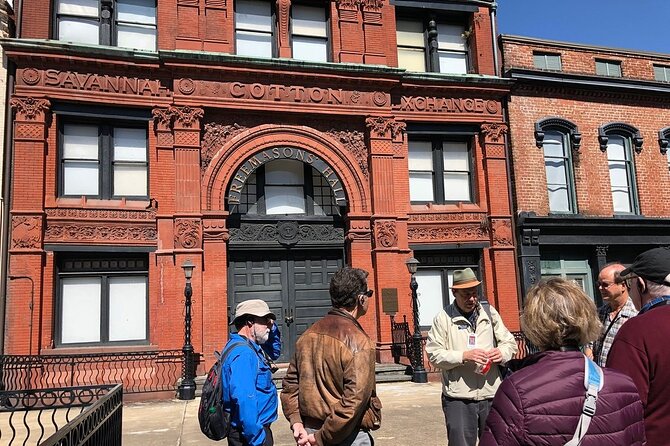
Your tour begins at Reynolds Square (32 Abercorn St). That matters because squares in Savannah aren’t just pretty spots—they’re the city’s organizing framework. Starting here is like opening a book on the first page: you’re grounded in the geography before the guide runs ahead into the political backstory.
From the first minutes, the guide’s job is to set the timeline. Multiple guides highlighted in the reviews—people like Kelce, Champ, Pierce, Rodney, and Robert—were praised for sticking to chronology and keeping the narrative clear. That’s a big deal for a history tour. If you’ve ever gotten lost in a lecture, you’ll appreciate a guide who keeps the story moving step by step.
You can also expect the tour to be interactive in the sense that the guide is ready for questions. If you’re the type who likes to connect your tour to what you read online or in a museum, this format is a good match.
Antebellum Savannah and Secession: Politics You Can See
A major chunk of the walk focuses on the antebellum section of the historic district, with the guide explaining Savannah’s cultural and political leanings and then getting to the reason for secession. The tour’s design helps you understand that the Civil War didn’t start as a single moment. It grew out of beliefs, power structures, and local decisions.
What makes this section worthwhile is that it uses streets and landmarks as context. You’re not just told that secession happened. You’re guided to understand how a city’s identity and politics can push people toward conflict—and how those choices shaped what came next.
If you’re a history buff, this is where you can feel the tour earning its keep. If you’re less comfortable with the subject, don’t worry: the guide portion is fully narrated, so you get a story you can follow without doing extra homework.
Sherman’s March to the Sea and Savannah’s Command Presence
Then the story pivots to Sherman’s March to the Sea, moving from political buildup into the military reality that followed. You’ll hear how the campaign unfolded and what it meant for Savannah specifically, not just the war in general.
One of the most concrete takeaways is that you’ll see places tied to the campaign, including Sherman’s headquarters. That’s one of those moments where history stops being abstract. Even if you’ve read about Sherman before, standing in a Savannah spot associated with his operations makes the event feel more specific and less distant.
From the reviews, guides like Rodney and Robert earned praise for clear, fact-forward storytelling and a calm approach—no theatrics. One review also specifically called out that the guide separated fact from fiction. That’s exactly the tone I’d want when the subject already has plenty of myths attached to it.
Special Order No. 15: A Turning Point With Real Consequences
The tour includes Special Order No. 15, which is a key part of the Civil War’s aftermath story. It’s the kind of topic that can feel confusing if you only hear quick headlines. Here, you get it in narrative form, with the guide explaining why it mattered and how it fit into the broader picture of what happened after the fighting.
This is also where the tour’s theme—what the guide calls the critical question of Reconstruction or retribution—becomes more than just a phrase. You can expect the guide to frame the moral and political tensions that came after the war, and why people disagreed about what justice should look like.
If you care about how policy affects real life, this section is one of the reasons the tour is highly rated. It turns a government order into a human consequence and keeps the focus on the stakes.
We have more Civil War and Southern-history tours across Savannah to follow




Oliver Howard, John Geary, and Robert E. Lee: Names With Savannah Anchors
This is a guide-led walk that keeps dropping names—but not in a random way. You’ll learn the roles of General John Geary and General Oliver Howard, and you’ll hear about Robert E. Lee in connection with Savannah: where he visited during his many trips to the city.
What you’ll like here is the cause-and-link effect. You’re not just collecting names for trivia. You’re connecting who these figures were to where they fit in the larger arc of the war and its aftermath. The tour’s structure helps you remember because you’re attaching each name to a physical point in the city.
Reviews also mention that some guides used visual aides and data and kept the discussion clear enough for people who started with limited Civil War knowledge. If you’re traveling with a partner or family member who doesn’t want to get bogged down, this is a good tour to pick because the guide’s delivery seems to stay understandable.
One more practical note: some reviews mention an audio system with earphones to help you hear the guide while still watching your surroundings. That’s useful if you’ve ever struggled to hear a guide in a lively street.
Squares, Stops, and the Pace That Lets You Keep Up
The route includes several Savannah squares, and that’s not just for beauty. Squares give the guide natural places to pause, point, and reset the group. More than one review noted the tour has a good pace—not too slow, not too fast—and some mentioned rest stops so you can keep going without turning it into a footrace.
Group size plays a role too. With a maximum of 15 travelers, it’s easier for the guide to check in, answer questions, and adjust tempo if people are lagging or stuck behind a photo moment.
Also pay attention to the season. One review mentioned the guide had spare fans when it got hot. You shouldn’t count on that every time, but it’s a hint that guides may show up prepared for Savannah weather.
Earbuds, Visuals, and Guide Style: Why Reviews Are This High
The rating is strong for a reason: the guide quality seems to be a repeat theme. Across multiple reviews, guides were praised for being friendly, clear, and well organized. People specifically mentioned that the guide kept the timeline intact and answered questions well.
You’ll also find that guides vary by personality, but the expectation stays consistent: fact-forward history with story flow. One review described a university professor style and praised how the guide clarified questions and separated fact from fiction. Another called out the use of relevant visual aides.
If you want the experience to feel more like learning than just walking past buildings, pick a departure time that lets you arrive a few minutes early. That way you start fresh, not rushed, and you can catch the first explanation at full attention.
Price, Time, and Value: Is $40 Worth It?
At $40 per person for about 2 hours, you’re paying for two things: expert narration and the translation of big Civil War themes into Savannah geography. In a city like Savannah, that value shows up because the landmarks alone don’t explain the why. A good guide does.
Here’s how to think about value for this one:
- If you like history and want context, the price is reasonable for a fully narrated, guided experience that covers multiple major topics—secession, Sherman’s campaign, Special Order No. 15, and Reconstruction debates.
- If you only want a quick scenic loop, you might feel the time is too focused. This tour is built for people who want the story, not just the view.
You’ll also get the small group feel (up to 15), which often translates into better chances for questions and less crowd noise. And since the tour is commonly booked in advance, it’s a sign that many people find the format worth planning around.
Who Should Book This Tour (and Who Might Skip It)
This guided Savannah Civil War walking tour is a strong fit if you:
- care about Civil War history and want it explained clearly
- like walking through historic districts with context, not just sightseeing
- enjoy tours with an expert guide and room to ask questions
- want a memorable way to connect major events like Sherman’s March and Reconstruction debates to Savannah itself
You might want to skip or choose something else if:
- you dislike walking for roughly two hours
- you’re looking for a museum-style experience with artifacts and indoor displays (this is streets-and-squares history)
- you’re traveling at a time when you can’t count on good outdoor weather, since the experience requires it
Ending at Oglethorpe Square: What to Do Right After
The tour ends at 127 Abercorn St, in the area of Oglethorpe Square. That location is helpful because it drops you back into the historic district rhythm. After the walk, you’ll be better at spotting what you’re seeing and why it mattered.
If you’re hungry or want to keep your Civil War learning going, plan something nearby while the names and stories are still fresh. With a good guide, it’s the kind of experience that makes later reading click faster because you can picture where the action fits in town.
Should You Book This Savannah Civil War Tour?
If you want a guided walk that explains why Savannah mattered before, during, and after the Civil War, this is an easy yes. The tour covers major turning points—Sherman’s March to the Sea, Special Order No. 15, and the Reconstruction vs retribution question—while also grounding the story in real Savannah places like Sherman’s headquarters and sites connected to Robert E. Lee visits.
The only real watch-outs are practical: wear comfortable shoes and be ready for weather, since the experience depends on it. If you’re picking a history-focused activity in Savannah and you want clarity, story flow, and strong guide performance, this is a smart use of two hours.
FAQ
How long is the Guided Savannah Civil War History Walking Tour?
The tour lasts about 2 hours.
Where does the tour start?
It starts at Reynolds Square, 32 Abercorn St, Savannah, GA 31401.
What does the tour cover during the walk?
You’ll learn about Savannah’s antebellum cultural and political leanings, the reasons for secession, Sherman’s March to the Sea, Special Order No. 15, and the question of Reconstruction or Retribution. You’ll also visit Savannah squares and see locations connected to Sherman’s headquarters and Robert E. Lee’s visits, plus the roles of John Geary and Oliver Howard.
How big is the group?
The tour has a maximum of 15 travelers.
Is the tour offered in English?
Yes, it’s offered in English.
Are service animals allowed?
Yes, service animals are allowed.
What is the cancellation policy?
Free cancellation is offered up to 24 hours in advance for a full refund. If you cancel less than 24 hours before the start time, the amount paid is not refunded.
More Tour Reviews in Savannah



More Savannah Civil War and Southern History Tours
More Savannah Squares and Historic Walking Tours



Not quite your thing? Here is more to see and do around Savannah












Savannah Squares & Historic Walking Tours, compared.
 ★ 5.0Savannah History and Haunts Candlelit Ghost Walking TourFrom $393,235 reviews
 ★ 5.0Savannah First Squares Culinary & Cultural Walking Food TourFrom $963,229 reviews
 ★ 5.0Historic Savannah Guided Walking TourFrom $302,918 reviews
 ★ 4.5Savannah’s Ghost City “Dead of Night” Walking Night TourFrom $342,482 reviews
 ★ 4.5Narrated Historic Savannah Sightseeing Trolley TourFrom $352,375 reviews
 ★ 4.5Southern Flavors Food, Pub Crawl, and History Walking TourFrom $601,623 reviews
 ★ 5.0Genteel and Bard’s Savannah Dark History and Ghost Encounter Walking TourFrom $391,546 reviews
 ★ 5.0Bonaventure Cemetery Walking Tour with TransportationFrom $481,467 reviews
Browse the lists this tour appears in