
Reviewed · SAVANNAH SQUARES & HISTORIC WALKING TOURS
Savannah’s Finest History Tour: A Walk Through Time
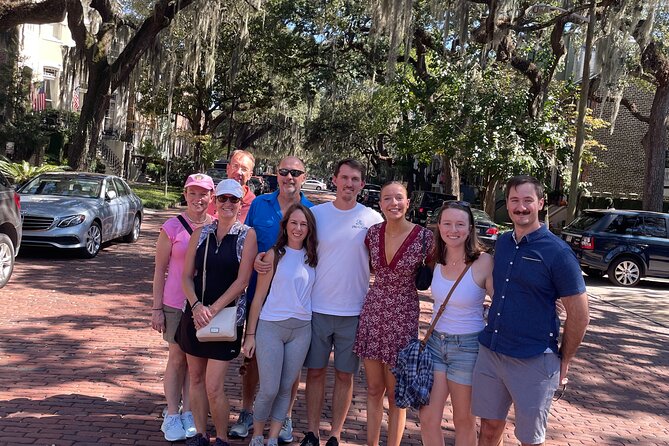
Savannah’s squares tell stories fast. This guided history walk strings together the city’s best-known public spaces—plus a cemetery and a church interior—so you get a clear timeline without needing to plot every stop yourself. I like how the route builds like a story, and I also like that the guided pacing keeps things moving while still pointing out what to notice.
Two favorites for me: you visit multiple “power squares” tied to major moments, and you end up inside Cathedral of St. John the Baptist where the interior is described as the Sistine Chapel of the south. One drawback to plan around: this experience depends on good weather, and you’ll be walking and standing for short stretches at each stop. Also, I did see at least one reported problem where the guide didn’t arrive and there wasn’t clear communication, so I’d strongly recommend you verify details the day before and keep your confirmation handy.
In This Review
- Key things to know before you go
- A fast, focused walk through Savannah’s historic squares
- Price and logistics: what $35 gets you and why it’s fair
- Johnson and Wright Squares: Greene’s monument and the hanging square
- Chippewa and Madison Squares: a pop-culture square and Sherman’s headquarters
- Calhoun and Monterey Squares: original 1850s vibes and storybook landmarks
- Lafayette Square and the Andrew Low House: Girl Scouts and St. John’s exterior context
- Colonial Park Cemetery: oldest graveyard and how disputes were settled
- Cathedral of St. John the Baptist: going inside the Sistine Chapel of the south
- Oglethorpe and Reynolds Squares: regency architecture and John Wesley’s legacy
- Who this tour is best for
- My practical advice before you book
- Should you book Savannah’s Finest History Tour?
- FAQ
- How much does Savannah’s Finest History Tour cost?
- How long is the tour?
- What time does the tour start, and where does it meet?
- Is the tour offered in English?
- What’s included during the tour?
- What happens if the tour can’t run due to weather or minimum travelers?
Key things to know before you go
- 11 stops, 1 hour 45 minutes: It’s fast, structured, and designed to cover a lot without long waits.
- Included admission tickets: Each listed stop comes with an admission ticket included, not just a street-side explanation.
- Historic squares are the backbone: Greene, the hanging square, Sherman, and more—each stop adds a new chapter.
- Cathedral visit is a highlight: You go inside St. John the Baptist and see the celebrated painted interior.
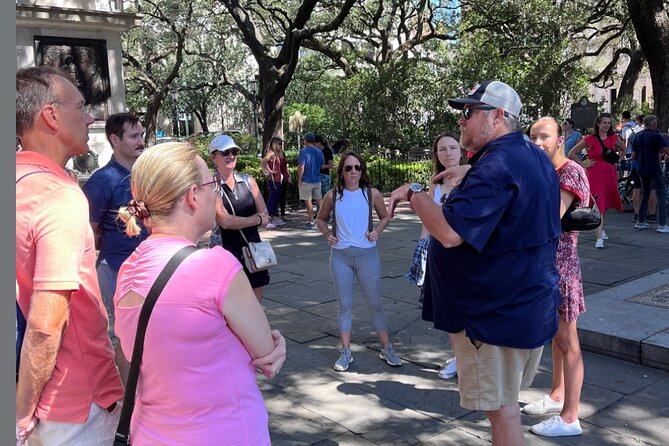
- Small-group feel: Maximum group size is 30, so it’s easier to hear your guide at street corners.
- Start point is clear: Meet in front of the monument at Johnson Square (2 E Bryan St).
A fast, focused walk through Savannah’s historic squares
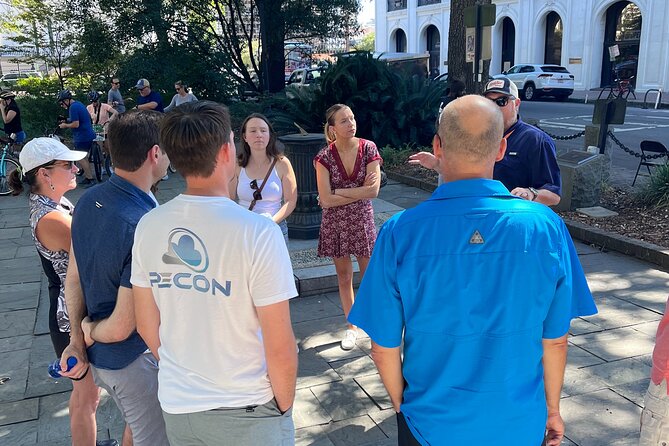
This is a classic “get your bearings fast” style of Savannah tour. You start at Johnson Square and move square-to-square, with each location tied to a real person or event. The format works well if you want history without a museum day that drains your energy.
The timing is tight but reasonable: the itinerary lists about 5 to 10 minutes per stop, which means you’ll spend your time looking at buildings, monuments, and the square layout rather than sitting for long speeches. If you like history that explains why certain places matter—rather than history that turns into a lecture—this kind of route tends to click.
Your guide and group meet up at Johnson Square first, right in front of the monument honoring Nathaniel Greene. From there, you’re off on the city’s signature walking experience: those green squares surrounded by grand façades.
We have more walks through Savannah's historic squares and old district to wander



Price and logistics: what $35 gets you and why it’s fair
At $35 per person for about 1 hour 45 minutes, this tour is priced like a solid value option—especially because the itinerary states admission tickets are included for the stops where entry matters. Many walking tours in older cities stay outside and call it included, so it’s useful here that you’re not only paying for interpretation—you’re also paying for access at specific points.
A second value factor is coverage. In under two hours, you hit multiple Savannah “anchor” locations: squares tied to war and governance, a cemetery tied to early disputes, and a major church interior. For many visitors, that bundle beats trying to self-guide everything while also guessing how much time each spot truly takes.
The main practical consideration is weather and walking comfort. Because the tour is built around outdoors squares and quick transitions, bring shoes you can stand in and carry a light rain layer if the forecast looks iffy. If poor weather cancels it, you’ll be offered a different date or a full refund.
Johnson and Wright Squares: Greene’s monument and the hanging square
You begin at Johnson Square at the monument honoring Nathaniel Greene. This matters because Greene isn’t just a name on a sign—he’s tied to the broader story of the American Revolution, and starting there gives you a sense of how the city memorializes its past leaders.
From Johnson Square, you move to Wright Square, known as the hanging square. Even if you don’t go into heavy detail at street level, the location gives you something important: Savannah’s public spaces weren’t only for strolling and beauty. They were also places where authority was exercised, and where consequences were made visible.
At these first stops, the main benefit is orientation. You learn what the squares look like as you walk them, not after you’ve already spent time in the heat trying to find your bearings.
Chippewa and Madison Squares: a pop-culture square and Sherman’s headquarters
Next comes Chippewa Square, where the tour points to its connection with Forrest Gump. That pop-culture link is useful because it gives you a memorable handle for a place you might otherwise treat as just another pretty square. It’s a good example of how Savannah tourism often works: entertainment can be the doorway, while architecture and real history become the deeper part of the visit.
Then you head to Madison Square to see where General Sherman set up headquarters during his march to the sea. This is where the tour’s timeline feel really starts to take shape. Instead of only looking at monuments, you’re given a sense of why military strategy and geography mattered—right down to the squares that served the city’s public layout.
The short time at each stop is both a plus and a trade-off. It’s a plus because you stay moving; it’s a trade-off because you won’t have unlimited time to linger. I’d plan to snap a few photos, note what your guide highlights, then keep walking.
Calhoun and Monterey Squares: original 1850s vibes and storybook landmarks
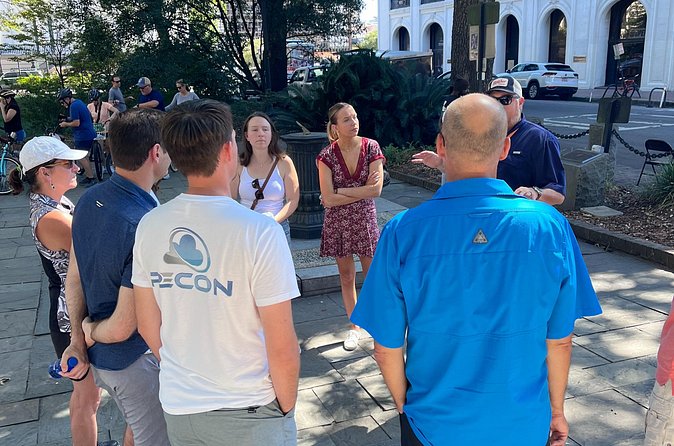
Calhoun Square is presented as the last square and the original square, with structures around it described as original. The idea is that walking Calhoun Square can feel like you’ve stepped back toward the 1850s. Even if you’re not trying to picture every single year, the layout and surrounding architecture make it easier to understand how Savannah developed and what “old” means here.
Next is Monterey Square, with General Pulaski’s monument and a connection to Jim Williams’ home from Midnight in the Garden of Good and Evil. If you like film and literature tied to real locations, this stop gives you a two-track experience: you can enjoy the recognizable story element while also taking a look at how the monument and surrounding area anchor that narrative.
One smart way to enjoy these stops is to pay attention to sight lines. Squares aren’t just “pretty spaces.” They’re visual stages. The way streets and buildings frame the center changes how you perceive power, ceremony, and even the scale of the people in the past who walked those same corners.
There is more Savannah history to walk through with our other tours





Lafayette Square and the Andrew Low House: Girl Scouts and St. John’s exterior context
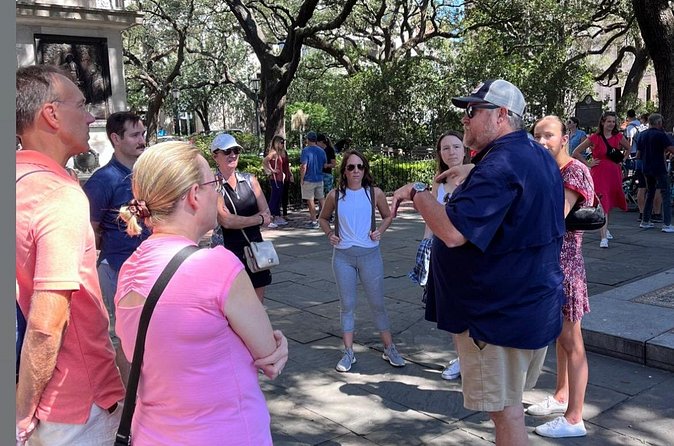
Lafayette Square brings you to the Andrew Low House, noted as the home to the first Girl Scouts meeting in 1912. That’s a different kind of history than war stories: it’s about institutions, community leadership, and the social changes that happened as the city moved into the 20th century.
From there, you also visit the Cathedral to St. John the Baptist area as part of the route. Even when you’re only outside first, the stop sets you up to appreciate what you’ll see later inside. In many cities, church interiors feel like a separate trip. Here, the tour connects the outside setting to the interior experience later.
If you’re traveling with kids or teens, this is one of the most relatable moments on the walk. The Girl Scouts detail is concrete, specific, and not just a vague timeline label.
Colonial Park Cemetery: oldest graveyard and how disputes were settled

Colonial Park Cemetery is the tour’s most reflective stop on paper, even if the time there is short. You see the oldest graveyard in Savannah and hear how disputes were settled in colonial times.
This is valuable because it changes how you read the city. You start thinking about how people lived, died, and handled conflict—not only how they decorated squares. Cemeteries in older cities can feel like open-air history books, and even a brief visit gives you a different emotional tone than monuments and buildings.
My advice: treat this part as a moment to slow down for a minute, look for details your guide points out, then move on. If you’re rushing through it, you’ll miss what makes cemeteries meaningful.
Cathedral of St. John the Baptist: going inside the Sistine Chapel of the south

One of the biggest reasons people choose this tour is the indoor stop: Cathedral of St. John the Baptist. The itinerary specifically calls it the Sistine Chapel of the south, and that’s exactly the kind of claim that matters here—because you’re not just hearing about it, you’re going inside.
This is the moment when a walking tour becomes more than street sightseeing. Church interiors in Savannah can be visually intense, and having a guide there helps you understand what you’re looking at while you’re still standing in front of it.
Plan to bring your camera readiness mindset, but also keep a second “look” mode. Photos are great, but this is the kind of interior you’ll understand better if you pause once without photographing everything.
Oglethorpe and Reynolds Squares: regency architecture and John Wesley’s legacy
Next you reach Oglethorpe Square, where the tour points out regency style architecture, specifically the Owens-Thomas House. The value of this stop is that it teaches you how to spot architectural style rather than only naming a pretty building. Even in a quick visit, you can train your eye to recognize what makes regency designs different in scale and details.
Then you move to Reynolds Square for the monument of John Wesley. The itinerary connects him to the founding principles of the Methodist Church. That framing helps turn “a statue in a square” into a real historical thread.
Together, these last square stops balance the narrative: you’ve covered war-era events, social institutions, and religious space. The architecture and Wesley detail help round it out so the tour feels like Savannah as a living city—not only a stage set for the past.
Who this tour is best for
This tour fits best if you want a guided, high-efficiency overview of Savannah’s historic anchors in a single outing. I think it’s especially good for:
- First-time visitors who want structure and clear stops
- Travelers who prefer walking tours with built-in access (not only exterior views)
- People who like the mix of monuments, architecture, and story-driven locations
If you’re the type who likes long stays at each site, this may feel a bit brisk. Because the itinerary allocates only minutes per stop, it’s designed for momentum, not for deep solo exploration at every location.
My practical advice before you book
- Bring comfortable walking shoes and expect quick transitions between squares.
- Wear weather-flexible layers. The tour is weather-dependent, and you’ll be outside most of the time.
- Take a photo at each stop, but also listen for what your guide points out. The real payoff is learning what to notice, not just collecting images.
- Since there was at least one reported case of a guide not showing and no notice, I strongly recommend you check your email the day before and keep the confirmation details ready on your phone.
Should you book Savannah’s Finest History Tour?
If you want a guided “walk through time” that hits major squares, includes admissions at the key stops, and gives you a coherent timeline in about 1 hour 45 minutes, this is a reasonable choice at $35. The itinerary is packed in a way that works for most visitors who don’t have the whole day to spend piecing things together.
I’d only hesitate if you’re someone who needs long, quiet time at each location, or if your schedule is ultra-sensitive to weather cancellations. If you can travel flexibly within the day and you’re comfortable with a brisk walking pace, this tour is an efficient way to get a meaningful first look at Savannah.
FAQ
How much does Savannah’s Finest History Tour cost?
It’s $35.00 per person.
How long is the tour?
The tour lasts about 1 hour 45 minutes.
What time does the tour start, and where does it meet?
It starts at 10:00 am, meeting at Johnson Square at 2 E Bryan St, Savannah, GA 31401. It ends back at the meeting point.
Is the tour offered in English?
Yes, it’s offered in English.
What’s included during the tour?
You’ll have a mobile ticket, and admission tickets are included at the listed stops.
What happens if the tour can’t run due to weather or minimum travelers?
The tour requires good weather. If it’s canceled due to poor weather, you’ll be offered a different date or a full refund. If it’s canceled because the minimum number of travelers isn’t met, you’ll also be offered a different date/experience or a full refund. You can cancel up to 24 hours in advance for a full refund.
More Tours in Savannah



More Tour Reviews in Savannah

More Savannah Squares and Historic Walking Tours
Not quite your thing? Here is more to see and do around Savannah












Savannah Squares & Historic Walking Tours, compared.
 ★ 5.0Savannah History and Haunts Candlelit Ghost Walking TourFrom $393,235 reviews
 ★ 5.0Savannah First Squares Culinary & Cultural Walking Food TourFrom $963,229 reviews
 ★ 5.0Historic Savannah Guided Walking TourFrom $302,918 reviews
 ★ 4.5Savannah’s Ghost City “Dead of Night” Walking Night TourFrom $342,482 reviews
 ★ 4.5Narrated Historic Savannah Sightseeing Trolley TourFrom $352,375 reviews
 ★ 4.5Southern Flavors Food, Pub Crawl, and History Walking TourFrom $601,623 reviews
 ★ 5.0Genteel and Bard’s Savannah Dark History and Ghost Encounter Walking TourFrom $391,546 reviews
 ★ 5.0Bonaventure Cemetery Walking Tour with TransportationFrom $481,467 reviews
Browse the lists this tour appears in