
Reviewed · SAVANNAH SQUARES & HISTORIC WALKING TOURS
Rising Voices: Underrepresented History (by Walk With Me Savannah Tours)
Savannah has more than one story. This 2-hour walk with Walk With Me Savannah Tours reframes well-known stops through the lives of people often left out. I especially loved the underrepresented perspectives that make each square feel fresh, and I really enjoyed how Sargon’s storytelling stays lively while still taking the subject seriously. One drawback to plan for: you need to be able to walk (or roll) for about 15 minutes at a time without a long stretch break.
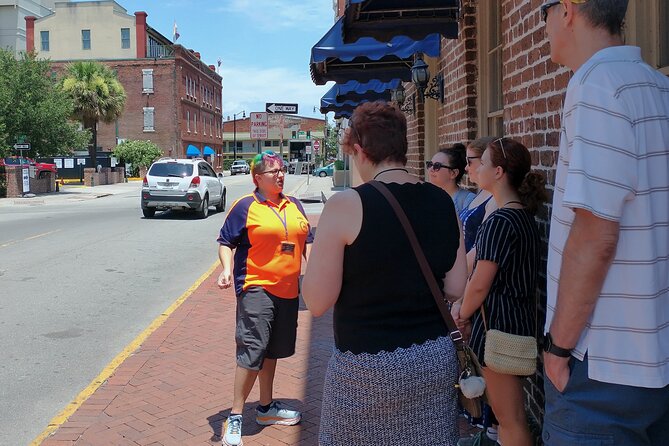
This is the kind of tour that helps you read the city instead of just looking at it. You cover major locations like Franklin Square, City Market, and Telfair Academy on foot, so you get close enough to notice details you’d miss from a bus window. And with a max group size of 20, you can usually ask questions and keep moving at a human pace.
The tour also moves fast enough to fit into a day trip, but slow enough to let the stories land. Expect a mobile ticket, multiple possible start times, and good weather to keep the walk comfortable.
In This Review
- Key points to know before you go
- Why Rising Voices Makes Savannah’s Squares Feel New
- Price and logistics: what $40 buys you in real value
- Franklin Square: Haitian support, secret literacy, and the Underground Railroad
- City Market: Lady Chablis, forced labor sites, and emancipation’s aftermath
- Telfair Academy and Wright Square: Mary Telfair, Tomochichi, and Mary Musgrove
- Juliette Gordon Low Birthplace and Chippewa Square: Girl Scouts, hearing loss, and Susie King Taylor
- Madison Square: Field Order 15 and the fight over practical reparations
- Monterey Square: Jim Williams, Savannah restoration, and Pulaski’s intersex story
- Who this tour suits best (and who might want something else)
- Should you book Rising Voices: Underrepresented History in Savannah?
- FAQ
- How long is the Rising Voices tour?
- Where does the tour start and end?
- What is the cost of the tour?
- What stops and attractions are included?
- Do I need to print a ticket?
- Is the tour okay with pets or service animals?
- What if the weather is bad or I need to cancel?
Key points to know before you go
- Underrepresented voices guide the whole route, from Haitian involvement in the Revolution to LGBTQ and Indigenous histories.
- Major Savannah landmarks are still the backdrop, but the meaning changes when you know the people behind them.
- Short stops at each square keep things efficient, and the pacing works even for groups with mixed needs.
- Guide interaction matters, since the route can pivot when questions come up.
- A small group size (20 max) makes it easier to hear and follow along, even with street noise around.
- You end at Monterey Square next to Count Casimir Pulaski’s monument, a clean finish point.
Why Rising Voices Makes Savannah’s Squares Feel New
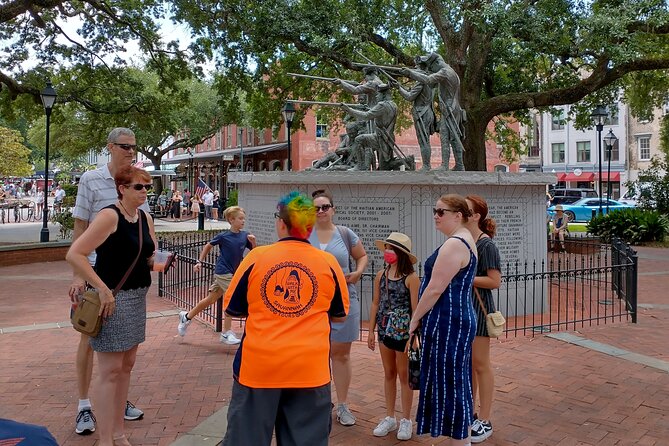
If you only know Savannah from the glossy postcard version, this tour gently ruins that illusion. The route hits the city’s classic squares and sights, but the focus is on who was speaking, teaching, organizing, and surviving while other narratives got filed away.
What makes the experience work is the balance. You get big-picture themes you can carry with you, like how education and freedom were fought for in everyday life. Then you get people you can actually picture, like Susie King Taylor or Mary Musgrove, shown where they connect to the city you’re standing on.
Also, it’s not the kind of history that stays stuck in the past. The tour’s stories keep returning to real patterns: power, exclusion, and who gets to be remembered. That’s part of why people describe it as refreshing and sometimes even required for a real Savannah understanding.
We have more walks through Savannah's historic squares and old district to wander


Price and logistics: what $40 buys you in real value
The price is $40 per person for an approximately 2-hour walking experience. For Savannah, that’s a fair number when you think about what you’re paying for: a live guide who can explain the city and connect details across time.
A big value point: much of what you see happens in public space. The stops are built around squares and street-level landmarks, with admission listed as free at the featured points. So you’re not paying extra on top just to access the route’s main “classroom.”
You’ll also get a mobile ticket, and you can choose a start time that fits your day. If you like tours that don’t force you into a single rigid window, this format helps. The tour runs with a maximum of 20 people, which usually means less crowding and more chance to hear the guide without playing shouting tennis with cars.
One planning note that matters: the tour is weather-dependent. Bad weather can mean a different date or a full refund, so check the forecast.
Finally, bring comfortable shoes. This isn’t a “sit on a bench and absorb” kind of tour. It’s walking-based, and it includes stretches where you’ll want to keep moving.
Franklin Square: Haitian support, secret literacy, and the Underground Railroad
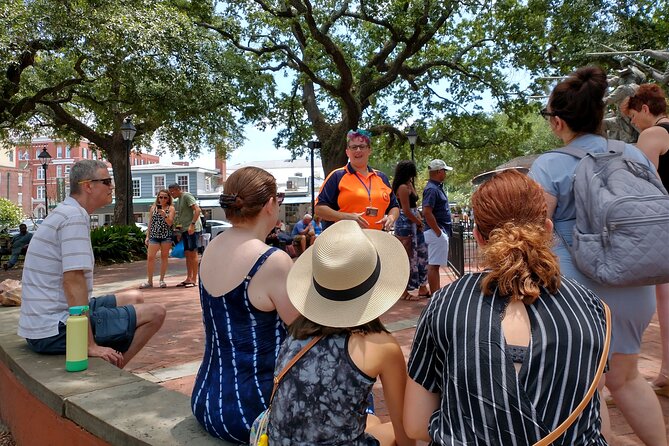
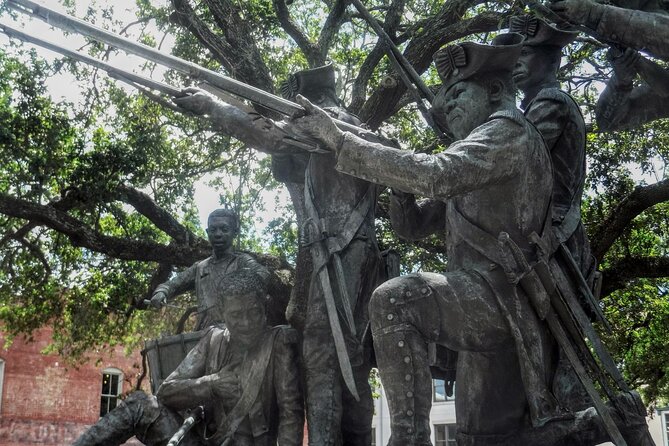
Franklin Square is where you start learning a new way to look at the city. The stories here open with Haitian involvement during the American Revolution, which is a smart way to frame Savannah early: this isn’t just a local story, it’s tied to wider Atlantic history.
Then you get a theme that keeps returning throughout the route: education as survival. The tour discusses clandestine schools that taught literacy to Black students in Savannah while such learning was outlawed. In other words, reading and writing weren’t “nice-to-haves” back then. They were power, and the people who taught and learned did it under threat.
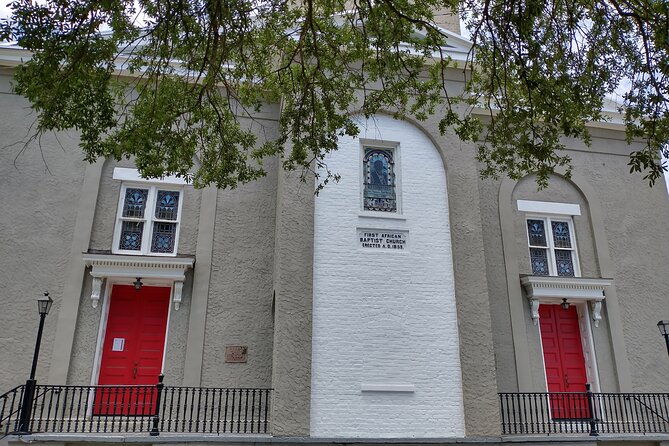
The stop also highlights the First African Baptist Church. You’ll hear how it houses the oldest African Baptist congregation in the country and how that congregation connects to the Underground Railroad. Even if you’ve read general Underground Railroad stories, this angle helps you see how local institutions could function as real support networks.
Practical drawback here: the stop itself is short. This is a 15-minute segment, so you’ll hear a lot compressed into a small window. If you have deep questions, save them for later, because the guide’s Q&A can pick up as the tour flows.
City Market: Lady Chablis, forced labor sites, and emancipation’s aftermath
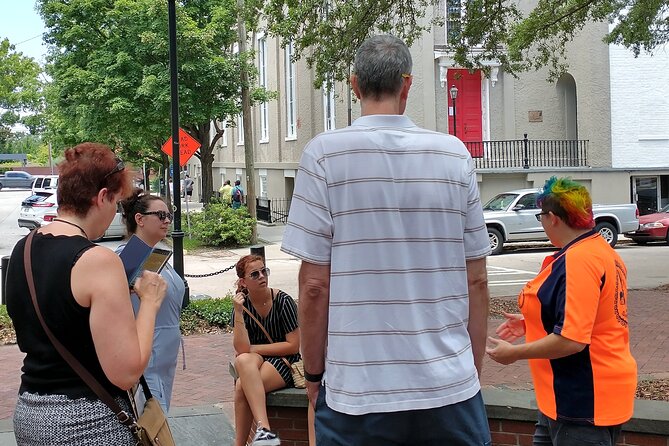
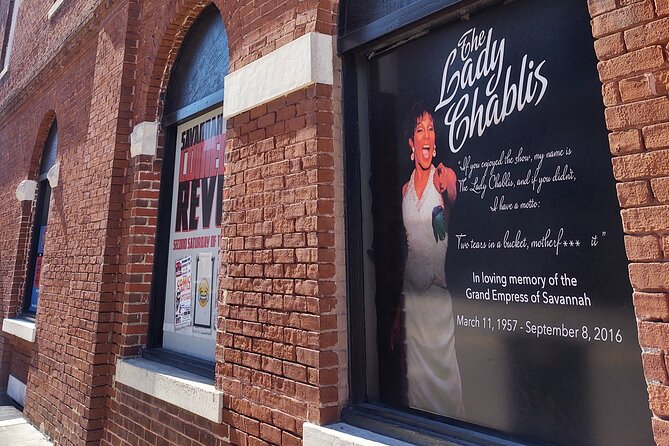
City Market is famous for shopping and strolling, but Rising Voices turns that stroll into a walk through memory. You’ll pass Club One, known as the home performance venue of Lady Chablis, a Savannah LGBTQ icon. That alone changes how you’ll remember the area; it’s not just where people come to visit, it’s also where community culture lived.
The other City Market story is harder to sit with, in the best way. You’ll see the building that was home to an active market for the selling of humans as property. Immediately after emancipation, the same space was converted into a freedmen’s school by people who had been sold there. That detail matters because it shows continuity instead of a clean “before/after” story.
If you like history that has momentum, you’ll appreciate how this stop refuses to treat emancipation like a light switch. The guide frames it as work that people had to build, day by day, often in the same locations where cruelty had been organized.
Telfair Academy and Wright Square: Mary Telfair, Tomochichi, and Mary Musgrove
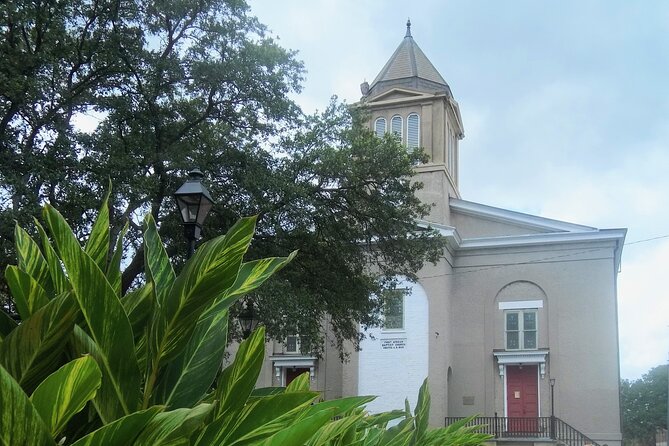
At Telfair Academy, the tour shifts to gender, power, and legacy. You’ll discuss Mary Telfair and how she defied gender expectations of her time. The story also connects to preservation in Savannah, which is useful because so much of Savannah’s modern identity is tied to what got saved and who chose to save it.
Then the walk moves to Wright Square, where the focus turns Indigenous. Tomochichi, described as chief and founder of the native Yamacraw tribe, is one anchor of this stop. Another is Coosaponakeesa, also known as Mary Musgrove, a Creek woman.
The guide’s framing is key: both figures are presented as instrumental in shaping Savannah, with the tour also noting how they compare in importance to James Oglethorpe, often treated as the founder. For you, this is the benefit of the format. By the time you reach Wright Square, the tour has already taught you to question whose perspective gets labeled as foundational.
A consideration here: if you’re the type who wants slow museum-style explanation, these are still short street stops (about 10 to 15 minutes each). But the pacing keeps you moving and prevents the tour from turning into a lecture marathon.
There are more Gullah Geechee and Black-heritage tours to learn from in Savannah

Juliette Gordon Low Birthplace and Chippewa Square: Girl Scouts, hearing loss, and Susie King Taylor
Juliette Gordon Low Birthplace Museum is the next stop, and the tour uses it to talk about women who didn’t follow the script. You’ll hear about Low as founder of the Girl Scouts, plus other unconventional female family members and how they shaped what women could do afterward. One very human detail you’ll hear is Low’s hearing loss, which helps keep the story grounded in actual lived experience.
Then Chippewa Square adds another Black woman whose story is often missing in casual Savannah conversation: Susie King Taylor. The tour describes her as a self-freed woman who served as a nurse and teacher during the Civil War, published a memoir, and helped open a school for Black children just off Chippewa Square. That’s a lot to take in for a brief stop, but it’s also exactly the point. These weren’t side characters in history. They were educators, caretakers, and authors shaping the record as it happened.
You’ll probably notice a pattern by now. The tour keeps returning to teaching and learning: secret schools, freedmen’s education, Girl Scouts leadership, and Susie King Taylor’s school. Savannah’s squares are becoming less like “pretty backdrops” and more like stages where people built literacy, safety, and community.
Madison Square: Field Order 15 and the fight over practical reparations
Madison Square is where the tour turns sharply toward policy and power. You stop in front of the Green-Meldrim house and discuss Field Order 15, which is described as issued by General Sherman but formed and negotiated by a group of 20 Black pastors and community leaders led by Garrison Frazier.
This is one of the stops where you’ll feel the guide connecting history to the present. Field Order 15 is framed as the birth of practical reparation efforts, and the tour explains why its implementation was prevented. You’re not just told what happened. You’re shown how organized Black leadership shaped the proposal, even when authorities blocked it.
If you’ve heard the name Field Order 15 only in passing, this stop can change your understanding fast. And if you’ve heard it before, you’ll still appreciate the emphasis on the people who negotiated it, not just the person whose name is attached.
Practical note: this is another 15-minute segment. The guide packs in the why, but it’s still a street stop. If you want more context, use the rest of the tour to ask questions or follow up after.
Monterey Square: Jim Williams, Savannah restoration, and Pulaski’s intersex story
The final stretch is Monterey Square, ending next to Count Casimir Pulaski’s monument. This ending location is smart because Pulaski’s monument is a recognizable landmark, and the guide uses it to pivot into a modern correction: a recent discovery suggests Pulaski was likely intersex.
That shift matters. It’s a reminder that history isn’t fixed, and research can revise how we understand the people behind the statues. The tour doesn’t treat this as gossip. It treats it as context that helps you read the past more honestly.
Before that monument moment, the tour discusses Jim Williams, famous from Midnight in the Garden of Good and Evil. Here, the guide places him as a prominent Savannah gay man who began Savannah’s restoration movement. That’s a different kind of “legacy” story than you might expect from a walking tour. Instead of preservation as something done by institutions only, it’s tied to individual activism and personal commitment.
When the tour ends, you’ll likely feel like you just walked through a city you’ve already visited—but with the footnotes flipped from the back of the book to the front row. It’s a satisfying ending because the location is easy to find again on your own afterward.
Who this tour suits best (and who might want something else)
This is a great fit if you want Savannah to mean more than architecture and famous names. You’ll enjoy it most if you like history with direct human stories: people who organized, taught, built institutions, created community spaces, and fought to keep their voices from disappearing.
You should also like walking tours and be okay with short stops, because you’ll cover multiple squares in about two hours. A key constraint: it’s not recommended for guests who cannot walk or roll for 15 minutes without stopping. If you need frequent breaks beyond that, you may want a different format.
It’s also a good choice if you value a guide who answers questions and adapts. In the experience’s spirit, Sargon is often praised for being friendly, highly informed, and willing to pivot based on what you ask in the moment. (If another guide is assigned, you can still expect interactive storytelling based on the tour style.)
One more tip: this tour covers sensitive subjects, from slavery-era markets to exclusion and blocked reparation efforts. If you’d prefer only light entertainment, this may feel heavy. But if you want a fuller Savannah, this is exactly the right tone.
Should you book Rising Voices: Underrepresented History in Savannah?
Yes, I’d book it if your goal is a Savannah that feels real. The route is built around major landmarks you’ll recognize, but the meaning changes because you hear the stories behind the stone. For $40, you get a small-group walking format, a mobile ticket, and a guide who can connect multiple centuries into something you can carry with you.
Skip it if walking for 15 minutes at a time is a problem for you, or if you only want the “easy” tourist version of history. Also keep the weather in mind; you’ll have a better experience when conditions are good.
If you want to feel like you’re seeing Savannah for the first time in a deeper way, Rising Voices is one of the strongest ways to do it.
FAQ
How long is the Rising Voices tour?
The tour lasts about 2 hours.
Where does the tour start and end?
It starts at 901 W Saint Julian Street, Savannah, GA 31401, and ends at Monterey Square, 11 W Gordon St, Savannah, GA 31401.
What is the cost of the tour?
The price is $40.00 per person.
What stops and attractions are included?
The itinerary includes Franklin Square, City Market, Telfair Academy, Wright Square, the Juliette Gordon Low Birthplace Museum area, Chippewa Square, Madison Square, and Monterey Square.
Do I need to print a ticket?
No. The tour uses a mobile ticket.
Is the tour okay with pets or service animals?
Service animals are allowed. Well-behaved pets are allowed as well.
What if the weather is bad or I need to cancel?
The experience requires good weather, and if it’s canceled due to poor weather you’ll be offered a different date or a full refund. There’s also free cancellation, and you can cancel up to 24 hours in advance for a full refund.
More Tour Reviews in Savannah



More Gullah Geechee and Black Heritage Tours in Savannah

More Savannah Squares and Historic Walking Tours



Not quite your thing? Here is more to see and do around Savannah










Savannah Squares & Historic Walking Tours, compared.
 ★ 5.0Savannah History and Haunts Candlelit Ghost Walking TourFrom $393,235 reviews
 ★ 5.0Savannah First Squares Culinary & Cultural Walking Food TourFrom $963,229 reviews
 ★ 5.0Historic Savannah Guided Walking TourFrom $302,918 reviews
 ★ 4.5Savannah’s Ghost City “Dead of Night” Walking Night TourFrom $342,482 reviews
 ★ 4.5Narrated Historic Savannah Sightseeing Trolley TourFrom $352,375 reviews
 ★ 4.5Southern Flavors Food, Pub Crawl, and History Walking TourFrom $601,623 reviews
 ★ 5.0Genteel and Bard’s Savannah Dark History and Ghost Encounter Walking TourFrom $391,546 reviews
 ★ 5.0Bonaventure Cemetery Walking Tour with TransportationFrom $481,467 reviews
Browse the lists this tour appears in