
Reviewed · SAVANNAH SQUARES & HISTORIC WALKING TOURS
Savannah Stroll: Guided Sightseeing & History Walking Tour of Savannah
A city with squares feels like a secret map. This guided walk threads Savannah’s Historic District and park-like squares with colonial and war-era stories.
I love how it starts at Reynolds Square and ties the buildings to real civic moments, not just pretty views. I also like the focus on Savannah’s role as a strategic port city in the American Revolution and Civil War, told at a stroll-friendly pace. One thing to consider: the experience is history-heavy, so if you want a long, detailed Civil War and slavery-focused lesson, you may feel like you want more depth than this route provides.
In This Review
- Key things I’d circle on your plan
- Reynolds Square: where the tour starts and why it pulls you in
- How the route really feels: 90 minutes, lots of shaded walking, and plenty of stops
- Getting oriented fast in Savannah’s Historic and Victorian Districts
- Cathedral of St. John the Baptist: a church stop that sets the tone
- Colonial Park Cemetery: history with a slower pace
- Johnson, Warren, Oglethorpe, and Chippewa Squares: the public-room heart of Savannah
- Green-Meldrim House and the people behind the buildings
- Juliette Gordon Low Birthplace Museum: a thoughtful stop for modern historical storytelling
- Owens-Thomas House & Slave Quarters: where the conversation turns to slavery
- Olde Pink House and Andrew Low House: architecture you can’t ignore
- Independent Presbyterian Church and the final stretch back toward Reynolds Square
- Shopping and dining tips: the guide’s real value after the last square
- Price and value: what you’re really paying for
- Who should book this Savannah Stroll?
- Should you book Savannah Stroll?
- FAQ
- How long is the Savannah Stroll walking tour?
- Where do I meet the guide for Savannah Stroll?
- Does the tour end back at the meeting point?
- Is the tour offered in English?
- Are there admission fees for the stops?
- Is hotel pickup included?
- How big is the group?
- Are pets allowed on this tour?
- Can I cancel and get a full refund?
Key things I’d circle on your plan
- Reynolds Square as the anchor: colonial government roots and a strong sense of place from the first minutes
- Dozens of squares in one loop: the Historic District, Victorian District, and 22 park-like spaces
- A guide-led storytelling format: history plus practical tips on what to see, shop, and eat nearby
- Free-to-attend stops listed on the route: museums and landmark buildings as part of the walk
- Small-group feel: capped at 30 people, with comfortable “stroll” timing
- English-speaking guide service: easy for most visitors to follow and ask questions
Reynolds Square: where the tour starts and why it pulls you in
If Savannah has a front door for walking tours, Reynolds Square is a good bet. This is where you meet your guide at 24 Habersham St (and where the tour ends back again), so you’re not stuck “finding your own way” after the last photo.
The square matters because it was the center of colonial government in the 1700s. Your guide also connects it to a major Georgia milestone: it originally held the House of Assembly, where the first reading of the Declaration of Independence in Georgia took place.
That setup is more than a fun fact. It gives you a mental anchor for everything else you’ll see: streets, church spires, and those postcard-perfect squares start to feel like a system—built for administration, trade, and community life.
We have more walks through Savannah's historic squares and old district to wander



How the route really feels: 90 minutes, lots of shaded walking, and plenty of stops
This is about 1.5 hours of walking, with a “leisurely stroll” vibe. You’re covering the Savannah Historic District and the Savannah Victorian Historic District, plus 22 park-like squares—so the time adds up, even though it never feels like an all-out hike.
Two things help this stay enjoyable:
- The tour is designed around Savannah’s famous layout, where squares break up the streets and offer frequent pauses.
- The walk is built for sightlines—tree canopies, floral landscapes, and historic building facades—so you’re not just walking from A to B.
A practical note: wear comfortable shoes. This is still a city-walk with repeated turning and stopping, and you’ll want your feet to agree with you. Also, your guide will be talking for most of the experience, so staying close to the front helps.
One small heads-up from real-world group behavior: street noise can happen. If you ever find yourself in a less-ideal spot, the simplest move is to adjust your position and keep listening. The tour is structured enough that you don’t lose the story.
Getting oriented fast in Savannah’s Historic and Victorian Districts
One of the best uses of a guided walk is getting your bearings before you start wandering on your own. This tour does that by threading you through Savannah’s major historic areas in one loop.
You’ll learn how the Historic District and the Victorian District shaped the city’s character. Your guide also frames what you see—architecture, civic life, and the city’s role in larger events—so those buildings don’t feel random.
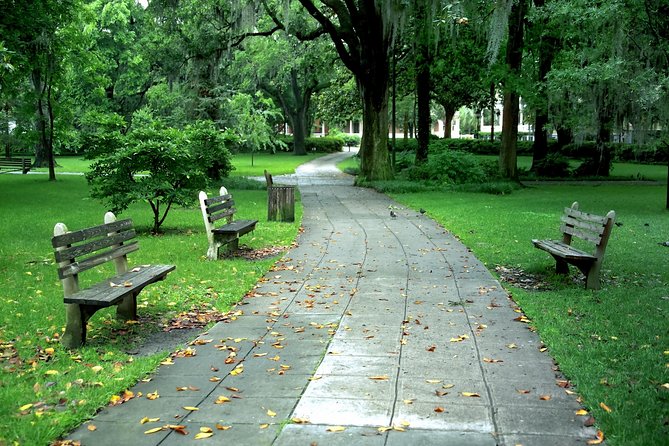
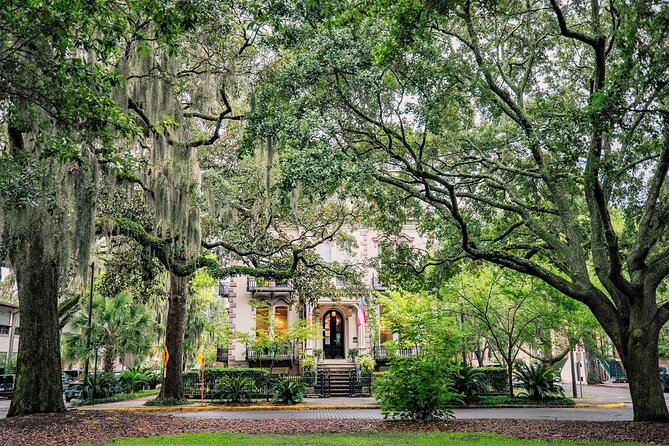
And yes, you’re going to notice the squares. They’re not just pretty. In Savannah, squares function like public living rooms. Trees cool the walkway, flowers soften the edges, and the historic surroundings make each stop feel like a scene in a movie—minus the script.
Cathedral of St. John the Baptist: a church stop that sets the tone
The first major stop is the Cathedral of St. John the Baptist. Even if you’re not deep into architectural tours, cathedral visits are useful because they show how Savannah organized community life.
Your guide starts by working from Reynolds Square into the surrounding historic streets, then brings you to this landmark church. You’ll get context for why places of worship mattered in a colonial-era port city where people gathered, debated, and formed community identity.
Timing matters here. If you’re arriving from the other side of town, give yourself extra minutes so you’re not hurried and out of breath. One earlier experience on this route mentioned missing the cathedral, which is the kind of thing that’s easy to prevent with a calm start.
Colonial Park Cemetery: history with a slower pace
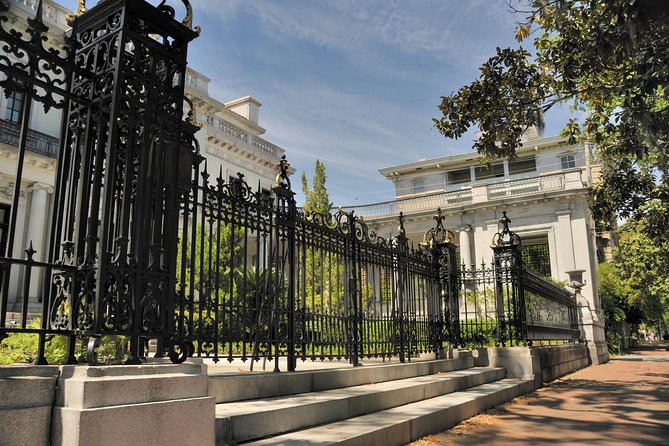
Then you head to Colonial Park Cemetery. Cemeteries can be tricky on a short tour—people either rush through or get emotionally overwhelmed. The smart way to treat a stop like this is as a “pause for context.”
What makes this stop worth your attention is the way it complements the civic and political stories you’re hearing. You get the sense that Savannah’s founding era didn’t live only in meetings and laws. It lived in family lines, community memory, and the long shadow of who built the city.
Practical tip: bring patience. Cemetery details reward slow looking. If you feel yourself trying to “speed-read” the moment, step back and let your guide’s points land first.
We have more guided Savannah tours led by local storytellers





Johnson, Warren, Oglethorpe, and Chippewa Squares: the public-room heart of Savannah
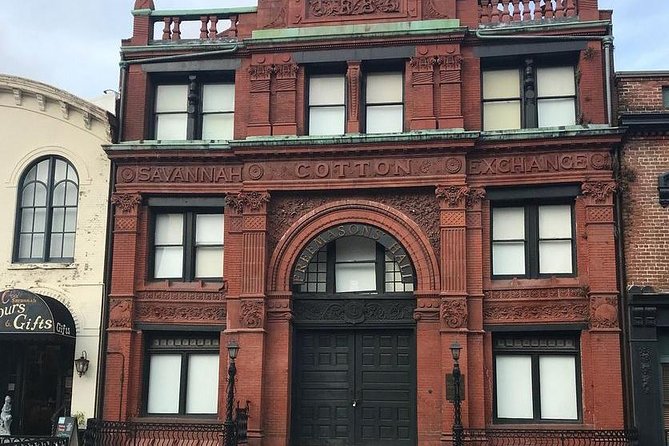
After the cemetery, the tour shifts into the squares mode: Johnson Square, Warren Square, Oglethorpe Square, and Chippewa Square. This is where Savannah’s nickname energy makes sense. The city feels designed for walking because the squares keep pulling you back to open space.
Here’s what to watch for as you move square to square:
- Tree canopies and landscaping: you’re walking under living shade, not across a bare street.
- Historic building edges: the streets feel narrower and more human because the blocks are wrapped by old architecture.
- A sense of civic rhythm: your guide uses the squares to connect governance, community life, and major historical moments.
Chippewa Square deserves special attention because it’s frequently referenced as a key node in Savannah walking routes. Even though your tour officially ends back at Reynolds Square, the route’s structure means this square is part of the “backbone” of the walk.
If you love photos, this is also where you’ll want to slow down. Don’t shoot while you’re half-listening. Let your guide explain why the square matters, then take pictures once you understand what you’re looking at.
Green-Meldrim House and the people behind the buildings
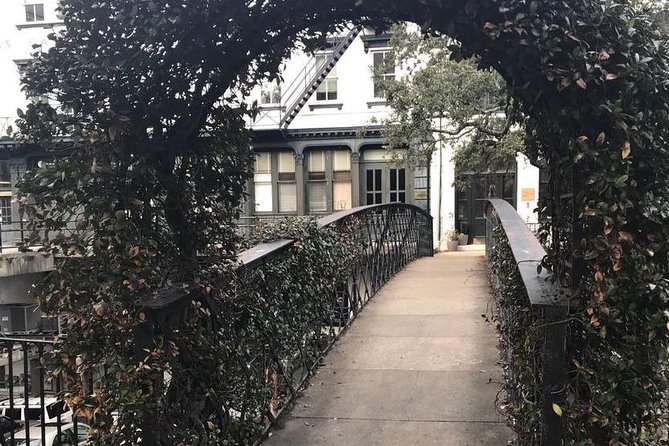
Next up is Green-Meldrim House. House stops can feel like a change of pace after squares, but they add texture. A square tells you how a community met. A house tells you how individuals lived around that community.
This stop also helps you notice architecture in a practical way. Even on a short tour, your guide points out enough so you start seeing patterns—rooflines, facades, and how styles reflect the era’s values and wealth.
It’s a good moment to ask questions, especially if you’re the type who wants to know what’s original versus restored. You won’t get a full architectural textbook in 90 minutes, but you’ll get enough to keep your own self-guided wandering grounded.
Juliette Gordon Low Birthplace Museum: a thoughtful stop for modern historical storytelling
You’ll make a stop at the Juliette Gordon Low Birthplace Museum. Museums like this work well on a walking tour because they connect Savannah’s historic built environment to a person-based story.
One nice thing about this kind of stop is that it breaks up the purely political timeline. You’re not only hearing about colonial government and war years. You’re also seeing how history continues through people whose lives became part of the city’s identity.
Since museum-specific details aren’t spelled out in the tour description, treat it as a “stop-and-understand” moment rather than a promise of a full indoor lesson. If you want extra time inside, plan to come back later on your own.
Owens-Thomas House & Slave Quarters: where the conversation turns to slavery
A major highlight on the route is Owens-Thomas House & Slave Quarters. The name alone signals why this stop lands differently than the squares and civic buildings.
This is where you should expect the story to get heavier. Savannah’s prosperity as a port city and its growth in the colonial and war eras are connected to systems that harmed real people. Seeing the slave quarters listed as a dedicated stop keeps the tour from turning into only a postcard walk.
That said, there’s a balance challenge with a short tour like this. If your top priority is a detailed, sustained focus on slavery and Civil War aftermath, you might find this stop more like a critical waypoint than a full course.
If that’s you, ask your guide a direct question like what other parts of Savannah you should see next for a deeper look. The tour is designed to set you up for further exploration.
Olde Pink House and Andrew Low House: architecture you can’t ignore
Two more standout building stops appear on the walk: the Olde Pink House and the Andrew Low House Museum.
The Olde Pink House is memorable just by its name, and the building becomes a visual anchor in your mind. The Andrew Low House Museum continues the pattern: historic homes that help you understand the city’s wealth, taste, and growth over time.
On a practical level, house stops help you carry the tour with you after it’s over. When you walk past similar buildings later, you’ll have a frame for what you’re seeing—styles, eras, and how Savannah’s identity got built street by street.
Independent Presbyterian Church and the final stretch back toward Reynolds Square
Near the end, you’ll stop at the Independent Presbyterian Church. Churches are useful on this kind of tour because they’re community landmarks that show how people organized beliefs, relationships, and public life.
After that, you loop through the last points on the route, including Savannah Walks (as listed on this route) and then back to Reynolds Square to close the circuit.
That ending matters because it keeps your day tidy. You’re not left “starting over” once your guide conversation wraps up. You’ll still be able to head out on your own with a clearer sense of where you are and what fits next.
Shopping and dining tips: the guide’s real value after the last square
The tour includes time where your guide points you toward the best shopping and dining spots. Even without specific names in the description, the benefit is that you’ll leave with a local sense of what’s nearby and worth your time.
This is especially helpful if it’s your first day in Savannah. A guided walk gives you context, then the guide’s practical tips help you convert that context into an easy plan.
My advice: after the tour, don’t scatter. Pick one shopping street area and one food stop within walking or quick rides from where you’re finishing.
Price and value: what you’re really paying for
The tour description lists free admission for the stops included. Even if you personally don’t go inside every building, this still represents value because you’re not paying extra just to make the route meaningful.
What you are paying for is the guide’s time and the way the route connects dots—colonial government at Reynolds Square, Savannah’s port-city role during the American Revolution and Civil War, and how the city’s historic squares functioned as civic space.
Also, the group size cap at 30 helps keep it a talkable walk. And since there’s no hotel pickup and drop-off, you can keep your logistics simple by getting to the meeting point and letting the guide handle the flow.
Who should book this Savannah Stroll?
Book this tour if you want:
- A 90-minute, walkable intro to Savannah’s Historic District and its famous squares
- A guide-led story that connects buildings to key events like the American Revolution and Civil War
- A route that helps you plan the rest of your day, with shopping and dining suggestions built in
- A short list of major stops where you don’t have to decide each one from scratch
Consider a different or additional tour if you’re expecting heavy, sustained focus on slavery and Civil Rights history. This walk is structured around founding-era and war-era strategy, and the balance may not match your needs if that’s your main goal.
Should you book Savannah Stroll?
Yes, if you like history that moves. This is a good first Savannah experience because it gives you a map through story: start at Reynolds Square, learn why the squares matter, see the major landmarks, and get ready to wander confidently afterward.
If you’re short on time but want the city’s big visual and historical anchors in one go, this tour fits the bill. Just go in with the right expectation: it’s a smart “get oriented” history walk, not a full semester on the darker chapters.
FAQ
How long is the Savannah Stroll walking tour?
It runs about 1 hour 30 minutes.
Where do I meet the guide for Savannah Stroll?
You meet at 24 Habersham St, Savannah, GA 31401, USA.
Does the tour end back at the meeting point?
Yes. This activity ends back at the meeting point.
Is the tour offered in English?
Yes, the tour is offered in English.
Are there admission fees for the stops?
The tour lists admission ticket free for the included stops.
Is hotel pickup included?
No hotel pickup or drop-off is included.
How big is the group?
The tour has a maximum of 30 travelers.
Are pets allowed on this tour?
Pets are welcome.
Can I cancel and get a full refund?
Free cancellation is allowed up to 24 hours in advance for a full refund. If you cancel less than 24 hours before the start time, the amount paid is not refunded.
More Tours in Savannah



More Tour Reviews in Savannah

More Savannah Squares and Historic Walking Tours


Not quite your thing? Here is more to see and do around Savannah











Savannah Squares & Historic Walking Tours, compared.
 ★ 5.0Savannah History and Haunts Candlelit Ghost Walking TourFrom $393,235 reviews
 ★ 5.0Savannah First Squares Culinary & Cultural Walking Food TourFrom $963,229 reviews
 ★ 5.0Historic Savannah Guided Walking TourFrom $302,918 reviews
 ★ 4.5Savannah’s Ghost City “Dead of Night” Walking Night TourFrom $342,482 reviews
 ★ 4.5Narrated Historic Savannah Sightseeing Trolley TourFrom $352,375 reviews
 ★ 4.5Southern Flavors Food, Pub Crawl, and History Walking TourFrom $601,623 reviews
 ★ 5.0Genteel and Bard’s Savannah Dark History and Ghost Encounter Walking TourFrom $391,546 reviews
 ★ 5.0Bonaventure Cemetery Walking Tour with TransportationFrom $481,467 reviews
Browse the lists this tour appears in