
Reviewed · SAVANNAH SQUARES & HISTORIC WALKING TOURS
Savannah: History and Architecture Homes Walk
Savannah’s homes tell stories if you know where to look. This 2-hour architecture walk turns the Historic District into a living classroom, with stops that explain how Savannah’s domestic life evolved over time.
I especially like the focus on specific houses and the way the tour points out design choices you can actually see. I also like that you get a native Savannah guide and time to ask questions, not just a lecture while you walk. One drawback: guide style can vary, and a few past tours have leaned into extra topics beyond pure architecture.
If you want a morning activity that feels calm, shaded, and very Savannah, this is a solid bet.
In This Review
- Key highlights at a glance
- Where to start in Savannah: Warren Square meets a 2-hour walking plan
- Owens-Thomas House: regency architecture you can spot with your own eyes
- Green Meldrim House and Sherman’s Civil War connection
- 18th and 19th century domestic life: how Savannah homes evolved
- Historic preservation in Savannah: why the walk ends with a landmark
- Pace, guide style, and how to get the most from 2 hours
- Price and value: is $30 worth it?
- Weather and comfort tips that actually help
- Who should book this Savannah homes walk?
- Should you book this Savannah History and Architecture Homes Walk?
- FAQ
- How long is the Savannah History and Architecture Homes Walk?
- How much does it cost?
- Where do I meet for the tour?
- What are some of the key homes or landmarks on the tour?
- Does the tour focus on a certain time period?
- What is included in the price?
- What is not included?
- Will the tour run in rainy weather?
- What should I bring for comfort?
- Is there free cancellation?
Key highlights at a glance

- Owens-Thomas House: A top U.S. example of regency architecture, shown in context of Savannah’s homebuilding
- Green Meldrim House: The stop tied to General William T. Sherman as a Civil War guest
- 200 years of domestic architecture: You’ll hear how Savannah homes changed, house by house and era by era
- Juliette Gordon Low Birthplace finish: Built in 1818 and recognized as Savannah’s first National Historic Landmark
- Ask-the-guide format: You get a local perspective and room to clarify details as you go
Where to start in Savannah: Warren Square meets a 2-hour walking plan
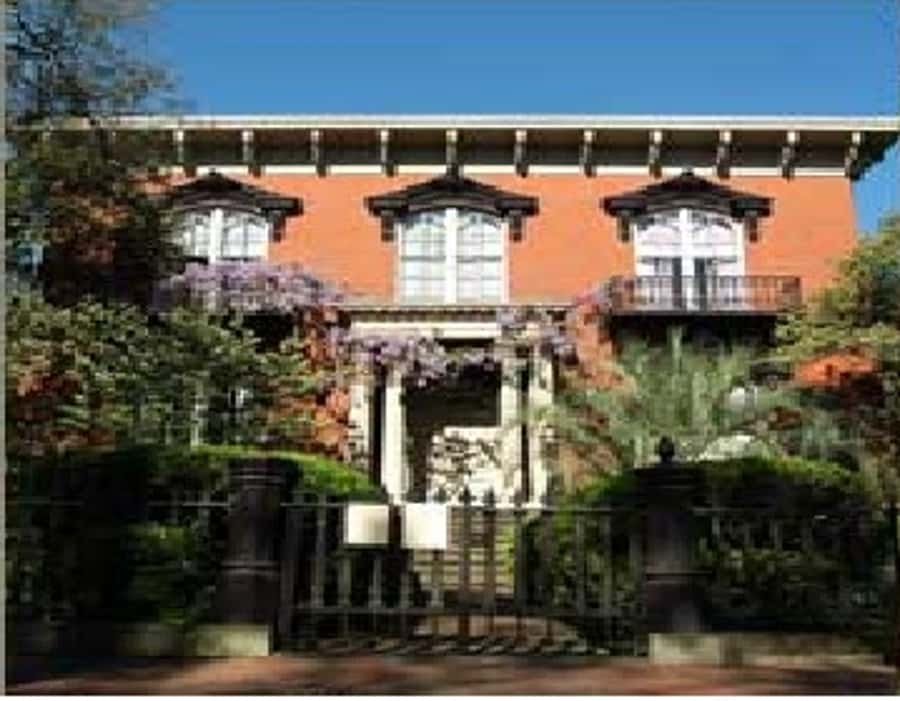
You’ll meet at Warren Square, right between Congress Street and Habersham Street. That’s a helpful detail because it keeps you anchored in the Historic District from the moment you arrive, instead of wandering around trying to match descriptions.
The tour runs about 2 hours, usually in the morning. That matters in Savannah, because morning light helps you spot architectural details, and the streets often feel less crowded before the day heats up.
One practical note from the experience: the walk leaves in light rain. If clouds look iffy, bring an umbrella or rain coat so you stay comfortable and can keep your attention on the houses, not your discomfort.
We have more walks through Savannah's historic squares and old district to wander



Owens-Thomas House: regency architecture you can spot with your own eyes
One of the biggest draws here is the Owens-Thomas House, widely recognized as the premier example of regency architecture in the United States. Even if you’ve never studied architectural terms, the regency angle gives you a framework for what you’re looking at: a more refined, stylistic approach that contrasts with simpler domestic forms.
What makes this stop valuable is how it’s used. You’re not just told the name; you’re guided into understanding how Savannah’s home culture expressed taste, status, and changing influences over time. That’s why the house works so well on a short walk. It gives you one anchor point to connect the rest of the tour.
If you love photography, this is the kind of house that rewards slowing down. You’ll want a moment to look beyond the facade and notice how the building presents itself as a “statement” home, not just shelter.
Green Meldrim House and Sherman’s Civil War connection
Another named highlight is the Green Meldrim House, with a specific Civil War thread: General William T. Sherman was a guest there. That kind of connection is helpful because it ties architecture to real events, not just style.
This is also where the tour’s pacing really matters. You’re walking through neighborhoods, but the guide’s job is to translate the past into something you can hold in your head. A Sherman-related stop does that well, because it gives you a clear historical marker you can remember when you move on to the next domestic dwelling story.
The practical takeaway for you: if you’re interested in American history, this is one of the moments where the tour gives you more than aesthetics. You can leave thinking about how wartime movements intersected with everyday housing and society.
18th and 19th century domestic life: how Savannah homes evolved
The tour isn’t trying to cover everything about Savannah. Instead, it zooms in on domestic dwellings—how Savannah homes developed across two centuries. That focus is what makes the walk feel coherent, even though you’re moving block to block.
You’ll hear discussions about how residential design in Savannah changed. The best part is that architecture here is explained as a response to people and needs: changing materials, shifting tastes, and the long arc from earlier periods into the 1800s. In other words, you’re learning how houses reflected the lived reality of their eras.
One of the stand-out strengths from the experience: guides often point out details about building materials used in historic homes. That matters because materials are more than trivia. They affect how a building ages, how it handles humidity, and what styles were practical in that specific place and time.
If you’re the type who notices gutters, window shapes, porches, brickwork, or how buildings sit along the street, you’ll get a lot out of this portion.
Historic preservation in Savannah: why the walk ends with a landmark
The tour wraps up near the Juliette Gordon Low Birthplace, built in 1818. This site is consecrated as Savannah’s first National Historic Landmark to honor the founder of the Girl Scouts.
Ending here is smart. You start with major architectural examples and the idea of how homes shaped culture. Then you finish at a preservation-minded landmark that shows Savannah taking responsibility for its history. It’s a reminder that architecture doesn’t just sit there—it’s protected, interpreted, and kept meaningful for the next generation.
The included information also points to Savannah’s role in historic preservation dating back to the mid-1950s. Even if you don’t go super deep on preservation policy, it gives context for why Savannah still looks the way it does today: people decided the city’s historic fabric was worth saving, not replacing.
There are more Savannah historic homes and architecture tours to admire




Pace, guide style, and how to get the most from 2 hours
A walking tour lives or dies by the guide, and this one can be very strong when the guide’s voice matches your interests. Many people have praised knowledge and confidence, plus an ability to make dates and details feel clear. One guide even stood out for being intensely sharp on city history and timelines, which is exactly what you want in a 2-hour format.
You should also expect that the tour can include some side themes. For example, one past tour leaned into ghost or haunted tidbits. That doesn’t mean it’s a ghost tour. It just means you may hear a few eerie asides mixed into the architecture narrative, depending on the guide.
Here’s a consideration to keep in mind: guide approaches can differ in how they handle sensitive history. One account flagged a guide’s pro-Confederate presentation and wording about slavery that was hard to hear. If you know that tone would derail your enjoyment, consider asking the operator in advance about the guide’s approach to Civil War and slavery topics, and choose the tour time that feels best for you.
Finally, use your advantage: you’re allowed to ask questions. In a place like Savannah, where details hide in plain sight, your best moments often come from asking a simple question like why a feature looks that way or what changed between early and later periods.
Price and value: is $30 worth it?
At $30 per person for about 2 hours, you’re paying for a local guide, a tight route, and access to interpretation. You’re not paying for entry ticket prices to a long list of sites, and transportation isn’t included.
So the value comes down to this: do you want a guided architectural story, with names you can remember, in a compact time window? If yes, this price is reasonable. Savannah’s Historic District can be overwhelming on your own, and a good guide helps you connect what you see (regency details, domestic design, historical markers) into one understandable arc.
If you prefer to wander freely and hate structured commentary, then you might find the cost less satisfying. But if you like walking with purpose—while learning what each home represents—this fits.
Weather and comfort tips that actually help
This is a practical tour, so comfort is not optional. Wear comfortable walking shoes, because Historic District streets and sidewalks don’t forgive flimsy footwear.
Plan for weather. Walks can depart in light rain, so bring an umbrella or rain coat if the sky looks unstable. And in summer, remember Savannah’s heat and humidity. Bring water, because the tour is timed and you’ll want to keep your energy for the whole route.
If you tend to overheat quickly, consider dressing in layers you can adjust once you’re under tree cover. That shade can make the walk feel much easier than the weather forecast suggests.
Who should book this Savannah homes walk?
I’d point you toward this tour if you:
- Love architecture and want to understand it in real historical context
- Want a 2-hour morning plan that fits neatly into a day of sightseeing
- Appreciate guides who can connect houses, dates, and cultural shifts
- Like learning from a local Savannah perspective
I’d hesitate if you:
- Want strictly quiet, unbiased lecture-style history with no side themes
- Are sensitive to how slavery and Civil War topics are sometimes framed by different speakers
- Hate walking in any rain situation, since the tour does leave in light rain
Should you book this Savannah History and Architecture Homes Walk?
Yes—if your goal is a focused, name-rich, architecture-first walk through Savannah’s Historic District. The Owens-Thomas House and the Green Meldrim House alone give you memorable anchors, and the finish at the Juliette Gordon Low Birthplace adds a preservation and civic-history payoff.
Book it with one smart mindset: choose it as an architectural learning experience, but bring your own preferences about historical tone. If that’s important to you, ask questions ahead of time so the guide’s approach matches what you want to hear. When the guide is on point, this tour is exactly the kind of Savannah morning that leaves you looking at houses differently.
FAQ
How long is the Savannah History and Architecture Homes Walk?
It lasts about 2 hours.
How much does it cost?
The price is $30 per person.
Where do I meet for the tour?
Meet at Warren Square, between Congress Street and Habersham Street.
What are some of the key homes or landmarks on the tour?
You’ll see the Owens-Thomas House, the Green Meldrim House, and the tour ends near the Juliette Gordon Low Birthplace.
Does the tour focus on a certain time period?
Yes. It focuses on 18th and 19th century culture and domestic architecture.
What is included in the price?
The tour includes a guide native to Savannah, help understanding 18th and 19th century life in the South, time to ask questions, and context about historic preservation.
What is not included?
Transportation is not included.
Will the tour run in rainy weather?
The walks depart in light rain, so bring an umbrella or rain coat if the weather looks questionable.
What should I bring for comfort?
Wear comfortable walking shoes and dress for the weather. In summer, bring water. An umbrella can help if rain is possible.
Is there free cancellation?
Yes. You can cancel up to 24 hours in advance for a full refund.
More Tour Reviews in Savannah



More Savannah Historic Homes and Architecture

More Savannah Squares and Historic Walking Tours



Not quite your thing? Here is more to see and do around Savannah












Savannah Squares & Historic Walking Tours, compared.
 ★ 5.0Savannah History and Haunts Candlelit Ghost Walking TourFrom $393,235 reviews
 ★ 5.0Savannah First Squares Culinary & Cultural Walking Food TourFrom $963,229 reviews
 ★ 5.0Historic Savannah Guided Walking TourFrom $302,918 reviews
 ★ 4.5Savannah’s Ghost City “Dead of Night” Walking Night TourFrom $342,482 reviews
 ★ 4.5Narrated Historic Savannah Sightseeing Trolley TourFrom $352,375 reviews
 ★ 4.5Southern Flavors Food, Pub Crawl, and History Walking TourFrom $601,623 reviews
 ★ 5.0Genteel and Bard’s Savannah Dark History and Ghost Encounter Walking TourFrom $391,546 reviews
 ★ 5.0Bonaventure Cemetery Walking Tour with TransportationFrom $481,467 reviews
Browse the lists this tour appears in