
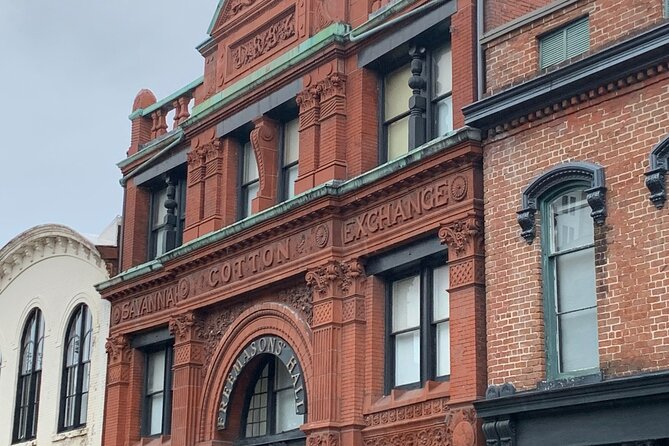
Reviewed · SAVANNAH HISTORIC HOMES & ARCHITECTURE
2 Hours Savannah Architectural Tour
Savannah’s buildings have stories—this walk explains them. You’ll learn how the city’s design decisions connect street squares to specific architects, and you can hear your guide with optional headphones. I like that it visits places many general walks skip, so you come away seeing Savannah with new eyes. One possible catch: it stays outdoors, so you won’t get indoor house-museum time.
I also love the way the tour frames architecture as a real-world story of preservation and builders, not just pretty facades. Names you’ll hear repeatedly include William Jay, John Norris, and preservationist Jim Williams, tied to what you’re standing in front of. If you get the kind of guide who’s quick with follow-up questions (and the group is small), this style really clicks.
Because the stops are short and exterior-focused, it’s best if you want a strong overview rather than a long museum day. You’ll still leave with a route you can continue on your own, but for deep interior viewing you’ll want to plan separate visits.
In This Review
- Key things I’d circle before you book
- Savannah Architecture That Makes Sense in Two Hours
- Where You’ll Meet, Where You’ll End, and What the Pace Feels Like
- The Audio System Is a Big Deal (Not a Fancy Extra)
- Stop-by-Stop: Nine Savannah Buildings With Names You’ll Remember
- Juliette Gordon Low Birthplace Museum: William Jay’s Footprints
- Harper Fowlkes House: Charles Klusky in the Spotlight
- Orleans Square: The Bullochs House Site and the Square Layout
- SCADstory: Savannah’s Original Armory
- Gryphon Tea Room: Scottish Rights Temple and Freemason Connections
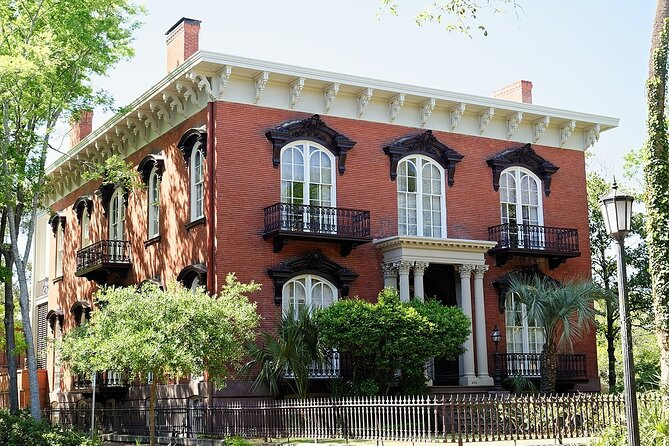
- Mercer Williams House Museum: John Norris Meets Jim Williams
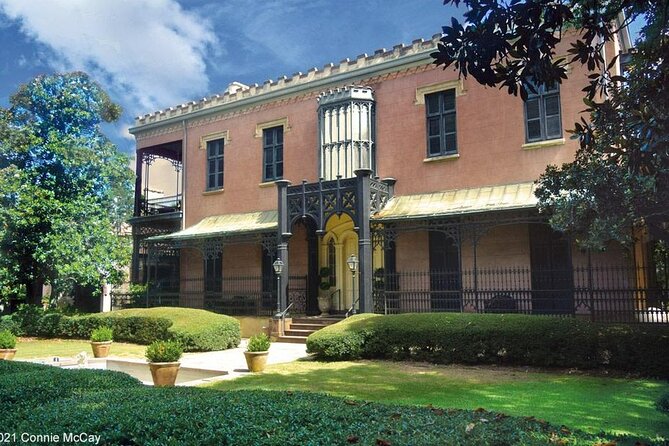
- Green-Meldrim House: Another John Norris Chapter
- Girl Scout First Headquarters: Andrew Low and John Norris
- Lafayette Square: Cathedral and J.D. Hall’s Hamilton-Turner House
- The Take-Home Map: Your Ticket to Keep Going
- Value at $50 for Two Hours: What Makes It Worth the Cost
- Who This Tour Fits Best (and Who Might Want Something Else)
- Quick Tips to Get the Most From Your Walk
- Should You Book This Savannah Architectural Tour?
- FAQ
- How long is the Savannah architectural tour?
- What does it cost?
- How many people are in the group?
- Is this tour in English?
- Will I hear the guide clearly?
- Is this an outdoor tour or does it include house museum entry?
- Where does the tour start and end?
- Do I need a hard copy ticket?
- Does the tour require good weather?
Key things I’d circle before you book

- A tighter group (max 10), which makes questions feel less like an interruption
- Audio tech that carries up to 150 feet, with optional headphones for noisy sidewalks
- A take-home landmark map so you can keep the learning going after the walk ends
- Architect-focused stops you’ll miss on standard tours, from houses to armory and temple-adjacent sites
- Good-weather dependent since most of the tour is outside on foot
Savannah Architecture That Makes Sense in Two Hours

Savannah can feel like a postcard city until you learn how it’s put together. This tour works because it explains architecture as a system: who designed buildings, how those designs fit the city’s square layout, and what it took to preserve the places that survived. You’re not just looking at historic structures; you’re building a mental map of how the city’s big ideas show up on the street.
What I appreciate is how the tour connects famous names to the exact moments you’re seeing. You’ll hear about Savannah’s father of architecture, William Jay, right at the Juliette Gordon Low Birthplace Museum. Then the story broadens from “who designed it” to “how the look endured,” especially when preservation enters the conversation at stops tied to Mercer Williams House Museum and other homes.
If you’re the type who reads plaques and then wants more context, this is your pace. If you want a pure photo-walk with zero talking, you’ll feel the time is more structured than you’d like. The sweet spot is being curious while you walk.
There are more Savannah historic homes and architecture tours to admire



Where You’ll Meet, Where You’ll End, and What the Pace Feels Like
The walk starts at 124 Abercorn St and ends at Lafayette Square, in front of the fountain. That end point matters because it’s one of the easiest places to re-enter your day—dinner plans, quick stops for treats, and the ability to keep sightseeing without a long re-route.
With a maximum of 10 travelers, you can usually hear your guide without the classic “big group shuffle.” The tour is about two hours, which means you move steadily between key buildings and squares. Expect short stop-and-story segments—roughly 10 to 15 minutes at each location—so you get variety without feeling like you’re waiting around.
Since it’s an outdoor route, wear shoes you’ll feel good in for repeated short walks between stops. And if you’re visiting during a heat wave, plan for the fact that you’ll be outside for the duration.
The Audio System Is a Big Deal (Not a Fancy Extra)
A lot of architecture tours fail quietly: you spend money and end up straining to hear. This one uses a listen-to-talk setup so you can follow the guide clearly from a distance—up to 150 feet is specifically called out. You also get the option of headphones, which is great if you’re near traffic, street noise, or a group that likes to talk while walking.
In practice, that means you can actually follow the architectural explanations instead of catching only the bits you’re close enough to hear. It also changes how you experience the stops: you can look at the building details while staying mentally locked into the story.
One more advantage of the small group plus audio tech combo: it’s easier to ask a question and get an answer without the whole tour turning into a stop-and-start conversation.
Stop-by-Stop: Nine Savannah Buildings With Names You’ll Remember
This tour is built around turning architecture into a story you can repeat later. Each stop is a chance to learn who shaped the building and what that design tells you about Savannah’s evolution.
Juliette Gordon Low Birthplace Museum: William Jay’s Footprints
Your first stop is at the Juliette Gordon Low Birthplace Museum, where the conversation points you to Savannah’s father of architecture, William Jay. This sets the tone. You start by connecting a well-known figure with the broader idea of how Savannah’s architectural identity formed.
As you listen, pay attention to how the guide ties Jay’s influence to what you can see on the street. Even if you don’t know architecture vocabulary, you’ll get a framework for spotting “style choices” and understanding why they mattered.
A handful more Savannah tours and experiences worth your time






Harper Fowlkes House: Charles Klusky in the Spotlight
Next up is the Harper Fowlkes House, with a discussion that brings in Charles Klusky. This stop helps shift from the big-picture “city architect” story into the more personal story of a specific building and the architect behind it.
This is also a moment where the tour’s structure really helps. Instead of treating each site like a random landmark, you build connections—how one architect’s choices relate to the others you’ll hear about later.
Orleans Square: The Bullochs House Site and the Square Layout
At Orleans Square, the tour connects the Harper Fowlkes House conversation with the site that was once The Bullochs House. This is one of the most useful stops for first-time visitors because it reinforces how Savannah’s square system shapes the walking experience.
Think of this stop as your “reading glasses” moment. The better you understand the square layout, the more everything else you see during the rest of your trip feels organized instead of accidental.
SCADstory: Savannah’s Original Armory
At SCADstory, you’ll hear about Savannah’s original armory and William Gibbons Preston. This stop is valuable because it reminds you architecture isn’t only about homes and churches. Buildings with civic or military roots shaped the city too.
I like this kind of contrast early in a trip. It stops Savannah from feeling like a single-note aesthetic and shows the practical purposes that created real structures.
Gryphon Tea Room: Scottish Rights Temple and Freemason Connections
The tour heads to the Gryphon Tea Room, where the discussion focuses on the Scottish Rights Temple, described as an appendage of the Freemasons, and the architect Hyman Witcover. This is the kind of detail you don’t usually hear on a generic walking tour.
If you enjoy social history—who built networks, who funded projects, how organizations influenced spaces—this stop is likely to be one of your favorites. Even if you don’t know Freemason history, the guide frames why the connection mattered.
Mercer Williams House Museum: John Norris Meets Jim Williams
At the Mercer Williams House Museum, the story brings in architect John Norris and preservationist Jim Williams. This is where the tour goes beyond “look what’s old” and turns into “how it was saved.”
For me, this is one of the tour’s best lessons: preservation isn’t passive. People made choices, and those choices shaped what you get to see today. When you stand in front of the building, it’s easier to understand why preservationists earn their place in the story.
Green-Meldrim House: Another John Norris Chapter
The Green-Meldrim House continues the Norris thread. The stop is shorter, but it reinforces the idea that a single architect’s work doesn’t show up only once—it echoes across multiple structures.
Use this stop to practice what the tour is teaching. Instead of chasing every fact, focus on patterns: recurring design ideas, the way the city’s overall look holds together from block to block.
Girl Scout First Headquarters: Andrew Low and John Norris
At the Girl Scout First Headquarters, the discussion ties in Andrew Low and architect John Norris. This is where you get an architecture-plus-people connection that feels grounded, not just academic.
Even if you’re not a Girl Scouts superfan, you’ll likely enjoy how the tour links a meaningful local story to the built environment. It’s a reminder that institutions and architecture are often partners.
Lafayette Square: Cathedral and J.D. Hall’s Hamilton-Turner House
The walk closes at Lafayette Square, in front of the fountain. Along the way into the square, you’ll hear about St John the Baptist Cathedral and J.D. Hall’s Hamilton-Turner House.
Finishing here is smart because Lafayette Square acts like a visual summary. You’re primed to notice how the buildings and their surroundings relate to the square setting—exactly the kind of “big picture” the tour has been teaching the whole time.
The Take-Home Map: Your Ticket to Keep Going
One of the most practical perks is that you receive a take-home landmark map. This isn’t just a souvenir. It’s your self-guided follow-up so you can revisit what resonated with you—without cramming every stop into your memory before you move on to the next thing.
This is especially valuable if you’re the kind of traveler who likes to wander after a tour. If you prefer a plan, you can use the map to build an easy second loop on your own. Either way, you’ll probably feel smarter walking through the historic district afterward.
Value at $50 for Two Hours: What Makes It Worth the Cost
At $50 per person, you’re paying for more than time on a sidewalk. You’re paying for guided interpretation tied to specific sites, plus the audio system designed to keep you connected to the guide’s narration.
The tour is outdoor-only, and house museum admission is not part of it. That could disappoint if you hoped for ticketed interior viewing. But it also keeps the schedule efficient. You get broad architectural coverage in about two hours, and then you can decide later whether you want to spend extra time (and money) going inside individual museums.
In other words: this isn’t a museum-day price. It’s an expert-led overview day. If you want context first—and you’ll follow up with indoor visits on your own schedule—this price can feel very fair.
Who This Tour Fits Best (and Who Might Want Something Else)
This works best for:
- People who enjoy architecture, design, and how cities are planned
- First-timers who want a clean mental framework for Savannah’s squares
- History-minded travelers who like stories tied to names and preservation choices
- Anyone who appreciates a smaller group and clearer guide audio
It might feel less ideal if:
- You’re hoping for a lot of interior access or extended museum time (this is outdoor viewing)
- You want to spend your whole trip in one neighborhood without any structured pacing
- You’re visiting in harsh weather, since the experience requires good weather and the tour is primarily outside
Quick Tips to Get the Most From Your Walk
Bring water if you’re traveling in warmer months. Wear comfortable shoes because the route is walk-heavy even though the stops are short. And don’t be shy about asking questions when they come up—this tour’s format is set up for that kind of back-and-forth.
Also, listen for names. William Jay, Charles Klusky, John Norris, Jim Williams, J.D. Hall, and several other key figures are part of the tour’s core fabric. Once you hear those connections a few times, the city starts to feel less random.
Should You Book This Savannah Architectural Tour?
If you like architecture and want a smarter way to see Savannah without committing to a full day of museum tickets, yes, book it. The combination of a small group, clear audio technology, and a take-home map makes it one of the more practical learning tours you can take downtown.
The biggest reason to choose it is simple: in two hours, you’ll understand how the city’s buildings and square layout connect to real people—architects, builders, and preservationists. The biggest reason to skip it is equally simple: if you want indoor access, plan separate museum visits because this is an outdoor walking tour.
FAQ
How long is the Savannah architectural tour?
It runs for about 2 hours.
What does it cost?
The price is $50.00 per person.
How many people are in the group?
The tour has a maximum of 10 travelers.
Is this tour in English?
Yes, it’s offered in English.
Will I hear the guide clearly?
The tour uses a listen-to-talk technology system, and you can hear the guide up to 150 feet away. Optional headphones are available.
Is this an outdoor tour or does it include house museum entry?
It’s an outdoor walking tour, and admission to house museums is not included.
Where does the tour start and end?
It starts at 124 Abercorn St, Savannah, GA 31401 and ends at Lafayette Square in front of the fountain (near 330 Abercorn St).
Do I need a hard copy ticket?
No. You’ll use a mobile ticket.
Does the tour require good weather?
Yes. The experience requires good weather and can be offered on a different date or refunded if canceled due to weather.
More Tours in Savannah






More Tour Reviews in Savannah

More Savannah Historic Homes and Architecture

Not quite your thing? Here is more to see and do around Savannah












Savannah Historic Homes & Architecture, compared.
 ★ 5.0Private Tour of Savannah’s Historic/Victorian Districts & Bonaventure CemeteryFrom $175418 reviews
 ★ 4.5Historic Homes of Savannah Guided Walking Tour116 reviews
 ★ 4.5Andrew Low HouseFrom $1529 reviews
 ★ 4.2History and Architecture Homes WalkFrom $3013 reviews
Browse the lists this tour appears in