
Reviewed · SAVANNAH SQUARES & HISTORIC WALKING TOURS
Behind the Plaques – 2 Hour Historical Walking Tour in Savannah
A stroll through Savannah’s squares can feel like a movie set. This 2-hour historical walking tour packs real landmarks, old plaques, and the stories behind them, from alleged haunted corners to screen-famous details like the Forest Gump bench. I love that it’s a smart orientation—you learn where things are and why they matter—while still leaving time for questions and a personal pace.
The second thing I like is the way the tour weaves together the city’s big names and smaller ghosts: governors, civic buildings, cemeteries, and even homes tied to writers and famous founders. One possible drawback: it’s about 2 miles of walking, so you’ll want a moderate fitness level, and summer heat in Savannah can be rough.
In This Review
- Key things to know before you go
- The value: a smart two-hour intro to downtown Savannah
- The route start: Chippewa Square to get your bearings fast
- What you’ll like here
- A small consideration
- Wright Square: Yamacraw leadership and Savannah’s original civic buildings
- Why this stop is so useful
- The haunted-lore element
- Oglethorpe Square: a quick hit on the founder himself
- Columbia Square: city gate clues, the Kehoe and Davenport houses, and the Wormsloe Fountain
- How to make the most of this stop
- Any drawback?
- Colonial Park Cemetery: where the tour’s mood goes deeper
- Why this works even if you don’t chase ghost stories
- Time on site
- Lafayette Square and Madison Square: literature links and Revolutionary hero monuments
- The wrap-up and what it means for your next day
- Pacing, weather, and who this tour fits best
- Who will enjoy it most
- Who might want to choose something else
- Tips to get more from the walk
- Should you book Behind the Plaques?
- FAQ
- How long is the Behind the Plaques walking tour?
- What does it cost, and is it per person?
- Where does the tour start and where does it end?
- Is the tour in English, and do I get a ticket on my phone?
- What stops and sights are included?
- Is it suitable for people who need limited walking?
- Is it a good choice in summer?
Key things to know before you go
- Built for orientation: you leave with a clearer map of downtown Savannah’s historic core
- Plaques + stories combo: alleged haunted houses, parks, and cemeteries add flavor without taking over
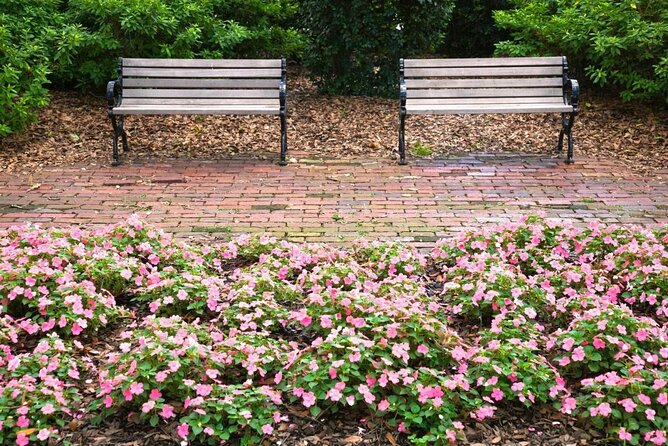
- Screen and street connections: the Forest Gump bench is a fun, quick stop that anchors the walk
- Civic Savannah in plain sight: you’ll spot an original city gate, the original town hall (now a courthouse), and where the old cemetery was
- Small-group feel: capped at 10 travelers, so it’s easier to ask questions
- Two-hour pacing: short visits to multiple squares works well if you’re on a tight schedule
The value: a smart two-hour intro to downtown Savannah
This tour is priced at $35 per person for about two hours, and that math mostly works because you’re not paying for entry tickets or long rides—this is all about guided walking, interpretation, and stories that help you “read” Savannah as you go. It’s a good fit if you’re doing a first pass through the Historic District and want the context that you just don’t get from wandering alone.
What makes the experience feel worth it is the structure. You move square to square. Each stop stays focused. You get a specific reason to care about that block—Battle of Chippewa context here, names of governors and founders there, and occasional haunted-lore threads when the plaques go there. If you like learning in short segments (and you don’t want a museum-day commitment), this tour hits that sweet spot.
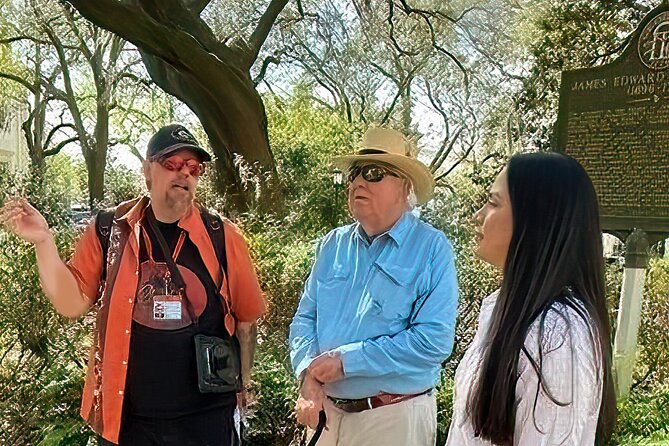
There’s also a practical side: with a group size limited to 10, you’re less likely to feel lost, and it’s easier to ask questions without waiting in line. Based on past tour experiences, guides like Brian or Bob tend to run things in a friendly, conversational way, with plenty of room for questions.
We have more walks through Savannah's historic squares and old district to wander


The route start: Chippewa Square to get your bearings fast
The tour begins at Chippewa Square (Savannah, GA 31401). This is one of the city’s best “anchor points” because it sits right in the flow of downtown sightseeing, and it’s easy to orient yourself before you start walking.
At this first stop, you’re told why Chippewa Square matters. It’s named after the Battle of Chippewa during the War of 1812. That gives you a useful theme for the whole tour: Savannah’s plaques often point to bigger national events, not just local trivia.
You’ll also hear about several landmarks nearby, including:
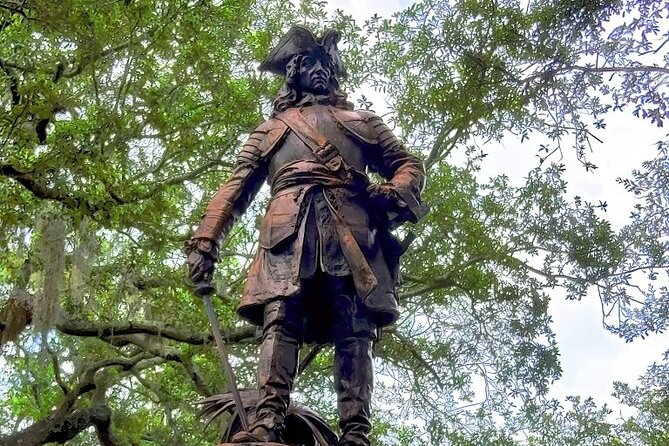
- Monument to James Oglethorpe
- The Eastman-Stoddard House
- First Baptist Church
- Savannah Theater
- The original location of the Forest Gump bench
What you’ll like here
This stop is more than a warm-up. The mix of military naming, civic monuments, and famous pop-culture reference helps you connect Savannah’s “old” with why people still talk about it today. The Forest Gump bench is a particularly good icebreaker because it’s immediate and visual—you can point, look, and then get the plaque meaning behind it.
A small consideration
Chippewa Square is outdoors and exposed. If you’re coming in strong heat or humidity, start hydrating early. The tour is short at each stop, but you still spend time walking between them.
Wright Square: Yamacraw leadership and Savannah’s original civic buildings
Next up is Wright Square, named for James Wright, the last Royal Governor of Savannah. Wright Square is where the tour starts to feel like it’s telling you how the city actually formed—who led it, who lived here first, and how power and place overlapped.
At this stop, you’ll learn about:
- Tomo-Chi-Chi, chief of the Yamacraw people, and a friend of James Oglethorpe
- A monument to William Gordon, tied to the Central Georgia Railroad and Central Georgia Railroad Bank, and the father of Juliette Gordon Low (Girl Scouts founder)
- The Original Town Hall, now used as a Court House
- A key detail inside the southwest building: the location of Savannah’s original cemetery
There is more Savannah history to walk through with our other tours




Why this stop is so useful
If you want to understand Savannah beyond the pretty buildings, this is a high-return stop. The tour doesn’t treat plaques like decoration—it connects them to civic life, colonial power, and how communities organized themselves. The mention of the original cemetery within the town hall complex also gives you a better mental model for how Savannah’s “public” spaces were never separate from burial and memory.
The haunted-lore element
Wright Square is also one of those places where the tour leans into alleged haunted stories tied to the city’s cemeteries and historic spaces. Even if you’re skeptical, the way the guide frames the stories can make the plaques feel alive rather than spooky for the sake of it.
Oglethorpe Square: a quick hit on the founder himself
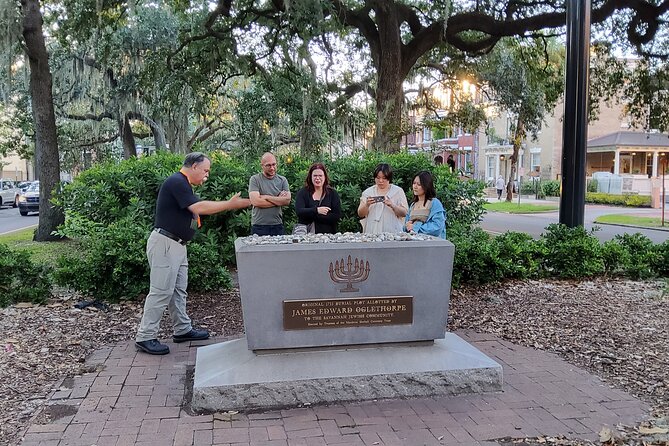
Then you move to Oglethorpe Square, named for James Oglethorpe, founder of the colony of Georgia and the city of Savannah.
This stop is short—about 10 minutes—but it helps set context. Oglethorpe shows up repeatedly in Savannah’s naming and signage, and if you don’t start with him, the rest of the walk can feel like a list. This quick square keeps the rest of the tour anchored.
Columbia Square: city gate clues, the Kehoe and Davenport houses, and the Wormsloe Fountain
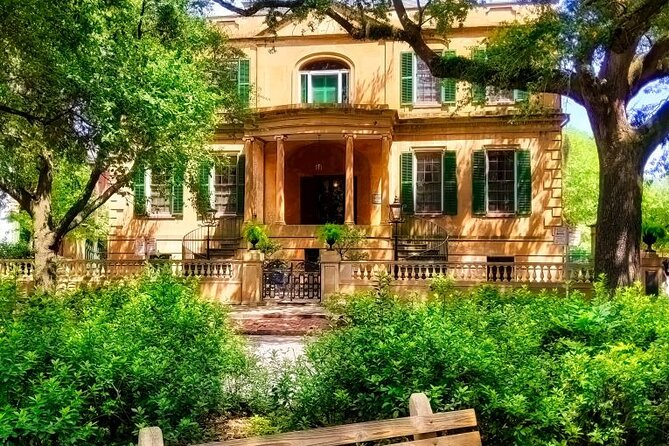
Your next square is Columbia Square, named after a nickname for the American Colonies. This is one of the stops where you’ll likely feel the tour click—your guide ties together a cluster of historic references that you might otherwise miss when you’re just looking for the biggest buildings.
Here, you’re pointed to several notable things:
- Kehoe House
- Davenport House
- The first Savannah city gate
- The Wormsloe Fountain
- The Historical Society House
How to make the most of this stop
Columbia Square is where I’d slow down mentally. Look at what’s around the square: plaques, facades, and street alignment. The idea is to understand how a city gate functioned as a boundary and checkpoint. Then when you see houses and institutional buildings nearby, you’ll grasp how fast Savannah grew and how quickly “frontier” details became permanent streetscape.
Any drawback?
Because the tour includes multiple squares, some stops are necessarily quick. If you love architectural details, you may wish you had more time at Columbia Square to look closer—but the upside is you keep moving and still get the broader story arc.
Colonial Park Cemetery: where the tour’s mood goes deeper
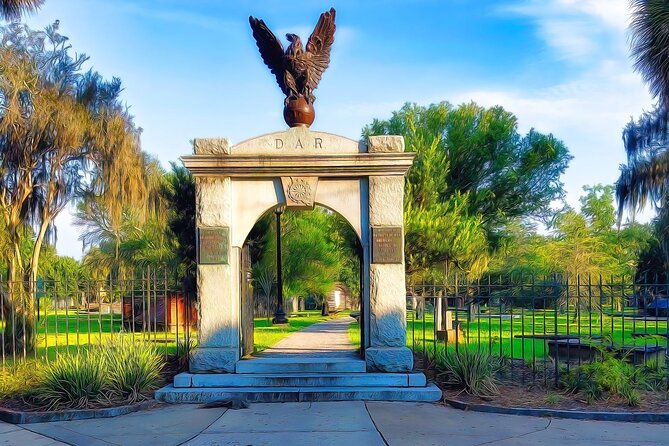
After the squares and civic references, the tour reaches Colonial Park Cemetery. This is the emotional center for a lot of people on this route because you get a stronger sense of who’s buried here and what that meant for Savannah.
You’ll hear about graves tied to:
- A signer of the Declaration of Independence
- Revolutionary War heroes
- Politicians and artists
- Yellow fever victims
- More names that connect the cemetery to major chapters of American history
Why this works even if you don’t chase ghost stories
Even if you’re not there for spooky lore, this stop adds gravity. Savannah’s plaques often reflect suffering, survival, and public memory. The cemetery reminds you that this historic city didn’t just build pretty streets—it faced epidemics, conflict, and loss. That context makes the rest of the tour’s “haunted” angle feel more grounded and less like theater.
Time on site
You get about 20 minutes here. That’s enough to absorb the big themes, though not enough to read every plaque slowly. If you want to do deep reading, plan to come back later with extra time.
Lafayette Square and Madison Square: literature links and Revolutionary hero monuments
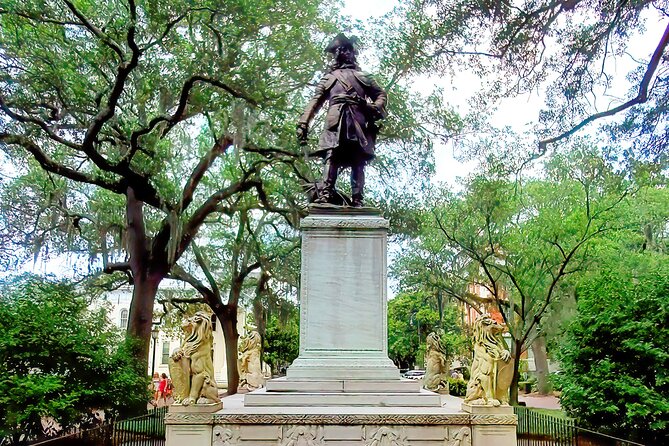
Next is Lafayette Square, named for General Marquis de Lafayette. This stop mixes international Revolutionary context with more personal, local storytelling.
You’ll see or learn about:
- The Flannery O’Connor childhood home
- The Andrew Low house
- A plaque honoring Mary Musgrove, described here as a translator for James Oglethorpe and Tomo-Chi-Chi
This is a great stop for making connections across centuries. O’Connor isn’t a colonial-era figure, so it shows how Savannah keeps producing influential lives—how the city remains a cultural setting, not only a historical one.
Then you reach Madison Square, named after James Madison. Here you’re pointed to:
- A monument honoring Sergeant William Jasper, a Revolutionary War hero
- St. John’s Episcopal Church
- The Green-Meldrim House
- The Sorrel-Weed House
- The Desoto Hotel
The wrap-up and what it means for your next day
The tour ends near the Madison Square area (about a short walk from where it began). Practically, that matters because you can continue your sightseeing without doing extra backtracking. If you’re planning dinner, a museum stop, or a second walk through the squares, you’ll already understand the geometry of the area.
Pacing, weather, and who this tour fits best
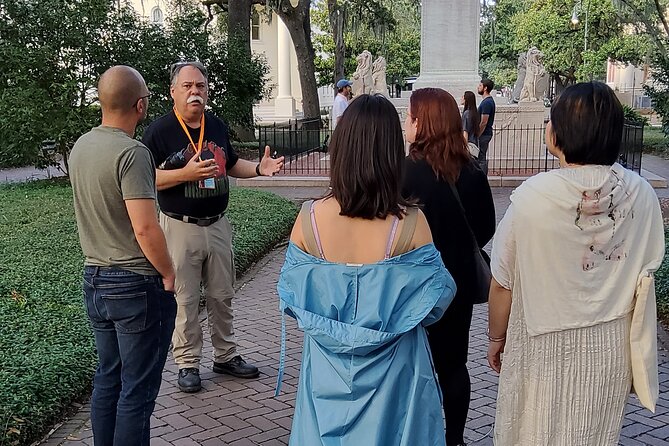
This is a walking tour with moderate demands. You should be able to walk at least two miles. It’s not recommended for people who can’t do that level of walking.
The guide also flags a weather reality: the summer heat and humidity can be difficult. If you’re visiting in July or August, it’s smart to pick a cooler time of day and bring water. You’ll be outside the whole way, and short stop times don’t erase the walk time between squares.
Group size is capped at 10 travelers, and the experience uses a mobile ticket and runs in English. Service animals are allowed.
Who will enjoy it most
- First-timers who want an orientation you can remember
- People who like plaques, guided storytelling, and Q&A
- Visitors who enjoy a light haunted angle as part of cultural history
Who might want to choose something else
If you hate walking, or if you need fully seated time, this likely won’t fit. Also, if you want long stops inside museums or deep cemetery reading, this tour may feel too quick—this is about squares and story beats, not all-day exploration.
Tips to get more from the walk
If you want the tour to pay off, use the format to your advantage. When you arrive at each square, pause long enough to see the whole scene: the buildings, the street layout, and the plaque placement. The guide’s stories land better when you connect the words to the physical space.
Also, don’t be shy about questions. The tour is built for conversation, and past experiences on this route show that guides like Bob and Brian tend to answer freely and keep it friendly rather than lecture-style.
Finally, wear comfortable shoes that handle cobblestones. You’ll be on historic streets, and your feet will remember the difference between cushion and pain.
Should you book Behind the Plaques?
Book it if you want a compact, guided orientation that helps you understand Savannah’s famous squares, key historic spots, and the stories attached to them. The $35 price feels fair for what you get: two hours of interpretation, no ticket lines to manage, and a route that naturally supports the rest of your day.
Skip it (or consider another option) if walking two miles outdoors is a stretch for you, or if you’re visiting in peak summer and heat is a problem. Also, if you expect major indoor attractions, this tour is mostly outdoors around parks, squares, and cemetery areas.
If you like learning in short bursts while you move through a city, this one is a strong choice.
FAQ
How long is the Behind the Plaques walking tour?
The tour runs for about 2 hours.
What does it cost, and is it per person?
It costs $35.00 per person.
Where does the tour start and where does it end?
It starts at Chippewa Square and ends near Madison Square, with the route ending about a short walk from where it began.
Is the tour in English, and do I get a ticket on my phone?
The tour is offered in English and you receive a mobile ticket.
What stops and sights are included?
It includes Chippewa Square, Wright Square, Oglethorpe Square, Columbia Square, Colonial Park Cemetery, Lafayette Square, and Madison Square, with landmarks like the Forest Gump bench location, the first city gate, and historic houses and monuments.
Is it suitable for people who need limited walking?
It’s not recommended for those who can’t walk for at least two miles. It also requires a moderate physical fitness level.
Is it a good choice in summer?
It’s not recommended in summers for anyone with difficulties with high humidity and hot temperatures.
More Tours in Savannah



More Tour Reviews in Savannah

More Savannah Squares and Historic Walking Tours
Not quite your thing? Here is more to see and do around Savannah











Savannah Squares & Historic Walking Tours, compared.
 ★ 5.0Savannah History and Haunts Candlelit Ghost Walking TourFrom $393,235 reviews
 ★ 5.0Savannah First Squares Culinary & Cultural Walking Food TourFrom $963,229 reviews
 ★ 5.0Historic Savannah Guided Walking TourFrom $302,918 reviews
 ★ 4.5Savannah’s Ghost City “Dead of Night” Walking Night TourFrom $342,482 reviews
 ★ 4.5Narrated Historic Savannah Sightseeing Trolley TourFrom $352,375 reviews
 ★ 4.5Southern Flavors Food, Pub Crawl, and History Walking TourFrom $601,623 reviews
 ★ 5.0Genteel and Bard’s Savannah Dark History and Ghost Encounter Walking TourFrom $391,546 reviews
 ★ 5.0Bonaventure Cemetery Walking Tour with TransportationFrom $481,467 reviews
Browse the lists this tour appears in