
Reviewed · SAVANNAH SQUARES & HISTORIC WALKING TOURS
Historic Savannah Self-Guided Walking Audio Tour
Savannah’s squares talk back. This self-guided Historic Savannah walking audio tour strings together 50+ short audio stories across major landmarks, so you can see the city at your pace while learning what’s behind the brick, statues, and churches.
I love the hands-free setup: the audio starts as you reach each spot, so you’re not constantly tapping to stay oriented. I also like the offline maps idea—download once on strong Wi‑Fi, then keep walking without needing cell service.
One consideration: it’s a real walk—about 5 miles—and Savannah can get chilly and windy, especially near the river. Also, if your phone is juggling other audio apps, you may need to troubleshoot so the tour plays correctly.
In This Review
- Key things to know before you start
- Price and time: why $14.99 can work well
- Where the walk starts: MLK Visitor Information Center as your anchor
- How the app actually behaves while you walk
- Stop-by-stop: what you’ll see and what it means
- 1) Savannah MLK Visitor Information Center: set your context fast
- 2) First African Baptist Church: community history right on the route
- 3) Reynolds Square: John Wesley and Methodism’s footprint
- 4) The Olde Pink House: a landmark you can taste
- 5) Johnson Square: Oglethorpe and early Georgia ties
- 6) Wright Square: rail history and a literary connection
- 7) Owens-Thomas House & Slave Quarters: architecture plus slavery-era context
- 8) Chippewa Square: architectural styles you can actually spot
- 9) Independent Presbyterian Church: Greek Revival and Civil War-era links
- 10) Historic Savannah Theatre: 1818 and continuity
- 11) Harper Fowlkes House: neoclassical and gardens
- 12) Cathedral of St. John the Baptist: French Gothic and stained glass
- 13) Old Sorrel Weed House Museum & Tours: Greek Revival with mystery
- 14) Flannery O’Connor Childhood Home Museum: literature roots
- 15) Massie Heritage Center: an interactive “how Savannah works” stop
- 16) Forsyth Park: the big scenic reset
- 17) Mercer-Williams House Museum: Italianate and Midnight in the Garden of Good and Evil
- 18) Ralph Mark Gilbert Civil Rights Museum: a serious turn
- 19) The Waving Girl Statue: maritime welcome, human story
- 20) The Pirates’ House: maritime lore meets today’s dining
- 21) Davenport House Museum: early 1800s Federal style
- The best day to do it (and how to make it feel effortless)
- Is it worth it? My practical take
- Should you book this Historic Savannah self-guided audio walk?
- FAQ
- FAQ
- How long is the Historic Savannah self-guided walking audio tour?
- Where does the tour start and end?
- Is the tour guided by a person?
- Does it work offline?
- Are tickets included for all stops?
- What devices does the tour work best on?
- Can I start and pause the tour whenever I want?
- Do I need headphones?
- Can the same password be used on multiple phones?
Key things to know before you start
- Start on your schedule: open the app onsite, then press play for the tour from your chosen direction.
- Offline after download: grab the download on strong Wi‑Fi/cellular, then the route works without service.
- Location-triggered stories: audio plays automatically when your phone detects the next stop.
- Short stops, big variety: most story segments are around 5 minutes each, mixing churches, houses, and squares.
- A few places may cost extra: Owens-Thomas House & Slave Quarters and Historic Savannah Theatre note admission not included.
- Headphones help a lot: you’ll get the best experience with earbuds, especially on busy sidewalks.
Price and time: why $14.99 can work well

At $14.99 per person for about 1–2 hours, this tour is priced like a smart add-on to a normal sightseeing day. You’re paying for two things that cost time when you do it yourself: (1) the “what am I looking at?” context and (2) the frictionless way the app cues the next location.
It’s also a good match for Savannah’s walking style. The historic district is built for drifting—squares in between streets, churches tucked near corners, and landmark houses that reward close-looking. If you’ve got limited time, this format helps you get structured learning without locking yourself into a group schedule.
Your best pacing depends on your group. If you’re moving fast, you can likely finish near the 1-hour mark. If you stop for photos, coffee, or a longer look inside a museum stop, plan closer to the 2-hour window.
We have more walks through Savannah's historic squares and old district to wander



Where the walk starts: MLK Visitor Information Center as your anchor
You begin at 301 Martin Luther King Jr Blvd, Savannah, GA 31401, and the experience ends back at the start. No one meets you. You simply arrive, open the app, and enter the first story point so the audio starts automatically.
That starting point matters because it sets you up for a classic Savannah flow: you’ll work your way through landmark squares and architectural stops, then continue onward toward the riverfront area. With a self-guided tour, having a clear “home base” keeps you from spiraling into random detours that cost time.
The tour is available daily from 9:00 AM to 6:00 PM (during the listed valid dates). So you can pick the light you want—morning for clearer photos, late afternoon if you like softer shadows across the squares.
How the app actually behaves while you walk
This is not a “read a map and guess” audio tour. The app is designed so stories play based on your location, and you can start anytime and pause anywhere. That flexibility is great when you want to duck into a shop, pick up snacks, or wait for a crosswalk.
A few practical tips help the experience go smoothly:
- Download the tour ahead of time on strong Wi‑Fi/cellular. After download, it works offline.
- Bring headphones/earbuds for the best clarity.
- If audio seems off, check whether another music or audio app is taking over the sound output, then reopen the tour app.
One useful detail from the tour setup: your password can be used on the same number of devices as the travelers you booked. So if you’re traveling with a friend or family member on a separate phone, you can use your shared access without repeating the whole setup.
Stop-by-stop: what you’ll see and what it means

1) Savannah MLK Visitor Information Center: set your context fast
You start at the Savannah MLK Visitor Information Center, framed as a place to step back in time. The audio nudges you to look at cobblestone streets and antebellum architecture, but the real value is the storytelling angle—why people shaped Savannah into what it became.
This is a smart opening stop. Instead of jumping straight into iconic photos, you get a mental map of the city’s big themes first, so the later church and neighborhood stories land better.
We have more self-guided audio tours and scavenger hunts across Savannah






2) First African Baptist Church: community history right on the route
Next is the First African Baptist Church, focused on the history and culture of Savannah’s African American community and its role in the broader American story.
Even if you don’t go inside anywhere (and this tour is mainly exterior walking), the location is a reminder that Savannah’s story isn’t just about architecture. It’s about people, faith, and community endurance.
3) Reynolds Square: John Wesley and Methodism’s footprint
At Reynolds Square, you’ll get the John Wesley statue context. Wesley is described as the founder of Methodism and a major religious figure tied to Savannah’s spiritual history.
If you like learning how religious movements shaped cities, this stop gives you a clear thread. It also helps you connect the dots when the tour later points you toward other church architecture.
4) The Olde Pink House: a landmark you can taste
At the Olde Pink House, the audio introduces the 18th-century building and notes it’s now a restaurant. You’re seeing a landmark that’s been repurposed, which is one of the more practical truths about historic preservation: many buildings survive by staying in use.
This stop is ideal for a quick pause and a photo. If you time it right, you may even be able to turn the walk into a partial meal stop.
5) Johnson Square: Oglethorpe and early Georgia ties
Johnson Square centers on James Oglethorpe, described as the founder of Savannah and a British general/philanthropist tied to Georgia’s founding in 1733. The audio also points out surrounding historic buildings, including Christ Church Episcopal, built in the 18th century.
What I like here is the combination of a founder story plus architectural orientation. It’s easier to appreciate Savannah when you know the early “why” behind the layout and institutions.
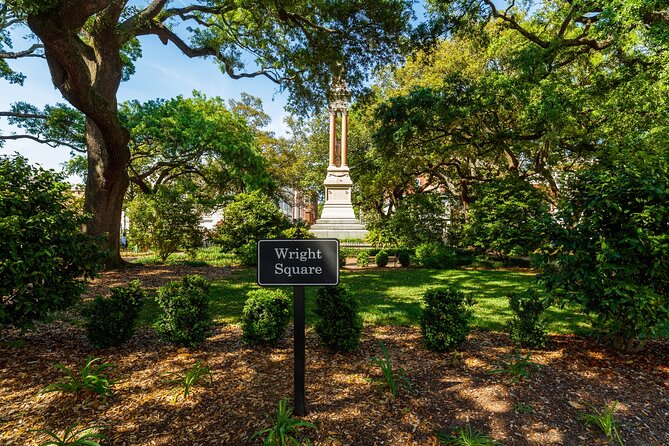
6) Wright Square: rail history and a literary connection
At Wright Square, the focus shifts to William Washington Gordon, identified as the founder of the Central of Georgia Railway. The audio also flags nearby historic buildings like the Mercer-Williams House connection to John Berendt.
Savannah gets discussed a lot as “beautiful,” but this stop brings in economic and cultural influence—railroads shaping cities, and literature shaping how we remember them. If you’re the type who loves how different forces shape a place, you’ll likely enjoy this part.
7) Owens-Thomas House & Slave Quarters: architecture plus slavery-era context
This stop is the Owens-Thomas House & Slave Quarters. The tour emphasizes admiring the architecture and learning about the families who lived there. The note says the admission ticket is not included, so plan for that if you want to go inside.
Even from outside, it’s worth slowing down. The audio framing here matters because it keeps the story grounded in the harsh realities that built wealth and shaped households.
8) Chippewa Square: architectural styles you can actually spot
At Chippewa Square, the audio points out architectural variety around the square—Federal, Italianate, and Victorian styles.
This is one of those stops that turns sightseeing into a visual game. If you keep your eyes open, you’ll start noticing details like window shapes, cornices, and rooflines—small clues to time periods.
9) Independent Presbyterian Church: Greek Revival and Civil War-era links
Next is the Independent Presbyterian Church of Savannah, described with a Greek Revival facade and a Civil War era history connection.
The practical value here is that the tour helps you read the building, not just recognize it. Greek Revival on a church, plus Civil War-era ties, is a powerful combo for understanding how Americans built and rebuilt civic identity during turbulent times.
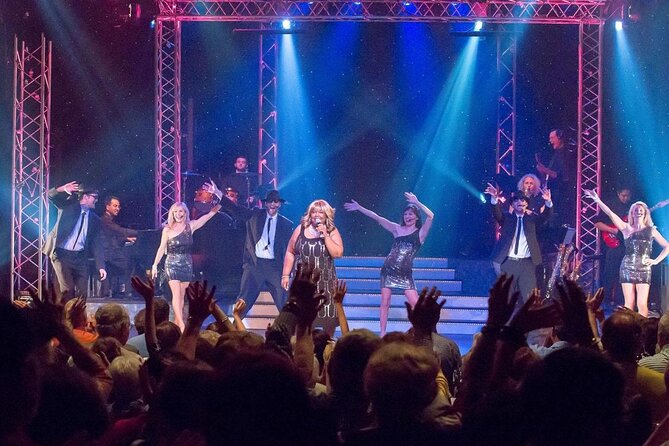
10) Historic Savannah Theatre: 1818 and continuity
At the Historic Savannah Theatre, the audio notes the building dates to 1818 and is one of the oldest continuously operating theatres in the United States. Admission is not included for this one.
If you’re a theatre person, this stop will feel especially satisfying. Even if you don’t go inside, it adds a layer of “people have come here for performances forever” that changes how you view the street.
11) Harper Fowlkes House: neoclassical and gardens
At the Harper Fowlkes House, the audio calls out neoclassical architecture with Greek Revival style details and notes a build date of 1842, plus an emphasis on the garden.
This stop is great when you want a slower look. A house like this rewards patience—walk the perimeter, notice the lines, then decide if you want extra time before continuing.
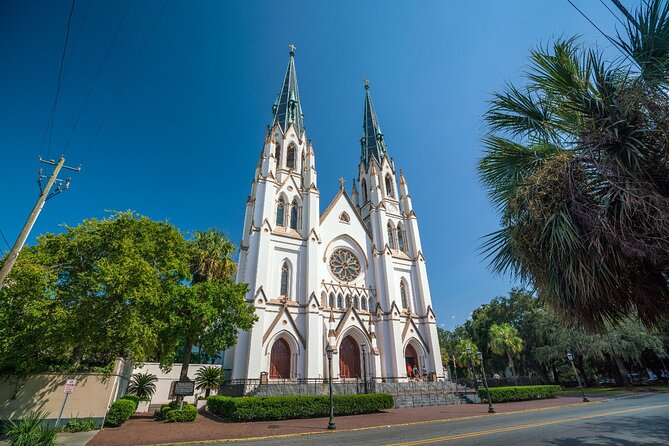
12) Cathedral of St. John the Baptist: French Gothic and stained glass
The Cathedral of St. John the Baptist gets special attention for its French Gothic architecture, built in 1876, including intricate details and stained glass windows.
If you’re spending time in Savannah, church architecture is one of the best photo-and-reflection categories. This is also a helpful mid-walk “breather,” since the cathedral’s facade gives you something visually rich without requiring extra tickets.
13) Old Sorrel Weed House Museum & Tours: Greek Revival with mystery
At the Old Sorrel Weed House Museum & Tours, the audio frames the site as a 19th-century Greek Revival mansion with stories that include paranormal activity. The note indicates admission is free for this stop, but there’s also mention of museum tours, so you might find you can spend extra time depending on what’s offered on the day.
This is a fun detour stop if you like spooky folklore. It’s also a reminder that Savannah doesn’t just tell history in a textbook way—it mixes stories, architecture, and local legend.
14) Flannery O’Connor Childhood Home Museum: literature roots
At the Flannery O’Connor Childhood Home, you’ll get the connection to the author’s formative years and a preserved 20th-century atmosphere. It’s a quieter stop that shifts the vibe from architecture to ideas and writing influences.
If you like American literature, you’ll probably want to spend a bit more time here than you think. Even a brief pause can add a lot to your understanding of why certain stories sound the way they do.
15) Massie Heritage Center: an interactive “how Savannah works” stop
The Massie Heritage Center is described as an educational hub with interactive exhibits and programs, housed in a historic 1856 school building. The tour positions it as a place to learn about Savannah’s architecture, people, and heritage.
This is a smart stop when you want to translate the walk’s exterior landmarks into deeper context. If you prefer hands-on learning, this may be the place where the tour pays off most.
16) Forsyth Park: the big scenic reset
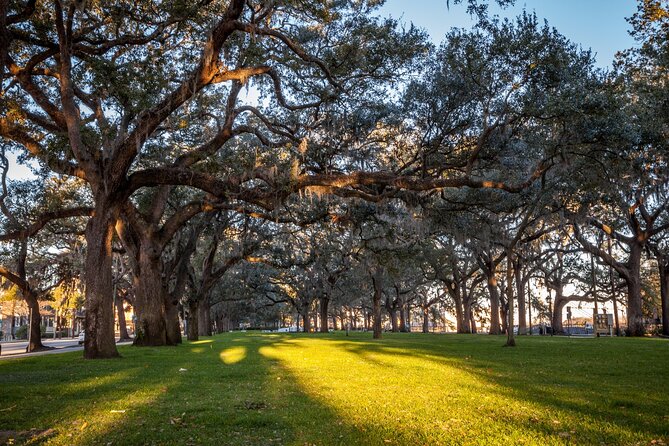
Forsyth Park is a 30-acre urban oasis with a central fountain, walking paths, and gardens, established in the 1840s. The audio frames it as a community gathering place and a classic Savannah break.
This part of the route is where you can reset physically. Take a breather, stretch your legs, and decide how long you want to linger before continuing.
17) Mercer-Williams House Museum: Italianate and Midnight in the Garden of Good and Evil
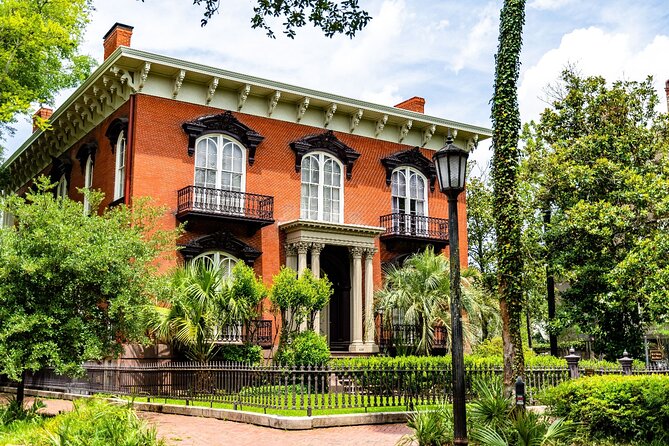
The Mercer-Williams House Museum gets called out for its Italianate architecture and connection to songwriter Johnny Mercer’s family. The audio also references its fame through the book Midnight in the Garden of Good and Evil.
This is a good stop for pop-culture familiarity. Even if you’ve never read the book, the tour helps explain why this house sits in Savannah’s myth-making machine.
18) Ralph Mark Gilbert Civil Rights Museum: a serious turn
Next is the Ralph Mark Gilbert Civil Rights Museum. The audio describes it as a tribute to civil rights struggle, with exhibits and artifacts tied to racial equality movements in the region. It’s also presented as honoring sacrifices and achievements and encouraging ongoing pursuit of equality.
This stop doesn’t feel like “just another building.” It’s one of the places where the audio tour’s themes turn more urgent, and it’s a reminder that historic preservation isn’t only about beauty—it’s about memory.
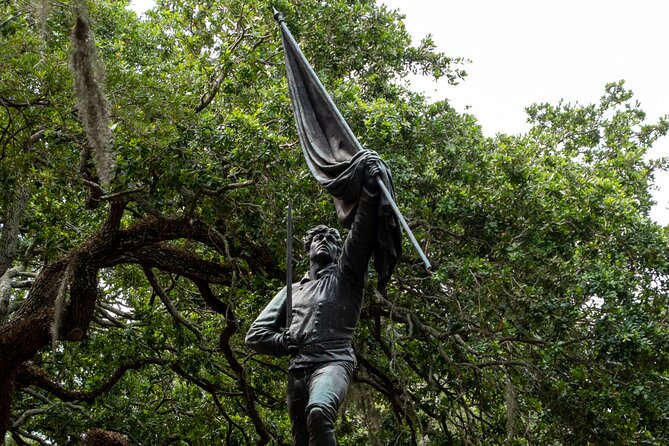
19) The Waving Girl Statue: maritime welcome, human story
At the Waving Girl Statue, you’ll learn the story of Florence Martus, who greeted ships for decades. The gesture is described as warmth and welcome for sailors entering the port.
It’s a small spot that carries a big emotional tone. When the rest of the walk is about institutions and buildings, this one grounds the narrative in a single person and a daily act of kindness.
20) The Pirates’ House: maritime lore meets today’s dining
The audio on the Pirates’ House leans into maritime legends. It notes an 18th-century origin, seafarers coming through, and that it reportedly inspired parts of Robert Louis Stevenson’s Treasure Island. Today it’s described as a restaurant and museum.
This is where you can connect the historic port vibe to a modern Savannah experience. If you want lunch or an end-of-walk treat, this stop is a practical candidate.
21) Davenport House Museum: early 1800s Federal style
Finally, you’ll reach the Davenport House Museum, a Federal-style home built in 1820 with period furnishings and guided tour content.
Ending here is satisfying because it brings the tour back to everyday life—how early Savannah residents lived—without losing the earlier themes of architecture and people.
The best day to do it (and how to make it feel effortless)
Savannah is a city you can do slowly. That makes this tour especially good if you like strolling and reading context as you go. The app’s pause-anytime approach helps you blend the walk with shopping, snacks, and photo breaks.
Choose footwear like you mean it. With a 5-mile route, comfort beats style. And if you’re walking near the river, pack layers. One of the clearest lessons from real-world use is that weather can change fast, and a windy cool day can make even a short stop feel longer.
If you’re prone to tech frustration, do a quick setup check before you start walking. Make sure the tour app is the active audio source, and test playback before committing to a busy sidewalk.
Is it worth it? My practical take
For $14.99, you’re getting a lot of structure for a low price. The biggest value isn’t the number of stops—it’s the format: 50+ location-triggered stories that let you roam without worrying about guides, schedules, or constantly looking things up.
You’ll get the most out of it if you:
- want a quick, organized way to learn Savannah’s landmarks
- like self-paced walking instead of group tours
- can handle a steady 5-mile route
- are willing to do one-time setup so offline works properly
If you only want to see a couple of major sights and you’ll mostly drive, this might feel like too much walking for your day. And if you hate all tech dependence, the navigation and audio cues may feel like work.
Should you book this Historic Savannah self-guided audio walk?
Yes, if your ideal Savannah day is a long stroll with clear context and flexible pacing. This tour fits perfectly when you want to see the squares, churches, landmark houses, and museum-adjacent spots in one pass, without hiring a live guide.
Book it when you can commit to a real walk, download on strong Wi‑Fi so the offline mode works smoothly, and bring a good pair of headphones. Skip it if your schedule is tight, you want only a short loop, or you’d rather rely on your own reading and street signs without the phone doing the cueing.
FAQ
FAQ
How long is the Historic Savannah self-guided walking audio tour?
It’s approximately 1 to 2 hours long, with the full route described as over 5 miles.
Where does the tour start and end?
The tour starts at 301 Martin Luther King Jr Blvd, Savannah, GA 31401 and ends back at the same meeting point.
Is the tour guided by a person?
No. It’s self-guided, and you won’t have someone meeting you at the start.
Does it work offline?
Yes. You’ll need to download the tour while you have strong Wi‑Fi/cellular, and after that the route works offline.
Are tickets included for all stops?
Not for every stop. Owens-Thomas House & Slave Quarters and Historic Savannah Theatre list admission tickets as not included. The rest are marked as free in the tour details.
What devices does the tour work best on?
The tour recommends an iPhone with iOS 15 or later, an Android device version 9 or later, or an iPad/tablet with GPS and cellular connectivity.
Can I start and pause the tour whenever I want?
Yes. The app supports starting at your convenience and pausing anywhere, so you can take breaks for photos or snacks.
Do I need headphones?
Headphones are recommended for the best experience. The tour includes hands-free audio that plays automatically, but earbuds improve sound clarity.
Can the same password be used on multiple phones?
Yes. Your password can be used on the same number of devices as the travelers you booked, as long as each device uses the same password.
More Tour Reviews in Savannah



More Savannah Self-Guided Audio Tours and Scavenger Hunts
More Savannah Squares and Historic Walking Tours



Not quite your thing? Here is more to see and do around Savannah












Savannah Squares & Historic Walking Tours, compared.
 ★ 5.0Savannah History and Haunts Candlelit Ghost Walking TourFrom $393,235 reviews
 ★ 5.0Savannah First Squares Culinary & Cultural Walking Food TourFrom $963,229 reviews
 ★ 5.0Historic Savannah Guided Walking TourFrom $302,918 reviews
 ★ 4.5Savannah’s Ghost City “Dead of Night” Walking Night TourFrom $342,482 reviews
 ★ 4.5Narrated Historic Savannah Sightseeing Trolley TourFrom $352,375 reviews
 ★ 4.5Southern Flavors Food, Pub Crawl, and History Walking TourFrom $601,623 reviews
 ★ 5.0Genteel and Bard’s Savannah Dark History and Ghost Encounter Walking TourFrom $391,546 reviews
 ★ 5.0Bonaventure Cemetery Walking Tour with TransportationFrom $481,467 reviews
Browse the lists this tour appears in