
Reviewed · SAVANNAH SQUARES & HISTORIC WALKING TOURS
Savannah Historic District Walking Tour
Savannah makes more sense on foot. This 3-hour historic district walk led by Savannah native Bonnie uses the city’s squares and monuments to tell the full story of how Savannah formed and changed over time, including layers many self-guided walks miss. You’ll cover one of the largest National Historic Landmark Districts in the U.S. while hearing it from a lifelong resident who knows what details to point out.
I especially love how Bonnie connects people and events to specific corners you’re standing in—Mary Telfair, James Oglethorpe, Revolutionary War fighters, Civil War-era tensions, and the economic role of African Americans in antebellum Savannah. I also like the practical pace: small group size (up to 10), lots of time at each square, and a built-in break at a local cafe during the walk. One consideration: the guide’s interpretation of history can feel strongly framed on politics and power to some people, so if you want a strictly neutral tell, keep that in mind.
In This Review
- Highlights: What Makes This Savannah Walking Tour Worth Your Morning
- Savannah’s Historic District on Foot: The Big Idea in 3 Hours
- Starting at Telfair Square: How Bonnie Sets the Stage
- Franklin Square: From Haitian Revolutionary Connections to a Landmark Black Church
- City Market Stroll: A Commercial Neighborhood With a Story Behind It
- Ellis Square: City Market Loss, Restoration, and Economic Contributions
- Johnson Square: Nathanael Greene and the Widow’s Impact
- Wright Square: Two Monuments Plus a Real Break at a Local Cafe
- Chippewa Square and James Oglethorpe: The Founder’s Thread
- Madison Square: Jasper’s Battle Deeds, Civil War Houses, and the Square-as-Evidence
- Monterey Square and Casimir Pulaski: A Quiet Ending With a Strong Detail
- Pace, Shoes, and What to Expect From the Walk Itself
- Price and Value at $46.16: What You Get for a Half-Day Commitment
- Tips to Make the Most of Bonnie’s Stories
- Should You Book This Savannah Historic District Tour?
- FAQ
- How long is the Savannah Historic District Walking Tour?
- How much does the tour cost?
- Where do I meet, and where does the tour end?
- What language is the tour offered in?
- Is there a limit on group size?
- Are admission tickets included for the stops?
Highlights: What Makes This Savannah Walking Tour Worth Your Morning
- Bonnie’s stop-by-stop storytelling ties events to the exact squares and monuments you’re seeing
- A tight 3-hour route across major historic landmarks without museum overload
- Two-square deep stops that focus on Revolution-era connections and the African American story, including the First African Baptist Church
- City Market context plus restoration talk at Ellis Square, so you understand what you’re walking through
- Cafe break included in the timing, so you’re not just marching between stops
- Small group feel (max 10), which makes questions easier and the pace more human
Savannah’s Historic District on Foot: The Big Idea in 3 Hours
This tour works because Savannah is built for walking—but also because it’s built to mislead you. If you only glance at the pretty squares and pretty homes, you’ll miss the logic of the city: why these places are here, who benefited, who was pushed out, and how the city’s economy grew. Bonnie guides you through that “why” using the city’s own map.
The route is also efficient. In about three hours, you hit key squares that cover the founding era, Revolution connections, and Civil War-era shifts—then you connect those dots back to the people who shaped Savannah. It’s not a museum tour. It’s a city-in-the-open-air tour, and that matters because Savannah’s best lessons live outside.
You’ll also notice the structure: most stops are short enough to keep your focus, but long enough for real explanation. You’re not stuck staring at one plaque for the whole time. You get turns of story, then you move.
We have more walks through Savannah's historic squares and old district to wander



Starting at Telfair Square: How Bonnie Sets the Stage
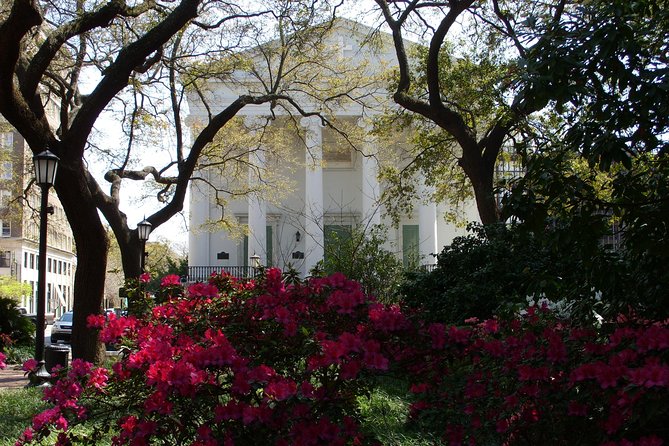
You meet at Telfair Square (121 Barnard St) at 9:00 am, and you’ll end at Monterey Square (11 W Gordon St). Starting at Telfair Square is a smart choice because it signals you’re in the heart of Savannah’s historic civic pattern—squares as public rooms, not just pretty pauses.
At this first stop, Bonnie talks about Mary Telfair and the history tied to the Telfair Museum. Even if you don’t go inside the museum on this tour, you’ll understand why her name and legacy appear in Savannah’s story. It gives you a frame for everything that follows: Savannah didn’t just happen; it was planned, funded, and promoted by real people.
And since the tour is in English and uses a mobile ticket, you’ll likely start the day with fewer hassles than paper-ticket tours. The tour is also listed as operating in all weather conditions—so bring the usual walking-day items (hat or umbrella as needed) and expect to keep moving.
Franklin Square: From Haitian Revolutionary Connections to a Landmark Black Church
Next up is Franklin Square, and this is where the tour becomes more than “pretty buildings with facts.” You’ll learn about the Haitian monument, including the Haitian regiment that fought in the Revolution. It’s a powerful detail because it broadens what you might assume about who helped shape the founding era.
Then Bonnie pivots to First African Baptist Church, which the tour notes as the oldest Black Baptist congregation in America. This stop isn’t just about a building. It’s about continuity and community—how faith communities endure and how their presence reshapes what “historic Savannah” means.
One practical note: squares like Franklin can be busy, and outdoor conversations can be affected by nearby construction or street noise. One review specifically mentions local construction competing with the guide. So if you’re the type who needs quiet to focus, arrive ready to lean in and ask questions.
City Market Stroll: A Commercial Neighborhood With a Story Behind It
Between Franklin Square and Ellis Square, you’ll take time to stroll through the middle of Savannah’s City Market neighborhood. This is a nice tempo shift. After two story-heavy stops, you get movement through a place that still functions like a market—shops, streets, and that open-air feel.
This part is also where you start connecting history to your day-to-day experience. Bonnie’s approach here is essentially: if you’re standing in a historic commercial area, don’t just browse. Learn what kind of commerce it supported and what happened when that economic pattern shifted.
When you’re traveling, this “walking plus context” format is gold. It makes your later choices—where to eat, what to revisit, which museum to prioritize—feel less random. You’re not just following signs; you’re following cause and effect.
Ellis Square: City Market Loss, Restoration, and Economic Contributions
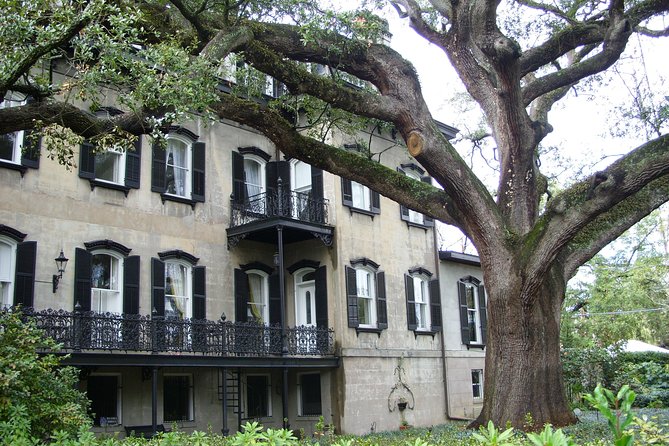
At Ellis Square, you’ll hear the history of Savannah’s City Market, including the story of its loss and the recent restoration of the square. This is a big value-add stop because so many historic tours stop at “the square is old.” Bonnie helps you understand that historic spaces don’t stay frozen; they get damaged, rebuilt, and reinterpreted.
This is also a stop where the tour focuses on how African Americans contributed to antebellum Savannah’s economy—both as free people and as enslaved people. That’s not a side note. In Savannah, labor and economic output are part of the city’s architecture and wealth story, whether plaques admit it or not.
If you’re the kind of traveler who wants the “straight timeline,” you’ll still get it, but it comes with human context: who had power, who had limited choices, and how the city profited. That’s one reason the tour tends to earn high marks: it doesn’t treat the past like a set of detached dates.
There is more Savannah history to walk through with our other tours





Johnson Square: Nathanael Greene and the Widow’s Impact
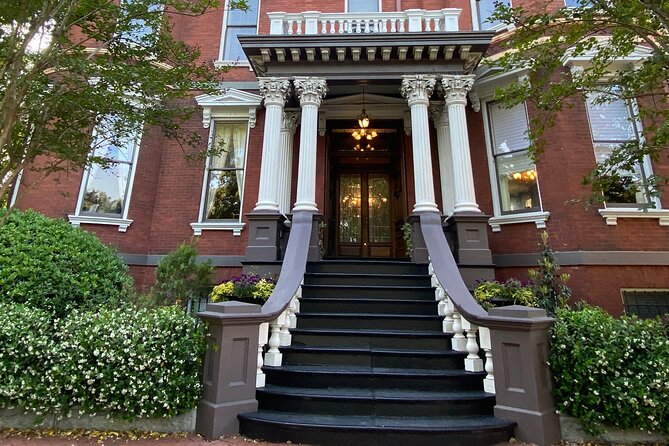
Johnson Square centers on the monument to Nathanael Greene, a Revolutionary War hero. Bonnie then brings in the story of how his widow altered the U.S. economy and history. That’s a sharp twist, because it reminds you that the Revolutionary era wasn’t only battlefield heroics; it was also legal, financial, and social change.
This stop also helps you read monuments differently. Instead of viewing it as a “name and dates” experience, Bonnie treats it like a clue. Why is this monument here? What does it say about who was valued? What decisions shaped what the country became?
You’ll have about 20 minutes at this stop, which is enough to connect the story to what you’re seeing without turning it into a lecture. It’s also long enough that you can ask a question if something clicks—or if something feels missing.
Wright Square: Two Monuments Plus a Real Break at a Local Cafe
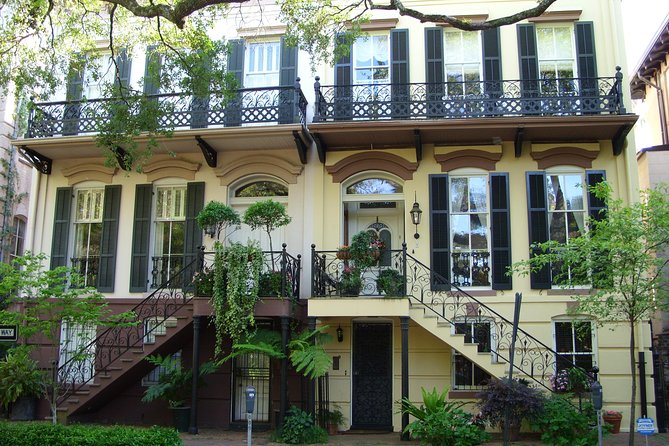
Wright Square is timed longer—about 30 minutes—and that extra time matters. You’ll view and learn about two monuments: one to a railroad magnate and one to a Native American chief. This pairing is quietly clever. It forces you to think beyond a single era and beyond a single type of power.
Railroad power connects to modernization and wealth, while the Native American monument connects to the long, painful story of land, governance, and displacement in U.S. history. Seeing both in one square is like seeing two chapters of the same book without flipping pages.
And then you get the break: Bonnie includes time to stop at a local cafe. Food and drinks aren’t included, but the break gives you a chance to reset with coffee or something cool, depending on the season. It’s also a practical move because Savannah walking days can add up fast.
Chippewa Square and James Oglethorpe: The Founder’s Thread

At Chippewa Square, you’ll hear about James Oglethorpe, the founder of Savannah and of Georgia. This stop helps anchor the whole tour, because it ties the physical layout of the city to the person who helped shape the plan.
You’ll appreciate this if you like a clear origin story. Without it, Savannah’s many squares can feel like pretty repeats. With it, the route becomes a guided interpretation of how a city’s founding logic continues to show up in its layout decades later.
It’s also a good contrast point. You’ve been through Revolution connections and Civil War-era framing (coming up soon), so returning to the founder helps you understand how the earlier decisions influenced what came later.
Madison Square: Jasper’s Battle Deeds, Civil War Houses, and the Square-as-Evidence
In Madison Square, Bonnie covers the Jasper monument and shares heroic deeds connected to the Battle of Savannah. You’ll also see the Sorrel-Weed House and the Green-Meldrim House and learn what Savannah looked like during the Civil War.
This stop is about evidence. Buildings and monuments don’t just mark where people stood; they hint at who held property, who had influence, and how the city’s story changed under pressure. Bonnie’s approach tends to make the square feel like a record: a place where different eras overlap.
You’ll spend about 25 minutes here, which is a thoughtful allocation. Madison Square needs time because it contains both monument story and architecture context. If you want one stop that ties together multiple timelines, this is it.
Monterey Square and Casimir Pulaski: A Quiet Ending With a Strong Detail
Finally, you reach Monterey Square, where you’ll enjoy views of one of Savannah’s favorite squares while learning about Casimir Pulaski, including that he is buried at the base of his monument.
This is a strong way to end. The last stop brings you back to a simple human detail—the location of someone’s burial—and it gives the tour a satisfying close after the heavier topics earlier. You’re also positioned to continue your day around the historic core, since the tour ends on W Gordon St near the downtown flow.
At this point, you’ve basically been trained to look at Savannah like a map of decisions, not just a set of photo spots. That’s what makes the experience useful after the tour ends.
Pace, Shoes, and What to Expect From the Walk Itself
The walk is around the historic district, and the tour is designed to keep moving while still letting each square breathe. A recurring theme in feedback is that Bonnie keeps a relaxed rhythm rather than a sprint, and people also note it’s a lot of talking with time to stop, sit when possible, and ask questions.
The tour is set up for most people to participate, and it’s on flat surfaces per feedback. Still, Savannah’s sidewalks are real sidewalks, so bring comfortable walking shoes. If you’re sensitive to heat, start hydrating before the tour and plan to use shade when you can—live oaks are part of the experience during warm mornings.
One more practical point: the guide is outdoors and conversation depends on surroundings. If construction noise pops up nearby, you might have to lean in. The good news is that the schedule gives enough time at each stop that you don’t lose the whole story when the street gets loud.
Price and Value at $46.16: What You Get for a Half-Day Commitment
At $46.16 per person for about 3 hours, this tour is priced like a serious guided experience, not a quick sightseeing pass. The value comes from three things you can feel right away.
First, you’re paying for interpretation. Savannah’s squares and homes are easy to see and hard to understand without a guide connecting them. Second, many stops are listed with free admission tickets, which keeps this tour from turning into an expensive add-on day. You’re learning without needing to budget for multiple paid entries.
Third, the group size cap of 10 changes the experience. Smaller groups generally mean fewer distractions and more room for questions. It also makes a leisurely walking pace more realistic.
If you’re only in Savannah for a short time, this kind of guided overview is a high-value way to reduce guesswork. You’ll know what you missed and what’s worth a return visit—because you’ll understand what to look for next time.
Tips to Make the Most of Bonnie’s Stories
Want the best experience? Here’s how to set yourself up.
- Wear shoes built for long block walks.
- Bring a hat and water, especially in warmer months. Shade helps, and Savannah’s trees are part of why the pacing works.
- Don’t treat squares as quick photo stops. Give Bonnie the full minute, because the detail often lands right after you notice the obvious monument.
- If you have interests—Revolution War, Civil War, architecture, or the role of enslaved and free Black communities—speak up early. Bonnie’s style is built for questions.
- If you’re sensitive to strong framing on slavery and power, ask yourself if that matters to you. The guide’s perspective is part of what people love, and it’s also what one person struggled with.
Should You Book This Savannah Historic District Tour?
Book it if you want a guided walk that helps you read Savannah like a story—one square at a time. This tour is especially good for first-time visitors because it covers founding-era context, Revolution-era connections (including Haitian links), and Civil War-era changes, then ties it to the people and economic forces that shaped the city.
Skip or reconsider if you only want a light, neutral narration that avoids interpretations of power and slavery. And if you dislike outdoor walking at 9:00 am, factor that into your morning planning.
If you’re game for a leisurely, small-group historic walk with Bonnie, you’re likely to leave with both a better map in your head and better instincts for where to go next in Savannah.
FAQ
How long is the Savannah Historic District Walking Tour?
It’s approximately 3 hours.
How much does the tour cost?
The price is $46.16 per person.
Where do I meet, and where does the tour end?
The tour starts at Telfair Square, 121 Barnard St, Savannah, GA 31401, and ends at Monterey Square, 11 W Gordon St, Savannah, GA 31401.
What language is the tour offered in?
The tour is offered in English.
Is there a limit on group size?
Yes. The tour has a maximum of 10 travelers.
Are admission tickets included for the stops?
The listed admission for the stops is free, and the tour includes a local guide. Food and drinks are not included.
More Tours in Savannah



More Tour Reviews in Savannah

More Savannah Squares and Historic Walking Tours
Not quite your thing? Here is more to see and do around Savannah












Savannah Squares & Historic Walking Tours, compared.
 ★ 5.0Savannah History and Haunts Candlelit Ghost Walking TourFrom $393,235 reviews
 ★ 5.0Savannah First Squares Culinary & Cultural Walking Food TourFrom $963,229 reviews
 ★ 5.0Historic Savannah Guided Walking TourFrom $302,918 reviews
 ★ 4.5Savannah’s Ghost City “Dead of Night” Walking Night TourFrom $342,482 reviews
 ★ 4.5Narrated Historic Savannah Sightseeing Trolley TourFrom $352,375 reviews
 ★ 4.5Southern Flavors Food, Pub Crawl, and History Walking TourFrom $601,623 reviews
 ★ 5.0Genteel and Bard’s Savannah Dark History and Ghost Encounter Walking TourFrom $391,546 reviews
 ★ 5.0Bonaventure Cemetery Walking Tour with TransportationFrom $481,467 reviews
Browse the lists this tour appears in