
Reviewed · SAVANNAH SQUARES & HISTORIC WALKING TOURS
Savannah Historic District Tour by The Wandering Historians
Savannah’s squares make more sense with a historian. This 2-hour walking tour is built around Savannah’s original planned layout and the architecture that still tells the story of how the city grew. I like that it keeps moving—footsteps, stops, and stories—so you get the big picture fast, and I also like the focus on named landmarks with specific historic details rather than vague generalities.
Two things really stand out. First, the narration is consistently praised for its pacing and storytelling, with guides like Ken and Paschal mentioned by name in recent reviews. Second, you cover a lot of ground in a short time while staying centered on Savannah’s signature squares and churches.
One thing to consider: this is mostly standing and walking. You’ll be on your feet for the full loop, and if you’re hoping for lots of present-day neighborhoods, shopping, or local-spot recommendations, this tour leans hard into history and architecture instead.
In This Review
- Key highlights at a glance
- How this Savannah walking tour actually helps you
- The pace and group size that make a 2-hour tour feel doable
- Stop-by-stop: Johnson Square and Wright Square (the founding story in plain sight)
- Johnson Square: where the colony organizes itself
- The City Exchange site and that gold dome moment
- Wright Square: charming, but historically heavyweight
- Bull Street axis: the walking-life artery of Savannah’s architecture
- Civic, religious, and famous faces: the stops that bring the city to life
- A historic home tied to Juliette Gordon Low
- The Scottish-heritage church with the 119ft cast iron steeple
- Chatham Boys Academy (now Board of Education)
- Chippewa Square and the Savannah Theatre area
- A cluster of churches that tell you about war, prayer, and community
- Oglethorpe, theater history, and coffee timing
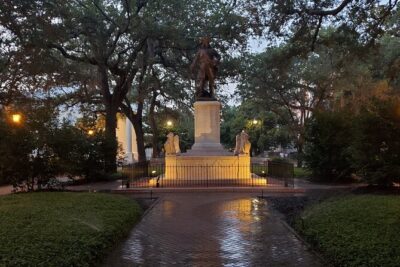
- James Oglethorpe Monument: Daniel Chester French at street level
- Savannah Theatre: old-stage energy without the museum feel
- Gallery Espresso: a real-world breather
- Artillery Bar, Henry Ford, and the Moorish building detour
- Madison Square and SCAD: how the city’s art life fits into the old plan
- Touring homes you see from the outside (and why that still works)
- William Jasper, Chatham Artillery barracks, and Gryphon Tea Room
- Jones Street to Monterey Square: the residential beauty and the big-name stories
- Pulaski Monument and Temple Mickve Israel: two stops with built-in mystery
- Mercer House and the Midnight in the Garden of Good and Evil connection
- Colonel Hardee Mansion and film-famous mansions
- What you get for $36.50: value measured in focus and time
- Who should book this tour (and who should think twice)
- Should you book the Savannah Historic District Tour?
- FAQ
- How long is the Savannah Historic District Tour?
- What does the tour cost?
- Where does the tour start and end?
- Is the tour walking heavy?
- Is there a restroom or coffee stop during the tour?
- How big is the group?
- What is the cancellation policy?
Key highlights at a glance
- Small group feel: capped at 30 travelers, with many reviews calling out the comfortable pace
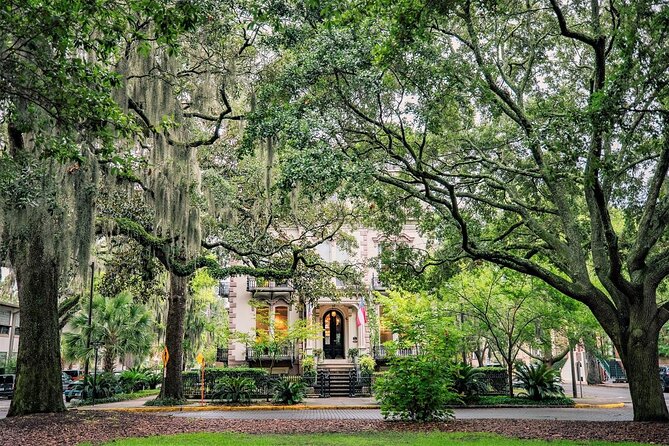
- Two-hour route through the squares: designed around the Historic District’s planned layout
- Architecture-focused stories: churches, civic buildings, and theaters tied to real events
- Real Savannah characters: Oglethorpe, Pulaski, Juliette Gordon Low, and more show up in the narration
- Coffee and bathroom timing: a quick stop is built in at Gallery Espresso when time allows
- South of the obvious detours: masonic spaces, SCAD buildings, and the Temple Mickve Israel area are included
How this Savannah walking tour actually helps you
Savannah is one of those cities where you can wander for hours and still feel like you’re only scratching the surface. This tour is designed to fix that early confusion. Instead of random stops, you’re guided through the Historic District’s square system and the buildings that explain why each square exists and what it became.
The route is also paced for first-time visitors. You’re not rushed between every photo op, but you also aren’t stuck at one spot for ages. Recent reviews repeatedly mention the “go by fast” feeling, especially because guides keep a steady rhythm and encourage questions.
We have more walks through Savannah's historic squares and old district to wander


The pace and group size that make a 2-hour tour feel doable
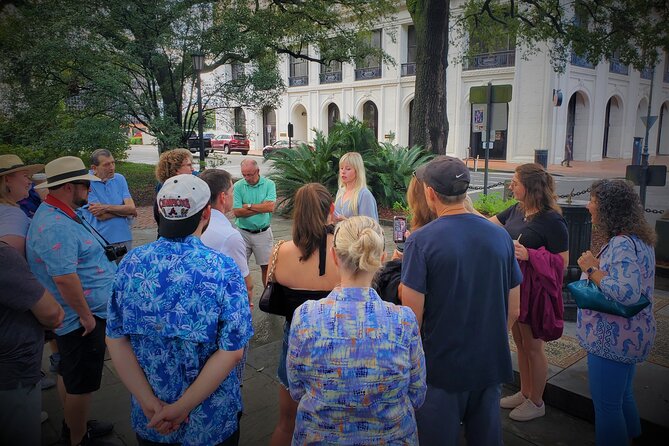
The tour runs about 2 hours on foot, and the maximum group size is 30. That matters because Savannah can get crowded, and big groups turn squares into traffic jams. Here, the goal is a manageable flow: walk a stretch, pause at a standout building, then keep rolling.
Also, wear shoes that can handle a lot of standing. One review specifically notes that you will not be sitting much, so bring comfort and traction. If you’re visiting in hotter months, plan on slowing down your own pace slightly when you stop for photos—your guide is moving, but the stops are short on purpose.
Stop-by-stop: Johnson Square and Wright Square (the founding story in plain sight)
The tour starts and ends at Monterey Square (11 W Gordon St). From there, you head into Savannah’s core square loop.
Johnson Square: where the colony organizes itself
Johnson Square is Savannah’s largest square, and the tour uses it like a timeline. You learn that it was central to the colony’s culture and commerce as early as 1733, when the colony was organized. You also look at the civic and religious presence that still shapes the square today—City Hall sits here, and the narration connects the square to prominent Revolutionary War figures.
Even better, you get stories tied to specific locations inside the square. You’ll pause near the area associated with English Church worship beginning in the city’s early years, including the Church of England legacy and its Classic Greek Revival design.
Why it’s valuable: you’re not just seeing a pretty plaza. You’re seeing how power and community are laid out in Savannah’s plan—government, worship, and public life in one visual system.
The City Exchange site and that gold dome moment
Near Johnson Square, you’ll also stop at the former 1799 City Exchange site, where government activities flow today. The big visual detail here is the 22-carat gold dome, erected at a later date. It’s the kind of thing that makes a photo tempting, but the real payoff is the history connection: civic buildings weren’t decorative; they were infrastructure for a growing colony.
There is more Savannah history to walk through with our other tours





Wright Square: charming, but historically heavyweight
Then comes Wright Square, one of Savannah’s original four squares from Oglethorpe’s founding period. The tour leans into the fact that the square isn’t only charming—it’s layered. You’ll hear about the earliest burying ground, the courthouse, jail, and the eventual burial connection to Tomochichi, the Indian leader.
Why it’s valuable: Savannah squares can feel interchangeable until a guide gives you the “why.” Here, Wright Square helps you understand what these places did day-to-day.
Bull Street axis: the walking-life artery of Savannah’s architecture
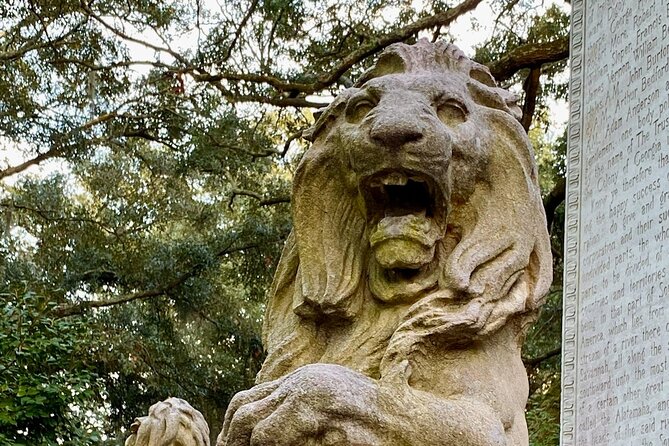
Between squares, the tour follows the Bull Street corridor, which you’re told functions like the main artery of walking life in Savannah. This is a smart design choice. You can look down the street and see why Savannah works for pedestrians, then the guide anchors what you’re seeing with stories about buildings and people.
Think of this as your architecture warm-up. You’re moving through multiple eras—colonial, Victorian, Greek Revival, and Gothic details—so by the time you hit the theater and tea rooms later, you’re already trained to notice.
Civic, religious, and famous faces: the stops that bring the city to life
This part of the tour is where Savannah starts feeling less like “pretty buildings” and more like a stage set for major American stories.
A historic home tied to Juliette Gordon Low
You’ll spend time outside a William Jay-designed home built around 1820, linked to U.S. Supreme Court Judge history early on and later tied to the Gordon family and Juliette Gordon Low, the founder connected to the Girl Scouts of the USA. The tour also frames this as an American Dream story: immigrants, industry, and military influence within one family thread.
Practical note: the guide specifically says you do not enter this touring home, but you do get enough time for stories at the location. That’s useful if you want context without turning your two hours into museum time.
The Scottish-heritage church with the 119ft cast iron steeple
Next, you’ll stop at an 1819 architectural wonder with a 119-foot cast iron steeple—the highest point in the city. The tour connects this spot to Savannah’s Scottish heritage and even mentions a personal milestone: Woodrow Wilson married in the courtyard.
This is one of those stops where the building detail is the hook, and the human story keeps you interested even if you’re not an architecture fanatic.
Chatham Boys Academy (now Board of Education)
You’ll also see the former Chatham Boys Academy, built as an elite school for boys. The tour notes sculptural frieze work connected to John Walz, tied to Gettysburg Battlefield and Bonaventure Cemetery sculpting history. Today, the building’s use is different, but the stop helps you see how Savannah’s institutions evolved.
Chippewa Square and the Savannah Theatre area
At Chippewa Square, you get a dense mix: Colonial and Victorian rowhouses, churches, inns, pubs, coffeehouses, and even the Savannah Theatre. You also learn about Georgia’s founder Oglethorpe represented in the square through a monument by Daniel Chester French.
This section is where I think first-time visitors get the biggest “oh wow” effect—Chippewa Square is visually busy, but the tour makes it understandable.
A cluster of churches that tell you about war, prayer, and community
The tour includes multiple church-related stories, including a 1830 stuccoed religious structure described as Savannah’s best-survived intact example. The narration highlights a powerful point: it’s where Union and Confederates prayed for the first time together after the war, plus the detail that the building includes a balcony once used by enslaved and freed people.
If you’re only skimming the exterior, this is still worth it because the tour turns architecture into a witness to real life.
Oglethorpe, theater history, and coffee timing
James Oglethorpe Monument: Daniel Chester French at street level
You’ll stop at the James Oglethorpe Monument, tied to Daniel Chester French and described as his finest work. The tour also explains a fun scale confusion: Oglethorpe himself was 6’11, and while the statue is often called life-size, it’s actually over 9 feet in real height.
If you like monuments, this is the kind of detail that makes the stop memorable.
Savannah Theatre: old-stage energy without the museum feel
The tour also includes America’s oldest continually operating theater—fires altered earlier appearances, but the story continues. You’ll hear about famous performers and lectures associated with the space, including Oscar Wilde, the Booth family, and Cesar Romero performing as a child.
This stop is also useful because it breaks up the religious and civic pattern. It reminds you Savannah’s history includes arts and public life, not only government and war.
Gallery Espresso: a real-world breather
When time allows, you may get a coffee and bathroom break at The Gallery Espresso, described as Savannah’s longest standing coffee house and a local favorite. It’s a practical stop, and it helps you avoid the common walking-tour problem: you spend two hours grinding and then wish you’d planned one small reset.
Artillery Bar, Henry Ford, and the Moorish building detour
Savannah tours often stick to obvious squares. This one also includes a strong “wait, what is that?” moment at Artillery Bar. The building is described as Moorish inspired with rounded glass corners and a terra-cotta facade. The standout historical detail: Henry Ford opened a showroom here in 1905.
Today it’s a cocktail bar, but the building isn’t chosen randomly—it’s a way to show that Savannah’s historic structures kept working and changing, even after their original purpose faded.
Madison Square and SCAD: how the city’s art life fits into the old plan
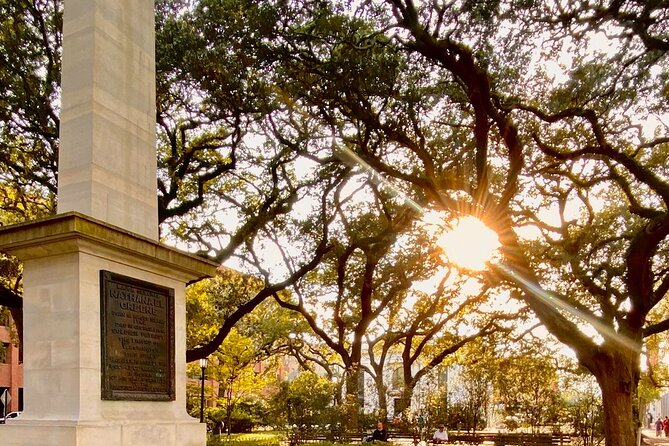
Madison Square gets attention for its architectural mix and its placement in the five-square tour route pattern. The tour then ties several spots to SCAD, described as America’s largest private art school. You’ll see SCAD buildings and learn it was founded in 1976 inside The Chatham Artillery.
This matters because it explains a modern Savannah truth: the city’s historic fabric hasn’t only been preserved; it has been reused. Old structures become classrooms, galleries, and creative spaces.
Touring homes you see from the outside (and why that still works)
A bunch of the most famous private properties are part of the loop, and the tour is explicit that you do not enter them. Instead, you spend quality time at each location.
Two highlights here:
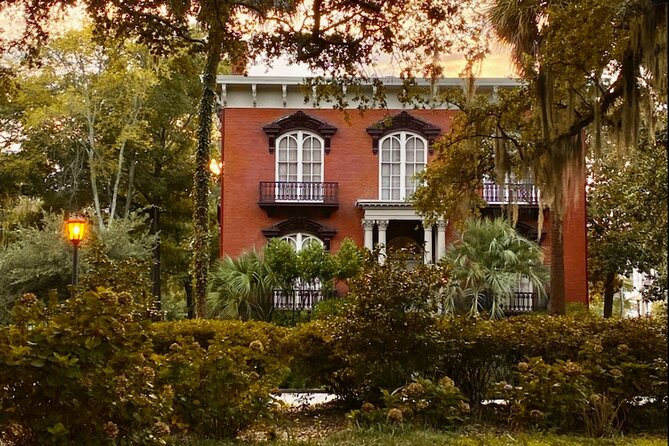
- A Greek Revival home tied to the Sorrel & Weed families, described as often considered the finest example of Greek Revival architecture in America, plus a modern twist involving paranormal TV popularity connected to the tour company founder’s role on Ghost Hunters.
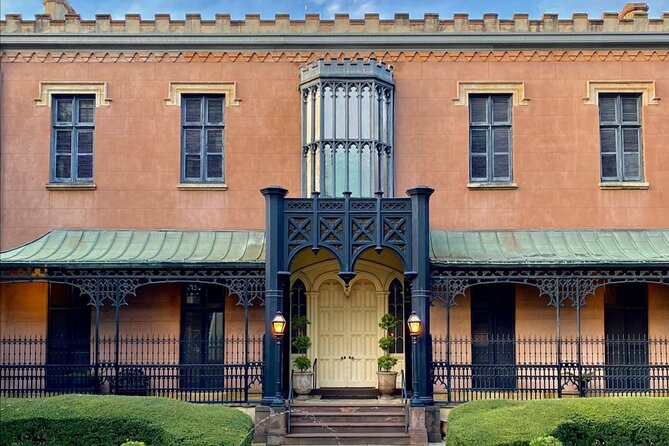
- A 1853 Gothic Revival house built with gas-powered jet air conditioning and associated with Robert Norris. The narration connects the property to Charles Green offering Sherman a headquarters home during the eight weeks Sherman occupied the city, plus a Harper’s Weekly illustration connection in December 1865.
Even if you’re visiting for “architecture only,” outside viewing can still be satisfying because the guide focuses on what makes the facade and setting significant.
William Jasper, Chatham Artillery barracks, and Gryphon Tea Room
You’ll stop at William Jasper Monument, which the tour frames as an example of Revolutionary War heroism linked to defense of Savannah and a love for freedom.
Then there’s Poetter Hall, described as housing local guardsmen in barracks when it was part of the Chatham Artillery story. The tour again connects the building’s later life to SCAD and highlights restoration work across many buildings.
Finally, you reach Gryphon Tea Room, located inside a massive Roman-styled Scottish Rite Masonic Temple now owned by SCAD. The tour adds a very specific authenticity hook: it’s described as Victorian-authentic, with interior derived from when the location was Solomon’s Drugstore.
This stop is a good reward for the walking. And it’s also a reminder that Savannah’s historic spaces include social life—tea rooms, halls, temples—not just churches.
Jones Street to Monterey Square: the residential beauty and the big-name stories
Savannah’s rowhouses are part of what makes it special, and the tour explicitly targets them. You’ll pass through the area described as Savannah’s most desirable residential street—called the Most Beautiful Street in Savannah—noting the original brick and asphalt brick streets and Jones Street’s rowhouse corridor.
Then you land back at Monterey Square, described as serene and European in feel. The tour packs Monterey Square with famous names and real events: Count Casimir Pulaski laid to rest here in 1779, plus mention of Jeff Davis hiding out during the Civil War. You’ll also hear about preservation figures Lee and Emma Adler, and how their lives connected to the area until their recent deaths.
If you love preservation stories, this is a strong segment because you’re watching history become a lived, protected environment.
Pulaski Monument and Temple Mickve Israel: two stops with built-in mystery
At Pulaski Monument, you’ll hear that it’s designed and installed by Latvian sculptor R.E. Launitz. The tour also describes controversy about whose remains were under the monument, including an international debate and an ongoing mystery angle.
Then comes Temple Mickve Israel. The tour describes Savannah’s Jewish community as very old for the region, including that Savannah claims America’s 3rd oldest Jewish community and has an antique congregation that worships inside a Christian styled building. The standout detail: the Temple holds the oldest Torah in the world at over 1100 years old.
Why it’s valuable: this gives Savannah a perspective that most first-time visitors miss. It broadens the city’s history beyond the usual founding and war story.
Mercer House and the Midnight in the Garden of Good and Evil connection
The tour also spends time outside the Mercer House, tied to multiple layers of identity: built in 1860 by the great-grandson of General Hugh Mercer, later used as a Masonic Temple, then becoming the private home of preservationist and antiques dealer Jim Williams for 20 years. The tour connects the site to the 1981 tragic killing that became the basis of the novel Midnight in the Garden of Good and Evil and later a bestselling book.
An important nuance: this tour doesn’t treat Mercer House as a one-note pop-culture stop. It uses it as a way to talk about how Savannah’s preserved spaces can hold complicated stories.
Colonel Hardee Mansion and film-famous mansions
You’ll also stop at the Colonel Hardee Mansion area, described with ornate cast iron window lintels and a wrap-around balcony. The tour names Alex Raskin as the long-time antiques seller here and says the mansion sold recently to Ralson College for over 5 million dollars.
Later, you’ll see a restored 1917 mansion with a lion’s paw colonnade, described as the private home of hotelier Richard Kessler, founder of the Days Inn company. The narration adds other identity layers: originally a private home of shipping great George Armstrong, later donated to school by his widow, sold to Jim Williams, and featured in the 1962 film Cape Fear starring Robert Mitchum and Gregory Peck.
If you’re the type who likes to spot buildings that you’ve seen on screen, this part can feel like a puzzle turning into a story.
What you get for $36.50: value measured in focus and time
At $36.50 per person for about two hours, the price feels fair if you care about history with structure. You’re paying for the narration and the ability to connect facts to what you’re physically looking at, square by square.
This isn’t a museum-ticket experience. It’s a guided street-level lesson in how Savannah works: squares, architecture styles, and the names behind them. If you tried to DIY it with only a map, you’d spend a lot of time figuring out why each place mattered.
The one tradeoff is selection. This tour focuses on the past and the built environment, not current residents, daily life, or modern-day highlights. So if your main goal is today-in-Savannah recommendations, you may need to pair this with another activity after.
Who should book this tour (and who should think twice)
Book it if:
- You want a first-time-friendly orientation to Savannah’s Historic District
- You like architecture and you enjoy hearing how buildings connect to major people and events
- You want to cover a lot on foot without feeling rushed
Think twice if:
- You dislike walking tours or you need lots of sitting breaks
- You mainly want restaurants, shopping, and local hangouts rather than guided historic interpretation
- You’re extremely temperature-sensitive, since the tour runs in good weather
Should you book the Savannah Historic District Tour?
Yes, if you want Savannah’s square system explained clearly in a tight two hours. The combination of praised guiding names like Ken and Paschal, plus the consistent emphasis on pacing and storytelling, makes this one of the easier “worth it” choices for a short trip.
If your idea of a great tour is mostly modern life and local scene talk, you might feel underfed. But if you’re in Savannah to understand the city’s layout, architecture, and the real stories behind the facades, this is a very efficient way to get oriented—and it will make the rest of your day in town easier to enjoy.
FAQ
How long is the Savannah Historic District Tour?
It runs about 2 hours (approximately).
What does the tour cost?
The price is $36.50 per person.
Where does the tour start and end?
It starts and ends at Monterey Square, 11 W Gordon St, Savannah, GA 31401.
Is the tour walking heavy?
Yes. It is described as covering the main sights and landmarks on foot in two hours, and reviews specifically note that you will not be sitting much.
Is there a restroom or coffee stop during the tour?
There is a stop at The Gallery Espresso, and the tour notes that when time allows it may permit a coffee and bathroom break.
How big is the group?
The maximum group size is 30 travelers.
What is the cancellation policy?
Free cancellation is available if you cancel up to 24 hours in advance for a full refund. If you cancel less than 24 hours before the start time, the amount paid is not refunded. The experience also requires good weather and may be rescheduled or fully refunded if canceled due to poor weather.
More Tours in Savannah



More Tour Reviews in Savannah

More Savannah Squares and Historic Walking Tours
Not quite your thing? Here is more to see and do around Savannah











Savannah Squares & Historic Walking Tours, compared.
 ★ 5.0Savannah History and Haunts Candlelit Ghost Walking TourFrom $393,235 reviews
 ★ 5.0Savannah First Squares Culinary & Cultural Walking Food TourFrom $963,229 reviews
 ★ 5.0Historic Savannah Guided Walking TourFrom $302,918 reviews
 ★ 4.5Savannah’s Ghost City “Dead of Night” Walking Night TourFrom $342,482 reviews
 ★ 4.5Narrated Historic Savannah Sightseeing Trolley TourFrom $352,375 reviews
 ★ 4.5Southern Flavors Food, Pub Crawl, and History Walking TourFrom $601,623 reviews
 ★ 5.0Genteel and Bard’s Savannah Dark History and Ghost Encounter Walking TourFrom $391,546 reviews
 ★ 5.0Bonaventure Cemetery Walking Tour with TransportationFrom $481,467 reviews
Browse the lists this tour appears in