
Reviewed · SAVANNAH SQUARES & HISTORIC WALKING TOURS
Savannah: Historic District Overview on Foot
Savannah’s squares walk you through time. This 3-hour small-group Historic District tour in the Landmark district helps you read Savannah like a map, with stories that cover centuries, not just sightseeing. You start at Telfair Square and follow a route that hits major squares, churches, and landmark homes while the guide keeps the pace friendly.
I especially like two things: the tiny group size (10 people or fewer), which makes it feel conversational, and the halfway cafe break (restroom, coffee/snack, and time to catch your breath). The guide, Bonnie Blue Tours’ Bonnie, takes real time at each stop so the past lands clearly, not like a quick scroll.
One heads-up: it’s still a walking tour for 3 hours, with uneven sidewalks and a lot of curb-to-curb time. If you’re bringing kids, it’s not set up for children under 8, and if your feet get cranky easily, you’ll want solid shoes and patience.
In This Review
- Key highlights at a glance
- Starting at Telfair Square, and why the timing matters
- Telfair Academy to City Market: the northwest corner with major stories
- Christ Church Episcopal, Wright Square, and the “cotton port” transformation
- The Gallery Espresso break: pacing, restrooms, and why it helps
- Madison Square, St John’s Episcopal Church, and the home-and-squares rhythm
- Ending at Casimir Pulaski Monument and planning your next steps
- Price and value: why $45 feels fair for this route
- Who should book this tour (and who should skip it)
- Tips to make the most of your 3 hours
- Should you book Savannah’s Historic District on Foot?
- FAQ
- How long is the tour?
- How much does it cost?
- Where do I meet the guide?
- Is the group small?
- Is there a restroom or food break during the tour?
- Is the tour wheelchair accessible, and are pets allowed?
Key highlights at a glance
- Small groups (max 10) keep the tour from feeling rushed or crowded
- Early start helps you dodge the worst heat and other tour groups
- Generous runtime for a walking tour means more time in the squares
- City Market focus includes landmarks tied to Black history
- A real midpoint break at The Gallery Espresso for restroom and refreshments
- Ends near Forsyth Park area, with an easy jump to more neighborhoods
Starting at Telfair Square, and why the timing matters

You meet in the Northwest corner of Telfair Square, across from Telfair Academy and First Chatham Bank. It’s a great start because you’re in the right zone immediately: you can feel how Savannah’s squares work as social hubs, not just decorative stops.
The early start is more than a nice perk. Savannah can get hot fast, and the Landmark Historic District is popular. Going early helps you keep your attention on the details the guide shares, instead of spending your energy hunting shade or weaving through other groups.
Before you go, wear comfy, grippy shoes. The sidewalks can be uneven, and even when the pace is leisurely and you’ll often have chances to rest on benches, you’ll still cover a lot of ground. If you’re the kind of person who takes photos every five steps, build in extra time for that on your end of the day.
We have more walks through Savannah's historic squares and old district to wander



Telfair Academy to City Market: the northwest corner with major stories
The tour kicks off near Telfair Academy of Arts & Sciences with a short sightseeing stop, just enough to get oriented. Then it moves into the first big theme: the people behind Savannah’s early chapters.
From there, you head toward the City Market area. This is where I think the tour earns its keep. You don’t just get postcard views; you get context for how Savannah developed, including stories connected to Black history. City Market is also a place where visitors naturally drift in on their own, so having a guide point out the historic associations makes it feel more grounded and less like a shopping stop.
Johnson Square is another key early square, and the pace here matters. A lot of tours speed through the public spaces. This one takes time, so you can actually look at the setting: the way the square sits in relation to nearby streets and how the homes and institutions face inward.
By the time you move deeper into the Landmark Historic District, you’re no longer just walking between big names. You’re building a mental picture of how a frontier town grew into an important hub over the long run.
Christ Church Episcopal, Wright Square, and the “cotton port” transformation
As you keep traveling up Savannah’s central north-south spine (along Bull Street), the stories shift in a smart way. You go from early formation and major figures into the era when Savannah became a prosperous cotton port.
The route passes Christ Church Episcopal, with a brief visit. It’s the kind of stop that works well on foot because you’re already in the rhythm of Savannah’s blocks and squares. A church like this isn’t just a building to photograph. It’s part of the community story—institutions that shaped daily life and public events.
Wright Square then brings you back to the square-by-square way Savannah tells its history. Chippewa Square is next, with scenic views along the walk. This is one of the strengths of the tour: it doesn’t treat the squares as isolated photo spots. It connects them so you understand how the city’s layout and landmarks fit together as a whole.
Then you reach Savannah Theatre for a short visit. Even if you’re not a theater superfan, it helps to see how cultural landmarks live inside historic neighborhoods. Savannah didn’t just grow wealth; it built places for public life.
What you’ll end up with is a clearer view of how Savannah’s image changes across time—scrappy beginnings to antebellum power—and how that history shows up in monuments, streets, and the grand houses facing the squares.
The Gallery Espresso break: pacing, restrooms, and why it helps

Midway through the walk you stop at The Gallery Espresso for a break. It’s scheduled as about 15 minutes, which sounds short until you realize how much energy a historic district walk takes out of you.
This break is practical in two ways. First, you get a restroom stop. Second, you can grab coffee or a snack if you want one. Drinks and snacks you buy aren’t included in the price, but the break itself is built into the plan. That means you’re not stuck improvising a bathroom sprint while the guide is already moving on.
I also like the timing of the break. By then, you’ve heard enough names and stories to want time to process them. A quick reset keeps you sharp for the rest of the walk, especially in the stretch where the route moves toward more homes, churches, and photo stops.
If you tend to get lightheaded in warm weather, use the break to slow down your breathing and drink water. The tour starts early to avoid heat, but your body still needs a little support in Savannah.
Madison Square, St John’s Episcopal Church, and the home-and-squares rhythm
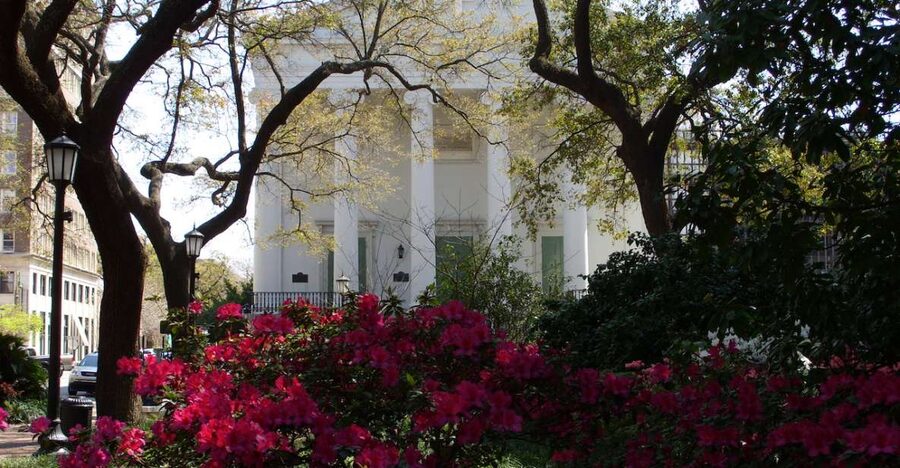
After the cafe stop, the tour carries on to Madison Square, with scenic views during the walk and extra time built into the approach. Squares here aren’t just scenery. They’re the stage where the city’s social life played out, and the guide uses them as anchors for what came next historically.
St John’s Episcopal Church follows with a short visit. Again, it’s brief, but that brevity works because you don’t lose the thread of the route. You get the sense of what institutions represented in Savannah’s story, without turning the day into a long church-tour marathon.
You then hit two landmark-style home stops. Green-Meldrim House is a photo stop, giving you time to frame it the way Savannah’s streets invite photos. Andrew Low House is next with a visit, and that’s a smart contrast: you go from a quick take-and-go shot to a stop that lets you absorb more detail.
Lafayette Square comes after, with scenic views on the way. Jones Street follows with a photo stop and a slower walk through the view lines. These are the moments that make the tour feel like Savannah, not just history class. You’re learning how to look: where to stand, what sightlines matter, and how the streets guide you back to the squares.
Monterey Square rounds out this section with sightseeing time. By the end of these stops, your brain starts doing something useful: it predicts what you’ll see next. That’s the best sign the tour is giving you real understanding, not just facts.
There is more Savannah history to walk through with our other tours





Ending at Casimir Pulaski Monument and planning your next steps
The tour finishes at the Casimir Pulaski Monument on the south end of the Landmark Historic District. This is a helpful landing spot. It’s within easy reach of Forsyth Park and other nearby attractions, so you’re not stuck crossing the city just to keep your day moving.
You also have an easy option to continue exploring by hopping on the free DOT shuttle into other neighborhoods. If you’re using Savannah’s neighborhoods as your strategy for the afternoon, this ending location supports that well.
Before you leave, ask Bonnie for one or two recommendations based on what you liked most during the walk—shopping, restaurants, or another neighborhood to pair with the historic district. The tour is designed to give you context, and local recommendations help you turn context into a day you’ll remember.
Price and value: why $45 feels fair for this route
At $45 per person for about 3 hours, this tour sits in the “pay for quality” category. You’re not just paying for a walk. You’re paying for:
- A guide who keeps the story clear and organized square-by-square
- A small group setting (10 people or fewer) that makes questions workable
- More time than typical walking tours, so you can actually see what you’re being pointed to
- A built-in cafe break halfway through
Also, the tour is designed around the Landmark Historic District, which is unusually large and well-preserved. That matters because the guide can recreate what daily life in Savannah looked like across major historical eras without constantly saying, Wait, let’s rush to the next stop.
What’s not included is minor but important: you don’t get snacks or drinks automatically at the cafe. You’ll still pay if you want to order something, but you get the break and time to use the restroom.
If you’re a first-time Savannah visitor, this kind of guided structure can save you hours of guessing where to start. If you’ve been before, it can still work because the tour’s emphasis includes notable women and stories connected to African Americans and Native Americans—more than the usual straight line of monuments.
Who should book this tour (and who should skip it)
This tour is a strong fit if you:
- Want a small-group historic walk with time at the squares
- Prefer a guide-led route that covers both Revolutionary War and Civil War era stories
- Like learning what people built and why, not just snapping photos
- Appreciate practical pacing—especially the halfway break
It’s less ideal if you:
- Need very short walks or a flexible route that can be modified for children
- Have trouble with uneven sidewalks or you expect frequent long seated breaks
The tour notes leashed pets are welcome, but only service animals are allowed inside local restaurants. If you’re traveling with a pet, plan for that cafe break in your logistics.
Tips to make the most of your 3 hours
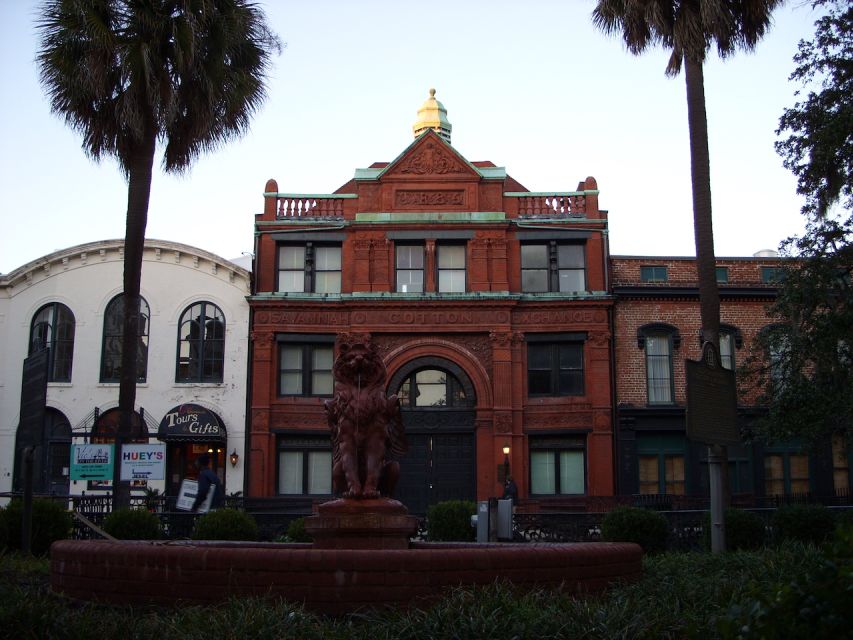
A few small moves will help you enjoy this even more:
- Arrive a few minutes early at Telfair Square so you’re not rushing at the start.
- Bring a layer if mornings are cool—Savannah can warm up quickly after an early start.
- Plan to use the built-in photo moments. The photo stop at Green-Meldrim House and the one on Jones Street are good times to pause, frame, and step back for wider shots.
- During the last stretch, keep an eye on where you’ll want to continue later. Ending near Casimir Pulaski Monument makes it easier to roll directly into Forsyth Park plans.
- If you have questions about what to do next, ask during lulls. The small group format makes those conversations easier.
Should you book Savannah’s Historic District on Foot?
I’d book it if you want a structured, story-rich walk without feeling trapped in a crowded group. The combination of small size, early start, and a guide like Bonnie—who explains each square with clarity and takes time—makes the $45 feel like it buys understanding, not just steps.
Skip it only if you can’t handle uneven sidewalks for a full 3 hours, or if you’re traveling with kids under 8. Otherwise, this is a practical way to see Savannah at street level, learn what shaped the city, and finish in a spot that naturally connects you to more exploring.
FAQ
How long is the tour?
The tour lasts about 3 hours.
How much does it cost?
It’s $45 per person.
Where do I meet the guide?
Meet in the Northwest corner of Telfair Square, across from Telfair Academy and First Chatham Bank.
Is the group small?
Yes. It’s limited to 10 participants.
Is there a restroom or food break during the tour?
Yes. There’s a halfway break at The Gallery Espresso, with time to use the restroom and get refreshments. Snacks/drinks you purchase are not included.
Is the tour wheelchair accessible, and are pets allowed?
The tour is wheelchair accessible. Leashed pets are welcome, but only service animals are allowed inside local restaurants.
More Historical Tours in Savannah
More Tour Reviews in Savannah



More Savannah Squares and Historic Walking Tours

Not quite your thing? Here is more to see and do around Savannah












Savannah Squares & Historic Walking Tours, compared.
 ★ 5.0Savannah History and Haunts Candlelit Ghost Walking TourFrom $393,235 reviews
 ★ 5.0Savannah First Squares Culinary & Cultural Walking Food TourFrom $963,229 reviews
 ★ 5.0Historic Savannah Guided Walking TourFrom $302,918 reviews
 ★ 4.5Savannah’s Ghost City “Dead of Night” Walking Night TourFrom $342,482 reviews
 ★ 4.5Narrated Historic Savannah Sightseeing Trolley TourFrom $352,375 reviews
 ★ 4.5Southern Flavors Food, Pub Crawl, and History Walking TourFrom $601,623 reviews
 ★ 5.0Genteel and Bard’s Savannah Dark History and Ghost Encounter Walking TourFrom $391,546 reviews
 ★ 5.0Bonaventure Cemetery Walking Tour with TransportationFrom $481,467 reviews
Browse the lists this tour appears in