
Reviewed · SAVANNAH SQUARES & HISTORIC WALKING TOURS
Savannah 101, a History Tour (by Walk With Me Savannah Tours)
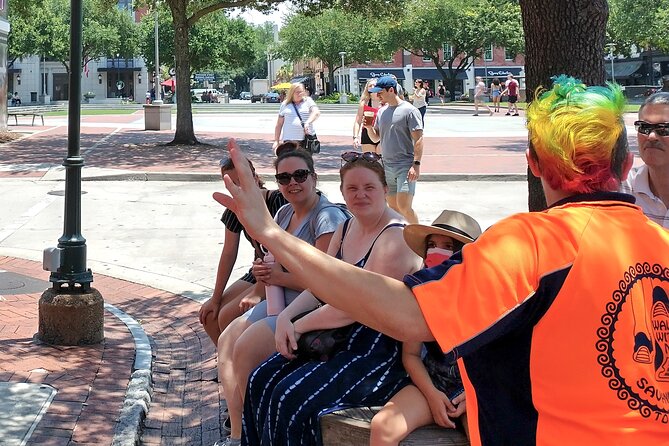
Savannah’s squares tell stories on foot. This 2-hour guided walk strings together Johnson Square to Wright Square, using Savannah’s buildings and layouts to explain how the city changed over time. I like that it mixes architecture with the people who shaped it, and it keeps you moving through key squares instead of dumping facts on a bus.
Two big wins for me: you get a clear look at how wars and economic forces (like the cotton trade) left marks on everyday life and on the city’s architecture. You also hear about famous Savannah names in context, like Nathaniel Greene’s monument at Johnson Square and Juliette Gordon Low’s family story at Wright Square.
One thing to consider: this is a walking tour, and it’s not ideal if you can’t walk/roll about 0.25 miles without resting. Also, it depends on good weather, since it’s designed for outdoor wandering among the squares.
In This Review
- Key highlights I’d plan around
- A 2-Hour Squares Walk From Johnson Square to Wright Square
- Price and Small-Group Value at $40
- What You Learn: Architecture, Religion, and Power
- Johnson Square to River Street: Founding Through Cotton
- Reynolds Square to Owens-Thomas House: Old Styles and Hard Lives
- Colonial Park Cemetery to St. John the Baptist: War, Faith, and Remembrance
- Lafayette and Madison Squares: Electricity, Writers, and the Revolution
- Chippewa Square to Green-Meldrim House: Fires, Theater, and Field Order 15
- Wright Square Finale: Juliette Gordon Low, Tomochichi, and Mary Musgrove
- When to Go, What to Wear, and Who This Tour Fits
- Should You Book Savannah 101?
- FAQ
- How long is the Savannah 101 History Tour?
- What does it cost and is there a mobile ticket?
- Where do I start and where do I end?
- What are the main kinds of places you visit?
- Is the Owens-Thomas House inside tour included?
- How big is the group?
- Can I bring a service animal or a pet?
- Is the tour dependent on weather?
Key highlights I’d plan around
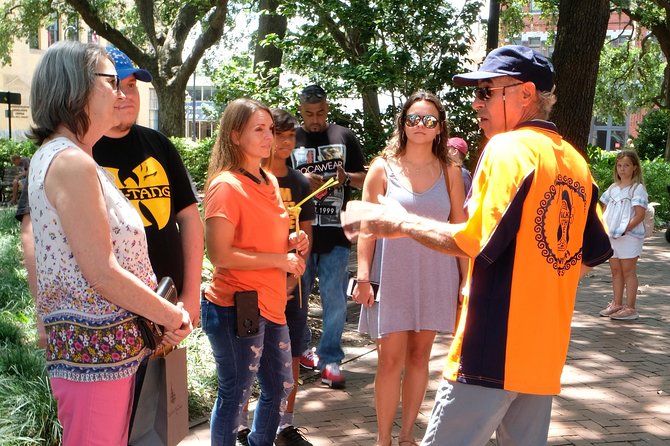
- Johnson Square to Wright Square: a tight route that loops back near where you start
- Cotton trade to Civil War links near Factors Walk and River Street
- Owens-Thomas House context with architecture explained, plus the inside tour you should add
- Cemeteries and Union occupation covered at Colonial Park Cemetery
- St. John the Baptist and Savannah’s religious history in a quick, focused stop
- Field Order 15 discussed at Green-Meldrim House, with attention to Black communities
A 2-Hour Squares Walk From Johnson Square to Wright Square
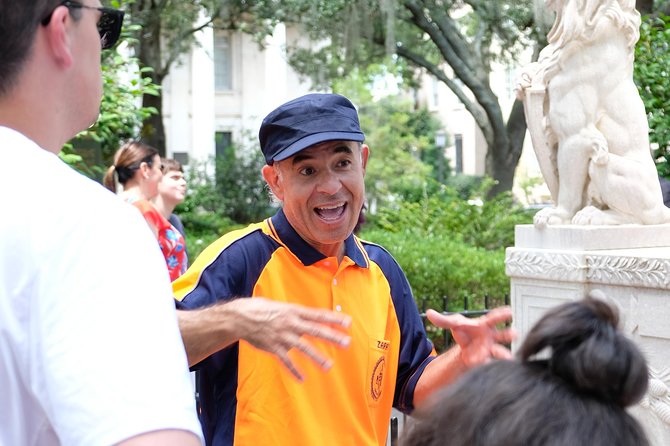
This tour is built around Savannah’s signature idea: the squares. You start at Johnson Square and finish at Wright Square, one square away from where you began. That end-point detail matters. After the walk, you’re still set up to keep exploring without a long scramble across town.
Expect a smooth pace that’s meant for sightseeing on foot, not a speed-walk. The tour runs about 2 hours, with short stops at each square or landmark so you can absorb the story and still see the buildings up close.
If you like the way old cities “read” when you’re walking them, this route helps. You’ll see how Savannah’s planning—its lots, streets, and open squares—makes history feel tangible instead of abstract.
We have more walks through Savannah's historic squares and old district to wander



Price and Small-Group Value at $40
At $40 per person for a 2-hour guided walk, you’re paying for local interpretation—someone who can connect architecture, major events, and names you’ll see again later in town. With a maximum of 20 travelers, the group stays small enough for your guide to keep it engaging and for the route to feel personal rather than rushed.
I also like that it runs on a schedule, so you can choose a tour time that fits your day. And if you’re planning ahead, note that it often books around 11 days in advance—so if you’re traveling during a busy season, it’s smart to reserve early.
One more practical perk: it uses a mobile ticket, so you’re not hunting for paper and QR codes once you’re in Savannah.
What You Learn: Architecture, Religion, and Power
This isn’t just a list of big names. The tour connects Savannah’s look—its homes, churches, and public buildings—to how power worked at different points in time.
You’ll hear about architectural trends and influential people, but also about the consequences of major conflicts and movements. The cotton economy isn’t treated as a side note; it’s framed as something that shaped wealth, slavery, and eventually wartime change.
Religion shows up too, in a way that feels practical. You’ll stop at Cathedral of St. John the Baptist and learn about Savannah’s Catholic congregations and the cathedral’s construction history, with a look at notable features along the way.
Johnson Square to River Street: Founding Through Cotton
Johnson Square is the launching pad. Your guide starts with Savannah’s founding and the city layout—what the founders were trying to do—and then ties it to a specific hero: Nathaniel Greene and his monument. This is a good first stop because it gives you the map in your head. After Johnson Square, the rest of the tour clicks faster.
From there, you’ll shift to the city’s river-side engine: Factors Walk and River Street. This portion explains why the area became the center of Georgia’s cotton trade and how that economy fed into both the slave trade and the Civil War. It’s the kind of explanation that makes you look at waterfront buildings differently, not just admire them.
If you want a tour that helps you understand why Savannah developed where it did, this section earns its keep. It turns a pretty stretch of old streets into a story about commerce and suffering—without getting lost in textbooks.
Reynolds Square to Owens-Thomas House: Old Styles and Hard Lives
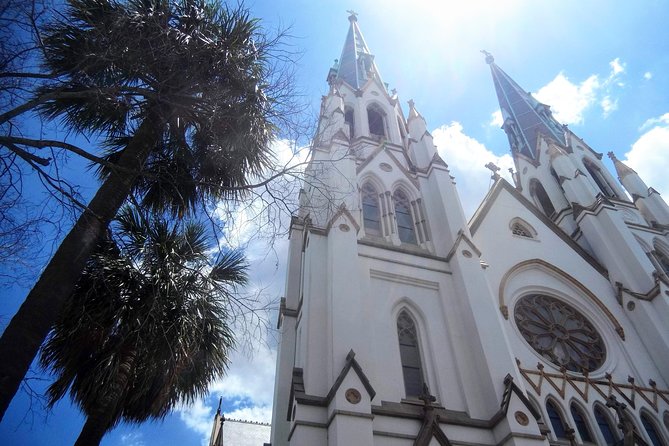
Reynolds Square is where the tour adds extra layers: you’ll hear about John Wesley, the Olde Pink House, and early agricultural experiments in Georgia. That mix of religion, landmark ownership, and farming ideas helps explain how Savannah attracted different kinds of influence.
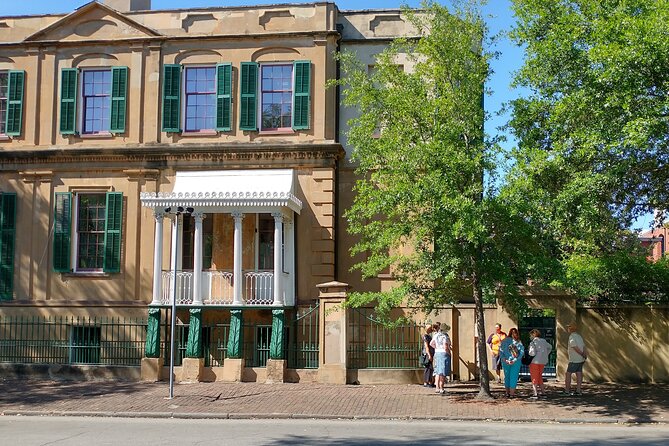
Then comes one of the most important stops on the route: the Owens-Thomas House & Slave Quarters area. Here, the focus is architecture—crediting its architect William Jay—and using the house to set up the human story. The tour also points out that the inside house tour is highly recommended but not included. That’s a key detail. If you care about firsthand context, budget extra time to add that indoor visit separately.
I like that this stop doesn’t try to be “only pretty.” You get architecture plus a direct link to the people whose lives were shaped by the system the building represents.
There is more Savannah history to walk through with our other tours





Colonial Park Cemetery to St. John the Baptist: War, Faith, and Remembrance
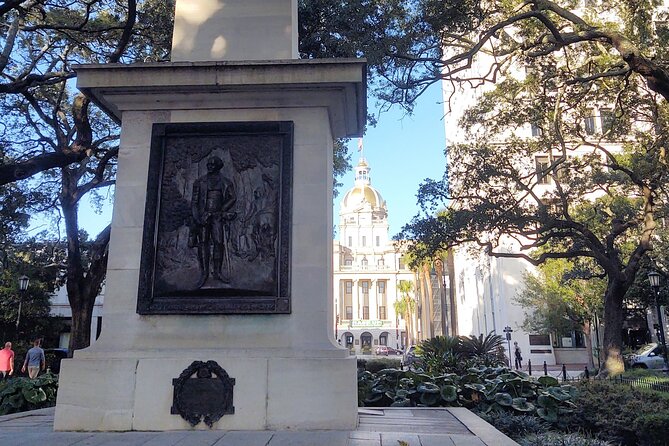
At Colonial Park Cemetery, you’ll learn how Savannah handled cemeteries and burial practices, plus the kinds of disasters that befell the city. It’s not just spooky ambiance. It’s about how a city remembers people—and how war and upheaval change those patterns.
The tour also touches the Union occupation of Savannah during the Civil War. That connection matters because it places the cemetery in the same timeline as the rest of the city you’re seeing. It helps you stop thinking of “historic sites” as separate postcards.
Next is Cathedral of St. John the Baptist. The guide’s angle here is Savannah’s Catholic history: the story of the congregations and the cathedral’s construction. You’ll also get a highlight of some features. This is a short stop, but it gives you a second lens on the city—faith institutions and community growth—not only government and war.
Lafayette and Madison Squares: Electricity, Writers, and the Revolution
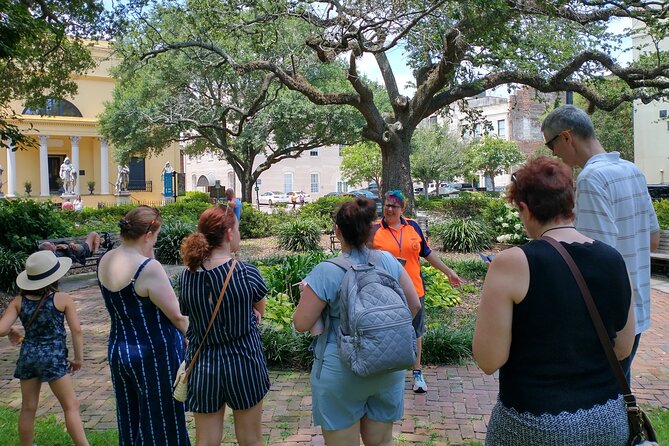
Lafayette Square brings the story closer to modern culture while staying in the past. You’ll hear about the Hamilton-Turner Inn, described as the first home in Savannah to have electricity, and you’ll get architectural notes that make the “firsts” feel real.
This is also where literature and scouting history show up in a personal way. You’ll learn about the childhood home of Flannery O’Connor, and you’ll hear about Juliette Gordon Lowe—her childhood details are tied to the wider tour, and her adulthood home is connected here—with her work as founder of the Girl Scouts.
Then the tour moves to Madison Square, where the conversation shifts again. You’ll see structures linked to local civic life, including the Savannah Volunteer Guards’ Armory and the Scottish Rite Temple. The stop also covers the monument to Sergeant Jasper and the Revolutionary War moments tied to him.
This sequence is useful if you want variety. One square is about early technology and famous residents; another is about civic institutions and war-era heroism. It keeps the tour from repeating the same theme.
Chippewa Square to Green-Meldrim House: Fires, Theater, and Field Order 15
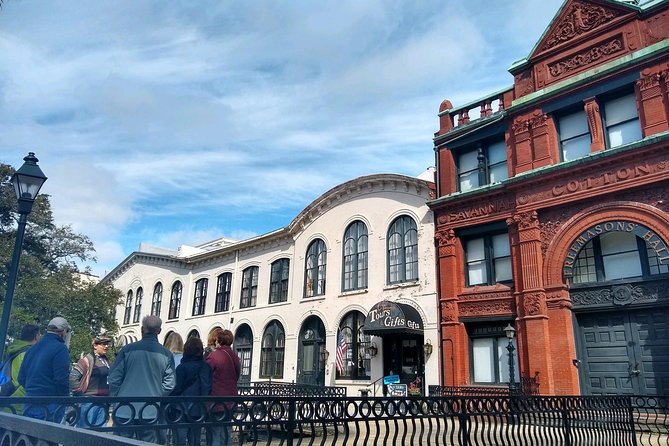
At Chippewa Square, you’ll start with governance: the guide explains Savannah founder Oglethorpe and what his leadership meant for the colony, including the fact that Georgia started as a non-royal colony. That political framing helps you understand why certain institutions look the way they do later on.
You’ll also hear about the history of fires in Savannah, plus quick, useful context for the Savannah Theater and the Independent Presbyterian Church. Even if you don’t plan to enter every building, it’s still valuable to know what you’re looking at and why it survived—or didn’t.
Finally, the emotional weight rises at Green-Meldrim House. The guide connects the house to innovative architecture and to Sherman’s residency during the Union occupation of Savannah. This is also where you’ll hear about Field Order 15 and its impact on Black communities both before and after its repeal.
I appreciate that this part doesn’t treat “Black history” as a brief mention. It’s brought in through policy, occupancy, and consequences—so you understand the stakes behind the buildings.
Wright Square Finale: Juliette Gordon Low, Tomochichi, and Mary Musgrove
The tour ends at Wright Square, and it’s a strong closing chapter. You’ll learn about Juliette Gordon Low again, focusing on her childhood home and her life, plus the accomplishments of her extended family.
This final stop also looks at the lots around Wright Square and how they were used historically. Then the tour circles back to early Savannah’s foundation stories through Tomochichi and Mary Musgrove—their influence and impact.
Ending here works well because it gives you multiple entry points into Savannah’s identity: scouting and education, founding-era relationships, and how land use shaped settlement.
When you finish, you’re still near your start area. The guide can direct you back to where you need to go or help you get a quick ride via bicycle cab.
When to Go, What to Wear, and Who This Tour Fits
Pick a day with good weather. Since this is a walking tour through multiple outdoor stops, rain or extreme heat can make the route less enjoyable. If the tour can’t run because of weather, you’ll be offered another date or a full refund.
Wear comfortable shoes. You’ll be stepping between squares and historical points, and the experience is designed for people who can handle that pace. If you know you’ll need frequent breaks, look closely at the walking guidance: the tour isn’t recommended if you can’t walk/roll 0.25 miles without resting.
This is ideal if you want:
- an easy way to get oriented fast,
- a guided explanation of Savannah’s architecture and major events, and
- a route that hits both pretty streets and heavier history without turning into a lecture.
I especially like the energy factor. From what I’ve seen in the way guides are described, guides such as Sandron and Sargon tend to bring enthusiasm and storytelling into the route—exactly what you want for a 2-hour walk.
Should You Book Savannah 101?
Yes, if you want a first-pass, square-by-square history walk that helps you connect the dots between architecture, economy, religion, and war-era change. At $40 for about 2 hours, it’s a solid value when you consider what you’re getting: local guidance, a tight route, and context for major Savannah landmarks you’ll see again later.
Skip it (or consider another option) if you have limited walking ability or you hate outdoor tours in uncertain weather. Also, if you love very deep architecture details, you may want to plan follow-up time—especially because the Owens-Thomas House interior tour isn’t included.
FAQ
How long is the Savannah 101 History Tour?
The tour runs for about 2 hours.
What does it cost and is there a mobile ticket?
It costs $40 per person, and you’ll receive a mobile ticket.
Where do I start and where do I end?
You start at Johnson Square and end at Wright Square, with the finish located one square away from where you began.
What are the main kinds of places you visit?
You’ll walk through Savannah’s historic squares and stop at notable attractions, including places tied to founding history, architecture, cemeteries, churches, and historic homes.
Is the Owens-Thomas House inside tour included?
No. The Owens-Thomas House & Slave Quarters stop provides context, but the inside house tour is recommended and not included.
How big is the group?
The tour has a maximum of 20 travelers.
Can I bring a service animal or a pet?
Service animals are allowed. Well-behaved pets are allowed as well.
Is the tour dependent on weather?
Yes. It requires good weather. If it’s canceled due to poor weather, you’ll be offered a different date or a full refund.
If you want, tell me your travel dates and what you care about most (architecture, Civil War, Indigenous history, or specific writers). I can help you choose a good tour time and plan what to do right after it at Wright Square.
More Tours in Savannah



More Tour Reviews in Savannah

More Savannah Squares and Historic Walking Tours
Not quite your thing? Here is more to see and do around Savannah












Savannah Squares & Historic Walking Tours, compared.
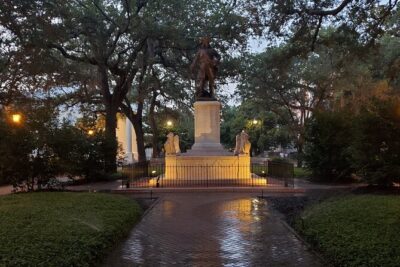 ★ 5.0Savannah History and Haunts Candlelit Ghost Walking TourFrom $393,235 reviews
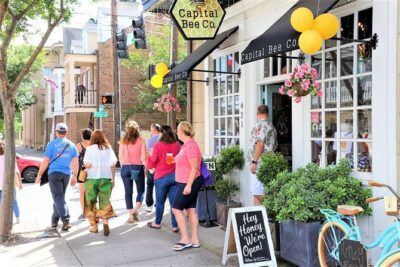 ★ 5.0Savannah First Squares Culinary & Cultural Walking Food TourFrom $963,229 reviews
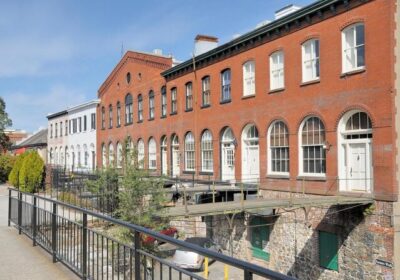 ★ 5.0Historic Savannah Guided Walking TourFrom $302,918 reviews
 ★ 4.5Savannah’s Ghost City “Dead of Night” Walking Night TourFrom $342,482 reviews
 ★ 4.5Narrated Historic Savannah Sightseeing Trolley TourFrom $352,375 reviews
 ★ 4.5Southern Flavors Food, Pub Crawl, and History Walking TourFrom $601,623 reviews
 ★ 5.0Genteel and Bard’s Savannah Dark History and Ghost Encounter Walking TourFrom $391,546 reviews
 ★ 5.0Bonaventure Cemetery Walking Tour with TransportationFrom $481,467 reviews
Browse the lists this tour appears in