
Reviewed · SAVANNAH SQUARES & HISTORIC WALKING TOURS
Private Walking Tour of Historic Savannah
Savannah’s squares tell a story fast. I like how this private walk keeps the pace human, and I like the way you can steer it toward Civil War, film trivia, or plain local legends. The main drawback to think about is sound and timing: if the guide is hard to hear or the group slows down, you may cover less ground than you expect.
You’ll start in the heart of the grid and end at a postcard-worthy fountain, with a guide who explains how the city was planned and why the details matter. I also appreciate the practical touch of a coffee/snack break built into the route, so you’re not just rushing from photo spot to photo spot. Just plan for heat, because this is a walking tour even if benches pop up along the way.
If you want Savannah in two hours without feeling herded, this is a strong option. You’ll see famous locations from the movies and books, but you’ll also get the civic backstory that makes the sights click. Go with comfy shoes, keep an ear open, and you’ll do fine.
In This Review
- Quick hits before you go
- Why a private walking tour works in Savannah
- Wright Square: Oglethorpe’s bluff, the square design, and Tomochichi
- Juliette Gordon Low Birthplace: Girl Scouts roots without rushing inside
- Independent Presbyterian Church: fires, hurricanes, and a famous 1885 wedding
- Chippewa Square and the Forrest Gump bench wait
- Sorrel Weed House: gray brick, courtyard walls, and fingerprints
- Madison Square: Revolutionary Siege of Savannah context
- Green-Meldrim House: Gothic architecture and Sherman’s headquarters
- SCAD building pass-by and the Gryphon Tea Room break
- Mercer Williams House and Midnight in the Garden of Good & Evil
- Armstrong House: the wow factor when it’s a private home
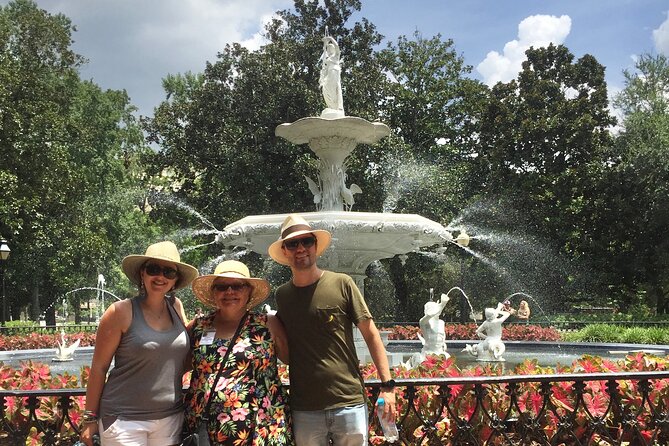
- Forsyth Park finish: the mail-order fountain from France
- What I’d watch for (so you’re not disappointed)
- Who this tour is best for
- Should you book this private Savannah walk?
- FAQ
- How long is the private walking tour?
- Where does the tour start and where does it end?
- Is this a private tour?
- What language is the tour offered in?
- Do we go inside the homes and museums?
- Is there a place to get coffee or snacks?
- How much walking is involved?
- Does the tour run in bad weather?
- What if I need to cancel?
Quick hits before you go
- Private, customizable focus lets you steer the conversation (Civil War topics are a popular add-on).
- Coffee and snack stop keeps energy up without breaking the flow.
- Forrest Gump bench scene spot turns a famous frame into a real place with context.
- Midnight in the Garden of Good & Evil house is included so you can connect the story to the street.
- French mail-order Forsyth Park fountain at the finish is a fun last payoff.
- About a mile of walking with benches along the way, so comfortable shoes are your best friend.
Why a private walking tour works in Savannah
Savannah’s historic core is laid out like a practical puzzle: squares, streets, and sightlines that make more sense when someone explains the “why.” With a private format, you’re not sharing the guide’s time with people who are lagging behind, drifting into shops, or asking unrelated questions. That’s a big deal when the whole tour is around two hours.
I like that you can shape the topics. Want Civil War context? Ask for it. Prefer city design and early settlement stories? You can lean that way too. Guides like Crystal and Rose (two names that show up with this tour) are described as knowledgeable and fun, with a pace that feels like a walk with a friend who actually did their homework.
The one thing to watch is group size and audibility. One earlier experience flagged that the guide spoke softly and that sound was an issue even with a small group. If you’re sensitive to hearing issues, it helps to stand where you can clearly see and hear your guide.
We have more walks through Savannah's historic squares and old district to wander


Wright Square: Oglethorpe’s bluff, the square design, and Tomochichi
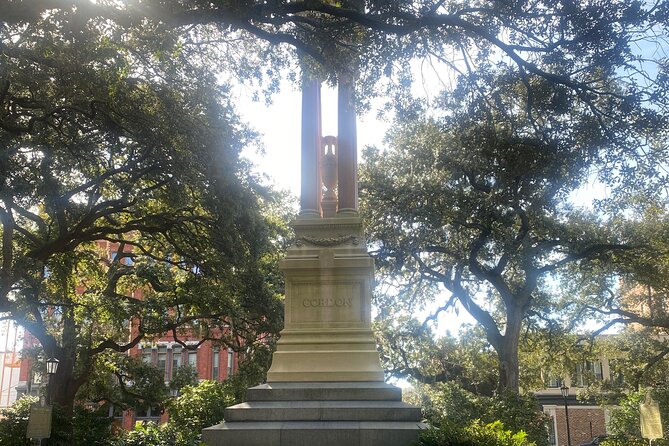
Your tour begins at the center of Wright Square, in front of the Gordon Monument. This is the right opening move because Savannah doesn’t start with haunted houses. It starts with planning.
You’ll hear why General James Oglethorpe chose that 40-foot bluff and how Savannah’s first layout was meant to work. The guide also walks you through why the squares are designed the way they are, and how those choices still shape what you notice today while you’re walking.
One of the most interesting parts is the Tomochichi story. You’ll learn who Tomochichi, the chief of the Yamacraw Indians, was, and why he’s buried under the Gordon Monument. That detail turns a simple statue-and-brick moment into something heavier and more human.
You’ll also get a quick sense of modern Savannah’s importance—like the fact that the Port of Savannah is the third largest port in the nation—which helps you connect the city’s early “why here” with its present-day role.
Juliette Gordon Low Birthplace: Girl Scouts roots without rushing inside
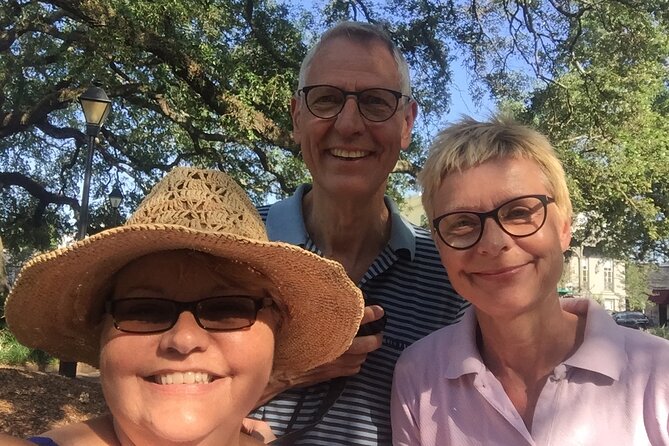
Next up is the Juliette Gordon Low Birthplace Museum. You’ll admire the birthplace of Juliette Gordon Low, born October 31, 1860, and you’ll get the big picture of the Gordon family and what the building is used for now.
A practical note: the tour experience here is outside only. You won’t go into the home, but you’ll get the context that makes it feel more grounded than a quick photo stop. For most people, that works well in a short tour—less time waiting, more time understanding.
If you love women’s history or you’re traveling with kids or teens, this stop adds a warm, relatable counterbalance to the heavier military and political stories later.
Independent Presbyterian Church: fires, hurricanes, and a famous 1885 wedding
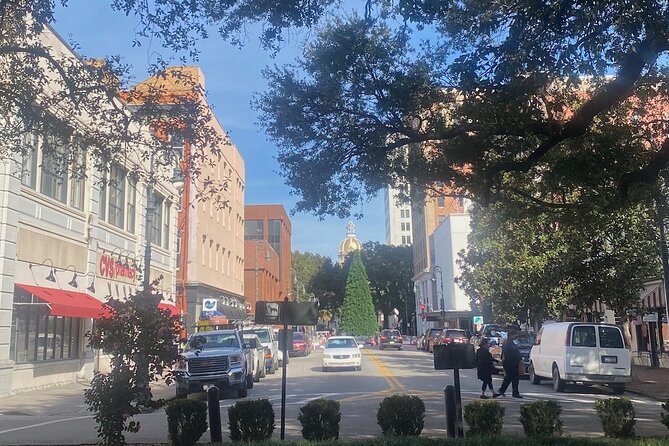
Then you’re at the Independent Presbyterian Church, with a stop that feels like a mini lesson in how cities survive. The church has a long, tangled path: founded in 1755 on Ellis Square (originally Market Square), destroyed by fire, rebuilt on Telfair Square, and later destroyed by a hurricane. The building you’ll see today sits on the corner of Bull St and Oglethorpe Ave, built in 1855.
The guide will point out why the steeple matters and share a specific surprise: which U.S. President was married in the church in 1885. That kind of detail makes an architectural feature feel personal rather than just old.
This is one of those moments where you can stand still and listen. Even if you’re not a church architecture person, the repeated rebuilding story helps you understand how Savannah kept coming back.
Chippewa Square and the Forrest Gump bench wait
Chippewa Square is one of those places you recognize before you realize why. Here’s where you’ll see the spot tied to the Forrest Gump bench scene—where Forrest sat with his box of chocolates while waiting for the bus.
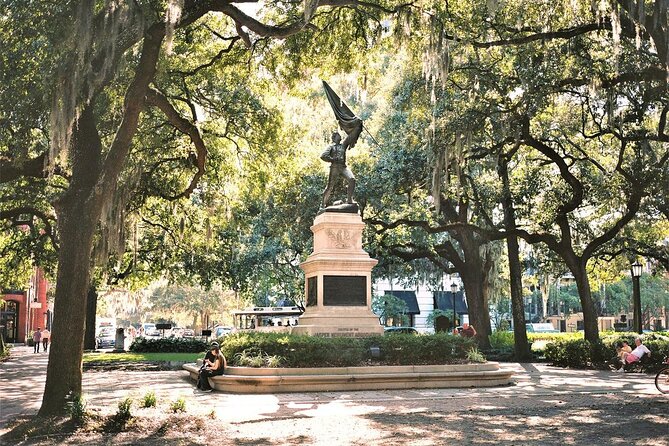
A fun detail (and a useful correction) comes right along with it: the monument in the center of Chippewa Square is General James Oglethorpe, not Captain Morgan. It’s easy to mix up because the name you see nearby can lead your brain. Savannah plays with that kind of misdirection, and your guide will keep it straight.
More importantly, you’ll learn about the man behind the colony of Savannah, and what his monument represents. It turns a pop-culture photo moment into a “now I get it” civic moment.
There are more private Savannah tours to make your own





Sorrel Weed House: gray brick, courtyard walls, and fingerprints
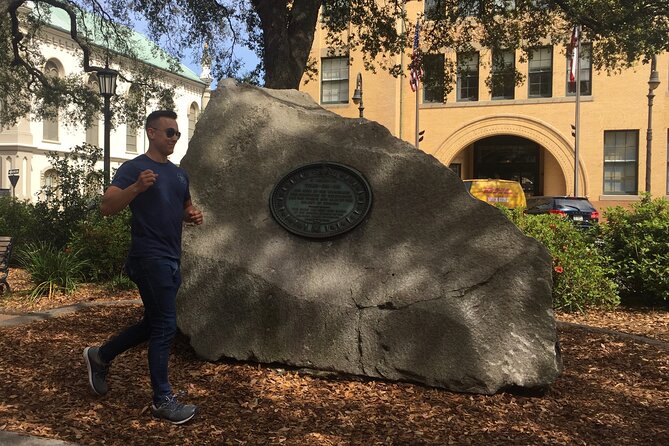
You’ll pass by the Old Sorrel Weed House Museum & Tours. This stop is quick, but it’s designed to plant the right image in your head: one of the most haunted homes in Savannah.
The guide focuses on the gray brick wall around the courtyard and why there are fingerprints in the brick. You’ll hear what the brick came from, which is exactly the kind of “how did they build this” detail that makes old buildings feel less like props and more like craftsmanship.
Even if you’re not into ghost stories, this is a neat way to learn how Savannah gets its texture—literal texture—underneath all the legends.
Madison Square: Revolutionary Siege of Savannah context
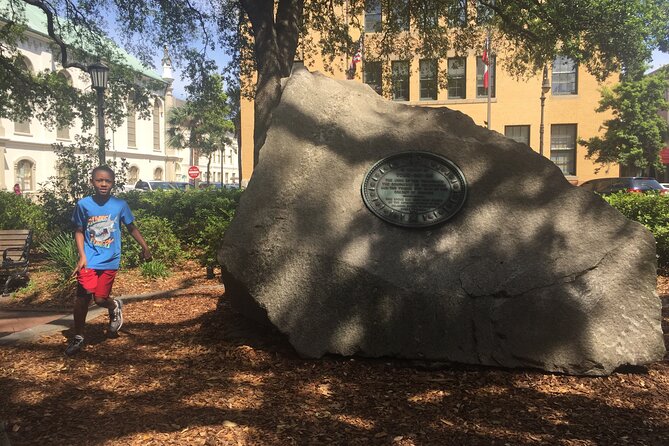
Madison Square is where the Revolutionary War turns personal. You’ll learn that where Madison Square is today was once the location of one of the bloodiest battles during the American Revolution, the Siege of Savannah.
This is a good stop for two reasons. First, it prevents the tour from becoming only “pretty squares and movie references.” Second, it helps you feel the timeline: the city you’re walking through isn’t just picturesque. It has scars.
You’ll spend about ten minutes here, so you’ll get the key story beats without getting lost in dates. If you want to go deeper, this is also the moment to ask your guide to expand into Civil War or earlier conflicts, since the tour is set up to customize.
Green-Meldrim House: Gothic architecture and Sherman’s headquarters
Then comes Green-Meldrim House, completed in 1853. You’ll get the standout architectural pitch: it’s one of the finest examples of Gothic Architecture in the South.
You’ll also get a sense of the cost and status behind the building. The house reportedly cost $93,000 at the time, which the guide translates to about $3.2 million today, making it the most expensive home in Savannah during the 1800s. That helps you understand why the building looks the way it does.
Another key point makes it more than just pretty architecture: the house served as Headquarters for General Sherman during his March to the Sea, when he occupied Savannah. That’s a direct link between the elegance on the outside and military reality on the inside—one reason this stop lands well even with a short schedule.
SCAD building pass-by and the Gryphon Tea Room break
Between the historic house stops, you’ll also go past a building originally used as the Savannah Volunteer Guard building, which is now owned by SCAD. This isn’t a long stop, but it gives you a sense of how Savannah repurposes buildings instead of treating them like frozen museum pieces.
Then the tour heads toward a food and pause moment: the Gryphon Tea Room, located inside what the tour calls the Shriner’s Building. The tea room has its own museum-like layers, including original mahogany cabinetry and cubbies that were once used to store medicines (Solomon’s Apothecary).
This is one of my favorite kinds of tour stops: it’s not only a break, it’s also a story you can taste and sit with. The tea room is described as a favorite for lunch, dinner, or just relaxing with tea.
If you’re tired of standing in one spot for photos, this is your reset.
Mercer Williams House and Midnight in the Garden of Good & Evil
Mercer Williams House Museum is the stop that connects Savannah to books and movies most directly. The house became famous through John Berendt’s Midnight in the Garden of Good & Evil, which is based on true events involving Jim Williams, who purchased the home in 1969, and the shooting of his assistant Danny in 1981.
The guide will also share a quick timeline: the book came out in 1993, hit the New York best seller list for 216 weeks, and the later movie helped bring more attention to Savannah tourism.
Here’s the practical tip I like from this tour’s approach: if you can, read the book or watch the movie before you visit. You’ll notice how the story’s moods match the streets around the house, and the experience lands with more meaning than name-checking alone.
If you prefer your history serious and your entertainment separate, you’ll still get value here because the story is anchored in a real building and real place.
Armstrong House: the wow factor when it’s a private home
Armstrong House is now known as the Armstrong-Kessler house. You’ll talk about the history of the home and who lives there today, but it’s important to know the limit: this is a private home, so it’s not open for tours.
That’s still worth including because you’ll get the “wow” reaction that many people talk about when they see the scale and presence of certain Savannah residences. The tour frames it as one of the homes where you just stop and stare, even without entering.
If you’re the kind of visitor who enjoys architectural outside views more than museum interiors, this stop will feel satisfying instead of disappointing.
Forsyth Park finish: the mail-order fountain from France
The tour ends at Forsyth Park, starting with the basics. You’ll learn that the park began in 1848 with only ten acres, and that today it covers thirty acres. It’s often treated like Savannah’s central green space, used by young and old alike.
Then you get the crowning payoff: Forsyth Park Fountain. The guide’s detail is what turns the fountain from a generic famous photo into a story worth remembering. The fountain was a catalog mail order from France, installed in 1858.
It’s a short final stop, about five minutes, but it’s timed well. You’ll have enough energy to take your picture and actually look at the fountain instead of racing past it.
This ending also helps you transition into the rest of your day. From here, it’s easy to plan a meal, a relaxed walk, or a stop for dessert without needing another “big” activity.
What I’d watch for (so you’re not disappointed)
This is a two-hour walk with no extra hours padded in. That can be wonderful—if everything stays on pace. One earlier experience flagged time management issues and that the guide was hard to hear, which cut down what they got to see.
To protect yourself:
- Stand where you can hear clearly, even if it means not being at the back.
- Bring water for Savannah heat and humidity, especially in summer.
- Plan on moving about a mile total, even with benches along the way.
Also, the tour runs rain or shine, so have an umbrella ready if weather shifts.
Who this tour is best for
This fits best if you want a tight, guided overview of Savannah’s historic heart without spending half a day in transit or inside ticket lines. It’s also ideal if you like the mix of serious civic facts plus fun details tied to movies and books.
It’s a good choice for:
- Couples and small groups who want conversation, not crowd control
- Visitors who enjoy learning city planning and not just looking at buildings
- People who want pop-culture anchors like Forrest Gump and Midnight in the Garden of Good & Evil, then connect them back to real history
If you need a fully inside museum day with lots of indoor time, this might feel too outdoors and too quick at each stop. The tour is built for visibility and context, not long exhibits.
Should you book this private Savannah walk?
Yes, if your goal is a 2-hour, no-stress introduction to Savannah’s squares with a guide who can talk architecture, early settlement, and later events without making it feel like homework. The best version of this tour includes that coffee/snack break, the film and book connections, and a pace that lets you actually absorb what you’re seeing.
I’d book with confidence if:
- You like the idea of Forrest Gump + Midnight in one route
- You want to learn why Oglethorpe set things up the way he did
- You prefer a private guide for clarity and flexibility
I might hesitate if:
- You already know Savannah well and need deep museum time
- You’re very sensitive to hearing and can’t easily position yourself to hear the guide
Overall, it’s a solid way to get oriented fast, then decide what to explore next on your own.
FAQ
How long is the private walking tour?
It runs about 2 hours.
Where does the tour start and where does it end?
It starts at Wright Square in Savannah and ends at the fountain in Forsyth Park.
Is this a private tour?
Yes. It’s a private tour/activity, and only your group participates.
What language is the tour offered in?
The tour is offered in English.
Do we go inside the homes and museums?
Some stops are outside only. For example, you admire the Juliette Gordon Low Birthplace from the outside. You also pass by the Sorrel Weed House rather than going in, and the Armstrong-Kessler house is a private home not open for tours.
Is there a place to get coffee or snacks?
Yes. The tour includes a stop for coffee and snacks along the way.
How much walking is involved?
You’ll walk about one mile, with benches along the route.
Does the tour run in bad weather?
The tour operates rain or shine, but it requires good weather. If it’s canceled due to poor weather, you’ll be offered a different date or a full refund.
What if I need to cancel?
You can cancel for a full refund if you cancel up to 24 hours in advance. If you cancel less than 24 hours before the experience’s start time, the amount paid won’t be refunded.
More Tours in Savannah



More Tour Reviews in Savannah

More Savannah Squares and Historic Walking Tours


Not quite your thing? Here is more to see and do around Savannah











Savannah Squares & Historic Walking Tours, compared.
 ★ 5.0Savannah History and Haunts Candlelit Ghost Walking TourFrom $393,235 reviews
 ★ 5.0Savannah First Squares Culinary & Cultural Walking Food TourFrom $963,229 reviews
 ★ 5.0Historic Savannah Guided Walking TourFrom $302,918 reviews
 ★ 4.5Savannah’s Ghost City “Dead of Night” Walking Night TourFrom $342,482 reviews
 ★ 4.5Narrated Historic Savannah Sightseeing Trolley TourFrom $352,375 reviews
 ★ 4.5Southern Flavors Food, Pub Crawl, and History Walking TourFrom $601,623 reviews
 ★ 5.0Genteel and Bard’s Savannah Dark History and Ghost Encounter Walking TourFrom $391,546 reviews
 ★ 5.0Bonaventure Cemetery Walking Tour with TransportationFrom $481,467 reviews
Browse the lists this tour appears in