
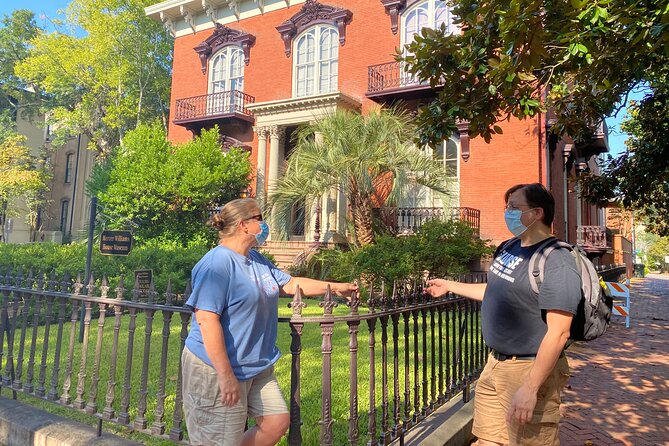
Reviewed · SAVANNAH SQUARES & HISTORIC WALKING TOURS
Private Savannah Medical History Walking Tour
Medicine meets Savannah in human stories. You’ll walk through the city’s health struggles and small medical wins with a registered nurse guide, using real locations—not just dates in a slideshow. I especially like how the tour connects medical history to places you can point at on a map.
My second favorite part is the guide’s style: Matthew adjusts his medical talk to match your level, so science people and history people feel comfortable. The tour also stays private, so questions don’t get lost in a crowd, and the walk moves at a human pace.
One thing to plan around: it’s mostly outdoors on historic streets, so in hot weather you’ll want to show up ready for Savannah summer heat.
In This Review
- Key Things You’ll Notice on This Tour
- Entering Savannah’s Medical Story Through Real Places
- Telfair Women’s Hospital (Across From the Park) and Mary Telford’s Impact
- Why Dueling Changed Medical Life in Savannah
- Midnight in the Garden of Good and Evil, But Through a Medical Lens
- The Girl Scouts Founder’s Hearing, a Medical Turn, and a Hard Lesson
- Owens-Thomas House & Slave Quarters: Medicine and the Health Cost of Enslavement
- Johnson Square: The Easy Ending That Still Feels Like Closure
- Price, Pace, and What Your Money Actually Buys
- The Tour Style: What Makes Matthew’s RN Approach Different
- Who Should Book This Private Savannah Medical History Walking Tour
- Should You Book It or Skip It?
- FAQ
- How long is the Private Savannah Medical History Walking Tour?
- How far do we walk during the tour?
- Where does the tour start and end?
- Are we going inside any buildings?
- Who leads the tour?
- What is the price per person?
- Is the tour private?
- What should I know about fitness level and walking?
- What’s the weather plan if it’s too hot or bad outside?
- What is the cancellation policy?
Key Things You’ll Notice on This Tour

- RN-led medical framing that turns landmarks into real health decisions and outcomes
- Matthew’s flexible explanations, using less or more medical terminology as needed
- No indoor ticket scramble: you’ll view key buildings from the sidewalk
- Dueling, epidemics, and scandals explained through practical health impacts
- Owens-Thomas House Slave Quarters tackled with the medical cost of enslavement in the conversation
- 1.6 miles total with a straightforward start at E Park Ave and finish near Johnson Square
Entering Savannah’s Medical Story Through Real Places
If you like history but also care about how people actually lived through illness, injury, and care, this tour hits the sweet spot. You’re not just hearing about doctors and diseases in the abstract. You’re walking between Savannah landmarks and hearing how health shaped behavior—whether that was violence, public health, or the brutal realities of enslaved life.
Matthew (the nurse guide) brings a clear medical lens. He’ll connect stories like dueling injuries, public health responses, and everyday care practices to the physical realities people faced. That means you leave with a better sense of how medicine worked in Savannah’s past, and why some of those patterns still echo today.
We have more walks through Savannah's historic squares and old district to wander



Telfair Women’s Hospital (Across From the Park) and Mary Telford’s Impact

The tour starts at 15 E Park Ave, at the old Telfair Women’s Hospital, right across from the park. If you already know Mary Telford mostly from museums, this start gives you a second angle. It focuses on how one of Georgia’s early feminists helped leave an imprint on women’s health.
This is a smart opening stop because it sets the theme: medicine isn’t only hospitals and outbreaks. It’s also advocacy, gender, and access to care. From the sidewalk, you get the building’s presence without paying admission or spending time waiting to enter.
Practical tip: early in the walk, use this moment to get your footing. The route is short—about 1.6 miles total—but the city streets can still feel uneven, and you’ll be outside for most of it.
Why Dueling Changed Medical Life in Savannah
Next comes one of those Savannah topics that sounds like pure drama—dueling—until you look at it from a health perspective. In the guide’s telling, Savannah had a custom where at least one doctor was expected to be present.
That flips the story. Instead of thinking only about honor and violence, you start thinking about triage, injury patterns, and the medical consequences of a “routine” that was anything but routine. Matthew uses a case study tied to an original signer of the Declaration of Independence, which gives you a recognizable anchor point for a practice that could be brutal and medically complicated.
This section also helps you understand why early medicine often lived right alongside conflict and politics. In a lot of eras, there wasn’t a neat separation between public life and health. Savannah’s dueling culture is a good example of that messy overlap.
Midnight in the Garden of Good and Evil, But Through a Medical Lens
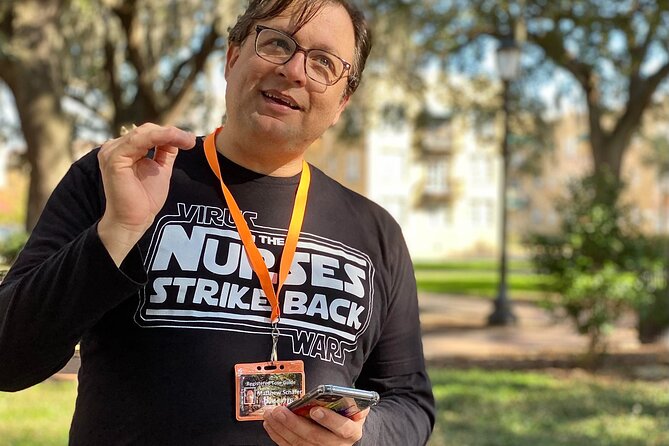
Then the tour steps into the world made famous by Midnight in the Garden of Good and Evil—the book and the movie—while treating it like a health-related case study. Instead of letting the story be only gossip or entertainment, Matthew frames parts of it in terms of what would have mattered medically at the time.
This approach is useful because it trains your brain to ask better questions. For example, when you hear a story that involves illness, injury, or behavior under stress, you’ll start looking at it like a pattern: what symptoms might have been present, what treatments were plausible, and what public reactions often followed.
If you’re a fan of the book or film, you’ll appreciate the extra meaning added to scenes you might already recognize. If you’re not, you’ll still get clear historical context.
The Girl Scouts Founder’s Hearing, a Medical Turn, and a Hard Lesson
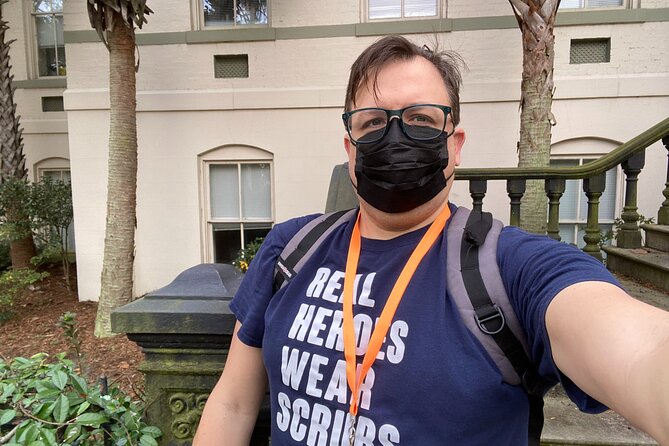
One of the tour’s more human stories comes next: the founder of the Girl Scouts was famously deaf in one ear. The tour explains that a childhood accident left her deaf for a period, and later in life a medical tragedy helped change her path—saving her from a loveless marriage.
This stop works because it shows medicine as life-changing, not just life-saving. Hearing loss affects communication, independence, and daily choices. The guide ties that into how health events could redirect people’s futures in a society where medical options were limited.
It’s also a reminder that “medical history” isn’t only plagues and major hospitals. It’s the small, permanent impacts that show up in how someone lives, works, and is treated.
There are more private Savannah tours to make your own






Owens-Thomas House & Slave Quarters: Medicine and the Health Cost of Enslavement

At Owens-Thomas House & Slave Quarters, the tour becomes heavier and more direct. The house was built by a slave trader, and Matthew uses it as a backdrop to talk about Savannah’s role in buying and selling human beings.
What I appreciate here is that the health angle isn’t tacked on. The discussion includes the medical implications of enslaving people and the realities of transporting them on cramped ships across the Atlantic. That means you hear how disease spread, how injuries occurred, and how the body was pushed beyond safe limits—before anyone ever arrived at a “destination.”
This is an emotional stop, and it’s also an important one for anyone trying to understand public health in a city shaped by slavery. Savannah’s medical story can’t be told honestly without that part of it.
Johnson Square: The Easy Ending That Still Feels Like Closure

The tour ends at Johnson Square on 2 E Bryan St. This is a good finishing point because it’s central, walkable, and you can immediately turn your new knowledge into a better day.
Matthew wraps up with directions to other attractions and recommendations for restaurants and shopping if you want them. It’s not just “walk to the end.” It’s more like: you’ve got the context now, so use it.
And since the tour only walks about 10 minutes at the Johnson Square endpoint, you’re not left stuck in limbo. You can head out when you still feel mentally fresh.
Price, Pace, and What Your Money Actually Buys

The tour costs $25 per person and runs about 1 hour 30 minutes. In my view, the best value isn’t the price by itself—it’s the fact that you’re paying for a medical professional, walking interpretation, and a tight loop of landmarks without added entry fees.
You also avoid a common trap on walking tours: you don’t have to decide whether it’s worth paying for building access. The stops are viewed from outside, and that keeps the focus on the story and the city, not on tickets and lines.
Pace matters too. You’ll walk 1.6 miles over historic streets with moderate physical fitness expected. This isn’t a marathon, but it’s not a sit-and-watch tour either. On a hot day, the experience changes. Savannah can reach 90 degrees or more in summer, so bring water, sunscreen, and a hat, and plan to move slowly when you’re adjusting to the sun.
The Tour Style: What Makes Matthew’s RN Approach Different
A lot of city tours use history as background. This one uses health as the organizer. Matthew connects the dots between environments, injuries, social practices, and how people sought care (or didn’t). The effect is that you start seeing the city as a living system, not a set of plaques.
That medical perspective also shows up in how he communicates. One highlight from real participants is that he quickly adapts to your level. If you’re in healthcare or public health, he can use more medical terminology. If you’re coming in as a general history fan, he makes it understandable without talking down.
If you want one practical takeaway: you’ll leave more able to interpret other Savannah stories through the body-and-care lens. That skill makes future walks more fun.
Who Should Book This Private Savannah Medical History Walking Tour
This tour is a great fit if you’re:
- Interested in public health, medicine, and how people lived with illness and injury
- A history fan who likes stories tied to real-world cause and effect
- Curious about Savannah’s famous cultural stories but want the health context behind them
- Looking for a private experience where you can ask questions without time pressure
It’s also a solid choice for mixed groups. Even if not everyone thinks about medicine all the time, the landmarks and Savannah-specific stories keep it lively.
Should You Book It or Skip It?
Book it if you want a short, focused walk that links Savannah’s landmarks to medical realities—from women’s health and hearing loss to dueling injuries and the health cost of slavery. The RN-led approach is the main reason this tour works, and it’s worth the time and price.
Consider skipping (or at least be strategic with timing) if you strongly dislike walking in heat. The tour is outdoors for most of the experience, and Savannah summer can be intense. If weather is mild and you’re prepared with water and sun protection, you’ll get a lot from the 90-minute format.
FAQ
How long is the Private Savannah Medical History Walking Tour?
It lasts about 1 hour 30 minutes.
How far do we walk during the tour?
You’ll walk about 1.6 miles over historic streets.
Where does the tour start and end?
The tour starts at 15 E Park Ave, Savannah, GA 31401, and ends in the middle of downtown at Johnson Square, 2 E Bryan St, Savannah, GA 31401.
Are we going inside any buildings?
No. You will visit the sites but not enter the premises.
Who leads the tour?
The tour is led by a registered nurse guide named Matthew.
What is the price per person?
The price is $25.00 per person.
Is the tour private?
Yes. It’s a private tour/activity, and only your group participates.
What should I know about fitness level and walking?
You should have a moderate physical fitness level. The tour is a walking experience over historic streets.
What’s the weather plan if it’s too hot or bad outside?
The experience requires good weather. If it’s canceled due to poor weather, you’ll be offered a different date or a full refund.
What is the cancellation policy?
You can cancel for free up to 24 hours in advance for a full refund. After that point, changes are not accepted and refunds aren’t available.
More Tours in Savannah



More Tour Reviews in Savannah

More Savannah Squares and Historic Walking Tours


Not quite your thing? Here is more to see and do around Savannah











Savannah Squares & Historic Walking Tours, compared.
 ★ 5.0Savannah History and Haunts Candlelit Ghost Walking TourFrom $393,235 reviews
 ★ 5.0Savannah First Squares Culinary & Cultural Walking Food TourFrom $963,229 reviews
 ★ 5.0Historic Savannah Guided Walking TourFrom $302,918 reviews
 ★ 4.5Savannah’s Ghost City “Dead of Night” Walking Night TourFrom $342,482 reviews
 ★ 4.5Narrated Historic Savannah Sightseeing Trolley TourFrom $352,375 reviews
 ★ 4.5Southern Flavors Food, Pub Crawl, and History Walking TourFrom $601,623 reviews
 ★ 5.0Genteel and Bard’s Savannah Dark History and Ghost Encounter Walking TourFrom $391,546 reviews
 ★ 5.0Bonaventure Cemetery Walking Tour with TransportationFrom $481,467 reviews
Browse the lists this tour appears in