
Reviewed · SAVANNAH SQUARES & HISTORIC WALKING TOURS
History of Savannah Walking Tour
Savannah makes sense after this walk. In about 90 minutes, you trace the city’s story through major squares and landmark stops, with local guide Sarah turning street corners into real-world context. I especially like how the tour keeps moving while still giving you time to ask questions, and how it links each place to a specific chapter of Savannah’s founding and later wars.
One heads-up: you’ll be on sidewalks that can be uneven, so good shoes matter. Also, this tour stays outside paid attractions, so if you want to go inside museums or houses, you’ll need a separate plan for that.
In This Review
- Key highlights to know before you go
- A 90-minute Savannah orientation that actually sticks
- Meet your guide: Sarah and why the tone feels personal
- Stop-by-stop: what you’ll see and what each place teaches
- Stop 1: Chippewa Square and Savannah’s founding story
- Stop 2: The Juliette Gordon Low Birthplace Museum area (quick Girl Scouts context)
- Stop 3: Wright Square and Tomochichi’s influence
- Stop 4: Owens-Thomas House & Slave Quarters and the real impact of slavery
- Stop 5: Colonial Park Cemetery and Victorian life (including what people said about death)
- Stop 6: Cathedral of St. John the Baptist and the Irish community’s role
- Stop 7: Green-Meldrim House and the Civil War connection
- Stop 8: Jones Street and the famous-at-a-glance beauty
- Stop 9: Monterey Square, Mercer-Williams House, and Pulaski
- Stop 10: Forsyth Park fountain and your wrap-up
- Timing and pacing: jam-packed, but not chaotic
- Price and value: why $35 makes sense here
- Comfort and logistics: the stuff that affects your experience
- Who this tour is best for
- Quick decision guide: should you book this Savannah walking tour?
- FAQ
- How long is the Savannah walking tour?
- How much does the tour cost?
- Where does the tour start and end?
- Is the tour offered in English?
- Does the tour include entry into museums or paid attractions?
- How big is the group?
- What happens if the weather is bad?
Key highlights to know before you go
- A compact 1.5-hour route that helps you orient fast in the Historic District
- Small-group format (up to 15) that makes questions feel normal, not rushed
- Top squares plus major house and cemetery context without ticket lines
- No paid museum entry, so your money stays focused on the walking experience
- A mix of big events and human stories from the founding to the Civil War
- Ends at Forsyth Park fountain, a great place to continue on your own
A 90-minute Savannah orientation that actually sticks
This walking tour is built for people who want the big picture without spending the whole day in transit. You’ll cover a thoughtful stretch of Savannah’s core, hopping between squares, churches, historic residences, and even a cemetery—then you finish at Forsyth Park’s big fountain. It’s one of those “now I get it” experiences, because the city is easier to read once you hear how the squares and buildings connect.
The route also works well as a first day move. Even if you’ve already done bus-style sightseeing, this helps you slow down and make sense of what you saw from the street—especially when you hear the founding details tied to specific locations.
We have more walks through Savannah's historic squares and old district to wander



Meet your guide: Sarah and why the tone feels personal
The standout here is the way Sarah leads the walk. Across the stops, her commentary is practical and story-driven, and the pacing leaves room for questions. If you’re traveling with kids, this kind of format tends to work better than a long lecture, because you’re constantly changing scenes and learning new angles as you walk.
The group size limit is a big deal. With a maximum of 15 people, you’re less likely to feel like a number, and in some cases you may feel closer to a small, conversational tour. That matters when you want clarity—like why certain communities shaped Savannah, or how slavery and conflict affected everyday life.
Stop-by-stop: what you’ll see and what each place teaches
Stop 1: Chippewa Square and Savannah’s founding story
You start in Chippewa Square, where your guide talks about James Oglethorpe and the founding of Savannah. This is a smart opening because it gives you a timeline anchor before you start noticing how the city is laid out.
What to watch for: the square itself as a civic center. Squares in Savannah aren’t just pretty breaks—they’re part of how the city organizes life, community, and identity.
Stop 2: The Juliette Gordon Low Birthplace Museum area (quick Girl Scouts context)
Next, you’ll make a brief stop at the Juliette Gordon Low Birthplace Museum area to connect the site to the founding of the Girl Scouts. The key here is that you’re not trying to cram a museum visit into the walk. You’re just using the location to learn the origin story in a few minutes, then moving on.
If you’re a planner type, it’s a good moment to decide whether you want to come back later for deeper museum time.
There is more Savannah history to walk through with our other tours




Stop 3: Wright Square and Tomochichi’s influence
At Wright Square, the tour turns to Tomochichi and the Native American tribe that helped the early colony succeed. This matters because it shifts the usual “founder-only” story. Savannah’s beginnings are tied to relationships and cooperation, not just names on a plaque.
This is also one of those stops where you’ll likely start noticing patterns in how Savannah’s story is told through physical locations.
Stop 4: Owens-Thomas House & Slave Quarters and the real impact of slavery
Your next historical stop is by the Owens-Thomas House and Slave Quarters, where the tour addresses how slavery affected early Savannah. This is not a gentle skip-over topic, but the tour’s approach is practical: you learn why these places exist and what they meant to the people living in that era.
A helpful expectation-setting point: because the tour doesn’t include paid entries into buildings, you’ll be absorbing context from outside the sites. If you want architectural walkthroughs or interior viewing, plan separate museum/house visits later.
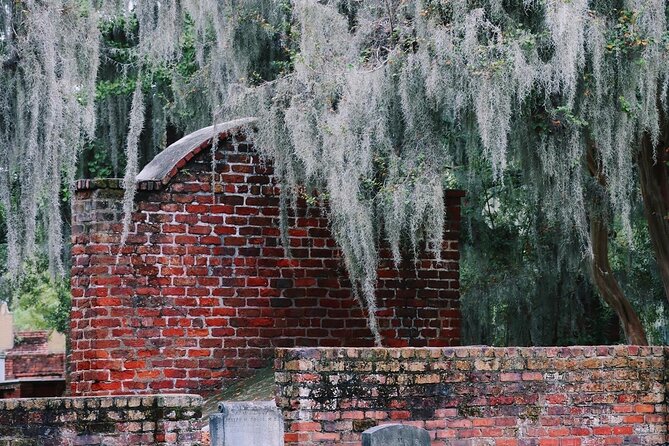
Stop 5: Colonial Park Cemetery and Victorian life (including what people said about death)
At Colonial Park Cemetery, you’ll hear what life—and death—could look like during the Victorian era in Savannah. Cemeteries are often surprisingly educational, because the design, language, and memorial traditions reflect how people understood mortality.
One bit you might come away with: you could hear the origin of the phrase dead ringer connected to stories from the cemetery. It’s the kind of detail that makes the visit memorable later when you’re talking about what you learned.
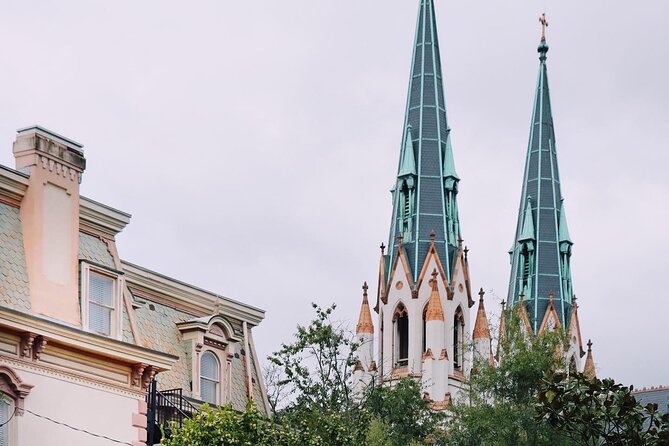
Stop 6: Cathedral of St. John the Baptist and the Irish community’s role
Then you’ll visit the area around the Cathedral of St. John the Baptist, where your guide discusses the influence of the large Irish community on Savannah. This is valuable because it broadens “Savannah history” beyond political milestones. You see how immigrant communities shaped the city’s social fabric and religious life.
If you like cultural history as much as wars and founders, this stop hits the right balance.
Stop 7: Green-Meldrim House and the Civil War connection
Next is Green-Meldrim House, where you’ll discuss Savannah’s role during the American Civil War. This is where the tour starts tying together how events changed daily life and shaped the city’s trajectory.
Even without entering buildings, you’ll get the why: why certain locations mattered, and how the city’s strategic position affected what happened later.
Stop 8: Jones Street and the famous-at-a-glance beauty
You’ll take a short walk along Jones Street, often described as the most beautiful street in America. This is the palate cleanser for your brain between heavy topics. The tour gives you enough context to appreciate the streetscape, while keeping the stop brief so you stay on schedule.
If you want photos, this is one of your best chances early in the walk—before you’ve got too tired to notice angles.
Stop 9: Monterey Square, Mercer-Williams House, and Pulaski
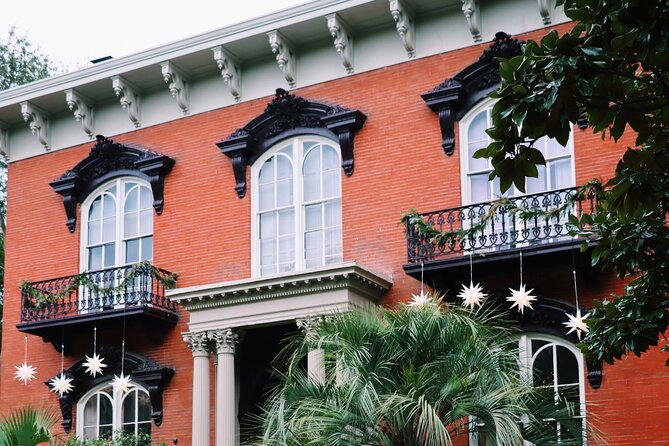
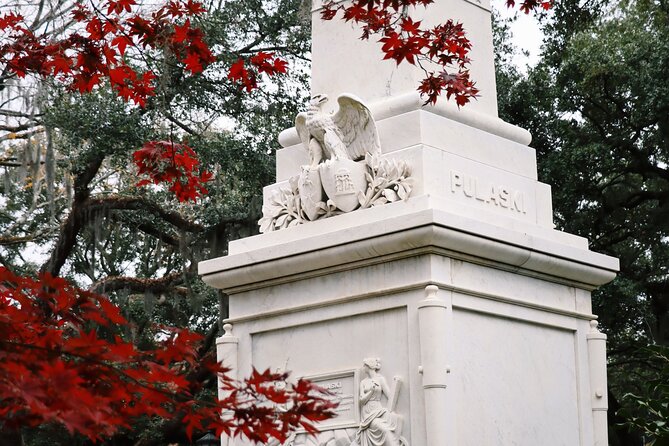
At Monterey Square, you’ll learn about the Mercer-Williams House and the role General Pulaski played in the Revolutionary War. This stop ties together political history with the kind of residential landmarks that shape how Savannah looks today.
What to watch for: how the stories connect to the architecture and location—so you don’t just see a pretty square, you know why it matters.
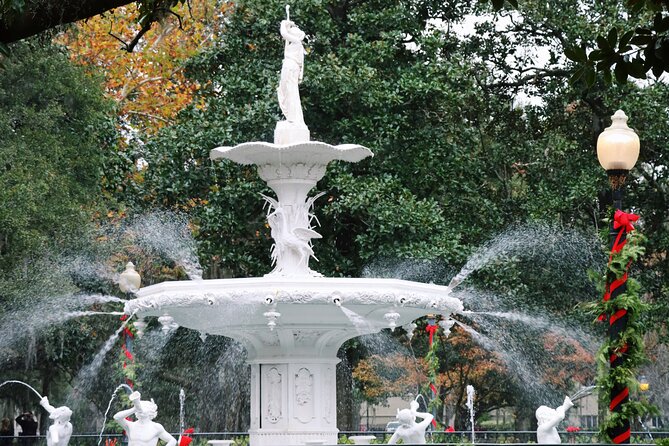
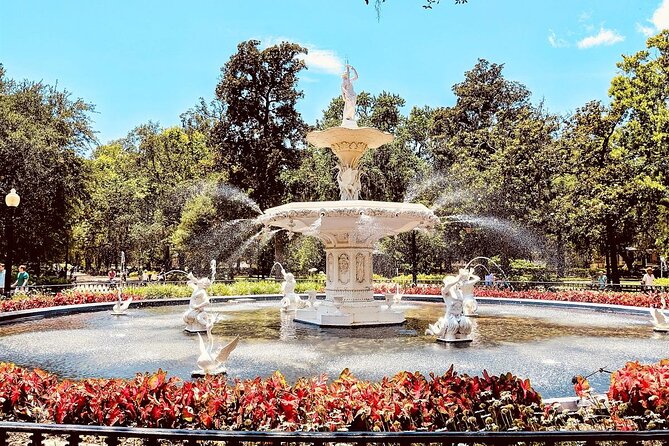
Stop 10: Forsyth Park fountain and your wrap-up
You finish at Forsyth Park, ending at the big fountain. This is a smart ending point because it gives you a clear landmark for meeting back up with friends, grabbing a snack, or continuing independently.
If you’ve been photographing all morning, you’ll appreciate that you end in a place built for lingering.
Timing and pacing: jam-packed, but not chaotic
The tour runs about 1 hour 30 minutes. That’s long enough to cover meaningful ground and hit multiple squares, but short enough that you’re not stuck for a whole afternoon. The pace tends to be efficient, with frequent “next stop” moments that help you stay focused.
The trade-off is the nature of walking tours like this: there’s not time to slow-roll every stop for long photo sessions or deep museum reading. If you want to linger, use the tour to learn what’s worth a return visit.
Price and value: why $35 makes sense here
At $35 per person, you’re paying for a guided route that connects major Savannah sites with commentary—without charging you additional entry fees. The stops are set up so that you can learn from the locations themselves, not from inside paid attractions.
What’s not included is just as important as what is included: you won’t enter paid museums or businesses during the walk. So think of this as orientation and context, not as a substitute for house-and-museum tickets.
One practical value angle: if you’re trying to stretch a day, this is a high-information use of time. Savannah’s Historic District can feel like “pretty places” at first. This tour helps you convert those sights into a story you can follow.
Comfort and logistics: the stuff that affects your experience
This is a walking tour through the Historic District, so wear shoes you’re comfortable in for steady walking. One common real-world issue is that you’ll encounter uneven surfaces, so flip-flops and very soft soles can make the experience harder than it needs to be.
Weather also matters. The tour requires good weather, and if it’s canceled because of poor weather, you’ll be offered a different date or a full refund. Savannah can change fast, so plan for a light layer and keep an eye on the sky.
Good news for convenience: service animals are allowed, it’s offered in English, and it’s near public transportation. You’ll also use a mobile ticket, which tends to be faster at check-in than paper.
Who this tour is best for
This tour fits best if you want a guided way to understand Savannah quickly. It’s also a nice match if you’re:
- traveling with a family and want history without a long sit-down
- pairing sightseeing with a plan for the next day (because you’ll know what to revisit)
- curious about how the city connects founding, immigrant influence, slavery, and the Civil War
Even if you don’t call yourself a history person, the format can still work, because the guide’s approach is built around walking from one meaningful point to the next.
Quick decision guide: should you book this Savannah walking tour?
Book it if you want an efficient way to learn Savannah’s story in the Historic District, and you like the idea of hearing context tied to specific squares and landmarks. I’d also recommend it if you already did a hop-on style tour and want your second pass to feel more purposeful.
Skip it or pair it with other plans if you mainly want museum interiors and house tours, because this walk does not include paid entrances. And if you’re not comfortable walking on uneven sidewalks, consider whether you’ll be able to manage the route comfortably.
In short: if you want Savannah to feel understandable—not just pretty—this is a strong pick.
FAQ
How long is the Savannah walking tour?
It runs for about 1 hour 30 minutes.
How much does the tour cost?
The price is $35.00 per person.
Where does the tour start and end?
It starts in Chippewa Square and ends at the big fountain in Forsyth Park.
Is the tour offered in English?
Yes, it is offered in English.
Does the tour include entry into museums or paid attractions?
No. It does not include entering paid businesses or museums during the walk.
How big is the group?
The tour has a maximum of 15 travelers.
What happens if the weather is bad?
The experience requires good weather. If it’s canceled due to poor weather, you’ll be offered a different date or a full refund.
More Tours in Savannah



More Tour Reviews in Savannah

More Savannah Squares and Historic Walking Tours
Not quite your thing? Here is more to see and do around Savannah











Savannah Squares & Historic Walking Tours, compared.
 ★ 5.0Savannah History and Haunts Candlelit Ghost Walking TourFrom $393,235 reviews
 ★ 5.0Savannah First Squares Culinary & Cultural Walking Food TourFrom $963,229 reviews
 ★ 5.0Historic Savannah Guided Walking TourFrom $302,918 reviews
 ★ 4.5Savannah’s Ghost City “Dead of Night” Walking Night TourFrom $342,482 reviews
 ★ 4.5Narrated Historic Savannah Sightseeing Trolley TourFrom $352,375 reviews
 ★ 4.5Southern Flavors Food, Pub Crawl, and History Walking TourFrom $601,623 reviews
 ★ 5.0Genteel and Bard’s Savannah Dark History and Ghost Encounter Walking TourFrom $391,546 reviews
 ★ 5.0Bonaventure Cemetery Walking Tour with TransportationFrom $481,467 reviews
Browse the lists this tour appears in