
Reviewed · SAVANNAH SQUARES & HISTORIC WALKING TOURS
Botanical Tour (by Walk With Me Savannah Tours)
Savannah has plants with stories. On this 2-hour botanical walk with Walk With Me Savannah Tours, I love the plant ID stops and the way the guide ties blooms to Savannah’s cast-iron landmarks. One heads-up: it’s a walking tour, so if you can’t walk/roll about 1/3 mile without resting, you may want to skip this one.
You’ll start at Columbia Square and finish at the Marine Corps Memorial, in a small group capped at 20 with a mobile ticket. It’s $40 per person, and it’s often booked about a month ahead, so snag a time that fits your days and weather.
In This Review
- Key Highlights To Expect
- Why Savannah’s Plants Belong Next to Its Cast-Iron Squares
- Route Overview: Two Hours Through Downtown’s Green Rooms
- Columbia Square to Colonial Park Cemetery: Where Ivy Meets History
- Lafayette and Madison Squares: Ferns, Flowers, and Cathedral Views
- Andrew Low House Garden: Juliette Gordon Low’s Camellias and Crepe Myrtle
- Jones Street and Monterey Square: Private Gardens and Local Ironwork
- Forsyth Park Finale: Live Oaks, Resurrection Fern, and the Scent Garden
- Price, Pace, and Value for $40
- Should You Book This Botanical Walk With Me Savannah Tours?
- FAQ
- How long is the botanical tour?
- How much does it cost?
- Where does the tour start and end?
- How many people are in a group?
- Can I bring a pet or service animal?
- What if the garden at Andrew Low House is closed?
Key Highlights To Expect
- Columbia Square’s ironwork + garden plants right at the start
- Colonial Park Cemetery trees and Spanish Moss in a calm, shaded setting
- Andrew Low House garden tied to Juliette Gordon Low and her Girl Scouts legacy
- Multiple downtown squares where you’ll spot ferns, hydrangeas, camellias, and more
- Forsyth Park finale with live oaks plus the Savannah Scent Garden for the Blind
Why Savannah’s Plants Belong Next to Its Cast-Iron Squares
Savannah isn’t just pretty buildings and live oaks. It’s a city where plants, architecture, and local craft show up together—especially in the historic squares. This tour leans into that idea: you’ll learn what you’re looking at, then get the context for why it fits the place.
What makes it fun is the mix of practical botany and real downtown details. I like that you’re not stuck with plant names only; you connect them to fountains, ironwork, and landmark corners. You’ll also get a guide who answers questions on the spot—one big theme from the tour feedback is that the guides don’t just talk, they respond.
The tour is also built around variety. You move from planted squares to a cemetery, then to garden walls and big open park space—so your brain doesn’t get bored, and neither does your camera roll.
We have more walks through Savannah's historic squares and old district to wander


Route Overview: Two Hours Through Downtown’s Green Rooms
Plan on about 2 hours of guided strolling, with a route designed for sightseeing without long detours. The walk starts at Columbia Square (Savannah, GA 31401) and ends at the Marine Corps Memorial at 1 W Gaston St. Most stops are short, so you’re in “look, learn, move” mode.
This is downtown walking, so good shoes matter. The tour notes say it’s not for people who can’t manage roughly 1/3 mile without resting, which is a helpful guideline if you’re deciding based on comfort. Also, the experience is not listed as wheelchair-specific, so if you use mobility aids, check that the route pace matches what you can handle.
Group size stays intimate—up to 20 travelers—so you’re more likely to get personal attention when you ask what something is. You’ll also have a mobile ticket, which makes getting started painless.
If you’re visiting in peak heat, bring water and dress for shade breaks. The tour’s best days feel like “slow enough to notice plants,” not “fast enough to feel rushed.”
Columbia Square to Colonial Park Cemetery: Where Ivy Meets History
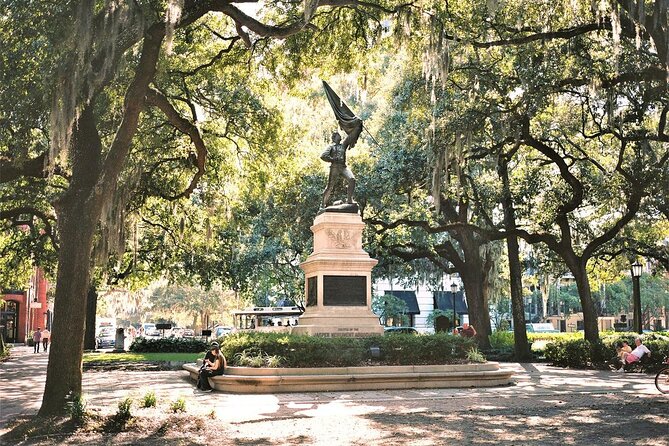
Columbia Square is a strong opener because it combines Savannah’s signature ironwork look with actual plant life in the same breath. The guide starts with cast iron ornamentation and points out the oldest fountain downtown. From there, you’ll connect the dots between historic production and the city’s modern ironwork details—what’s especially nice is that this isn’t treated like trivia. It’s a visual way to understand why these squares feel so “Savannah.”
Then the plants begin. In Columbia Square, you’ll learn to spot things like Star Jasmine, Bottlebrush, Tea Olive, Privet, Azaleas, and Rhododendron. Even if you don’t keep plant names in your head forever, you’ll leave with a clearer eye for what’s growing where—and why these choices make sense in a subtropical city.
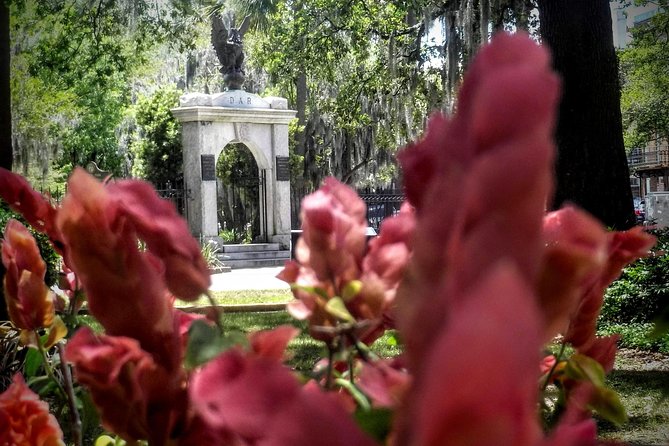
Next you’ll head toward Colonial Park Cemetery, and the tone shifts. Cemeteries can feel heavy, but this one works well for a plant-focused walk because it’s full of mature trees and low layers of greenery. The guide highlights Spanish Moss, Palmetto Trees, and Crepe Myrtles, plus notable specimens like Ginkgo trees and Magnolias. You may also hear about the possibly oldest crepe myrtle downtown—those are the details you’ll remember when you see the same kind of tree later around town.
One practical benefit: you’ll likely get more shade than you’d expect from a downtown itinerary. That matters in Savannah’s warmer months.
Lafayette and Madison Squares: Ferns, Flowers, and Cathedral Views
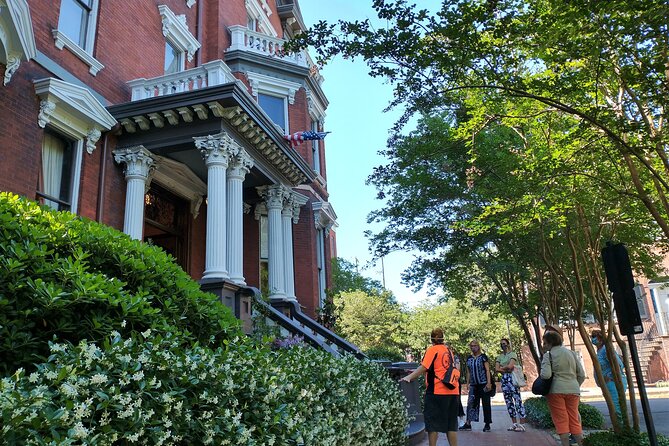
Lafayette Square is one of those places where the photo-op is real, but it’s also a good classroom. The tour spotlights plant types including Variegated Shell Ginger, Green Leopard Plants, and Japanese Holly Fern. You also get views of the Cathedral and surrounding homes, plus a fountain, so it’s not just close-up studying—it’s learning the garden shapes in a broader context.
This part of the route is quick, so you’ll want to pay attention right away. The stops are designed to be concentrated: you arrive, identify what you’re seeing, and move before the heat or fatigue catches up.
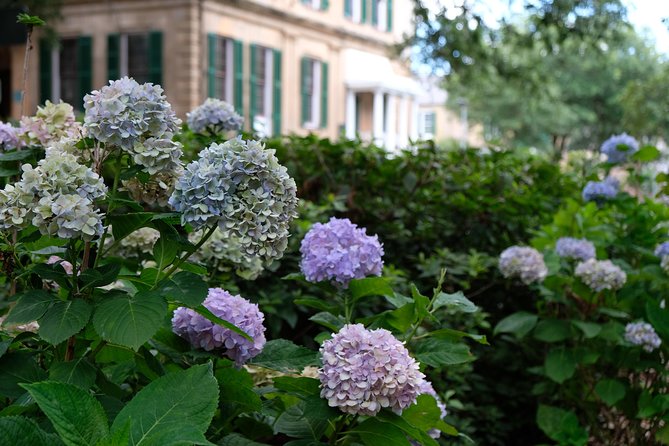
Madison Square continues the same pattern, with a bigger mix of flowers and foliage. Expect Agapanthus, Reed Canary Grass, and Big Leaf Hydrangeas, along with larger statement plants like Lacy Tree Philodendrons and Shrimp Plants. There’s also mention of a Japanese Cherry Blossom, which is the kind of stop that makes you look twice because Savannah has plenty of old-world charm, and blossoms are what “bring it alive.”
If you like city tours that teach you how to see—not just where to stand—this square-to-square flow is a winning format. It’s also a nice way to learn without committing to long museum time.
Andrew Low House Garden: Juliette Gordon Low’s Camellias and Crepe Myrtle
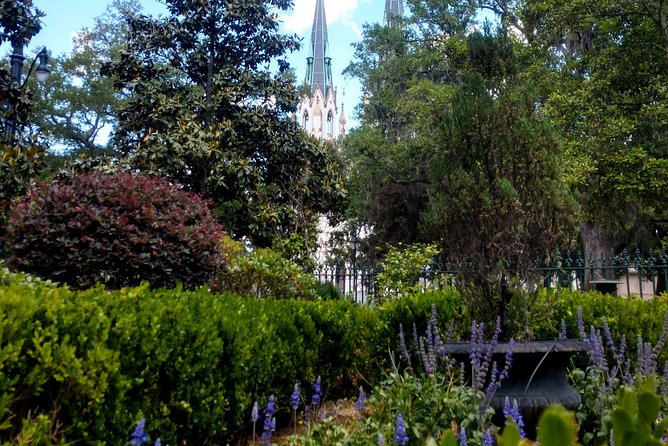
Andrew Low House is where the tour turns especially story-driven. The garden you’ll visit is connected to Juliette Gordon Low, founder of the Girl Scouts, and that gives the plant lesson a human anchor. You’ll see Crepe Myrtles, multiple varieties of Camellias (with the note that camellias were Juliette’s favorite), and Narcissus, among other plants.
There’s one important practical consideration here: there’s a small possibility the garden is closed based on the house schedule. The good news is that you can still see everything from outside the fence, so you won’t lose the chance to learn the plant identities—though you may have a slightly different viewing angle.
This stop is also a reminder that Savannah’s greenery isn’t only street-level. Private garden spaces, historic home grounds, and cultivated beds shape the city’s look just as much as public parks. If you enjoy gardens but don’t want to spend an entire afternoon ticket-hopping, this is a smart compromise.



Jones Street and Monterey Square: Private Gardens and Local Ironwork
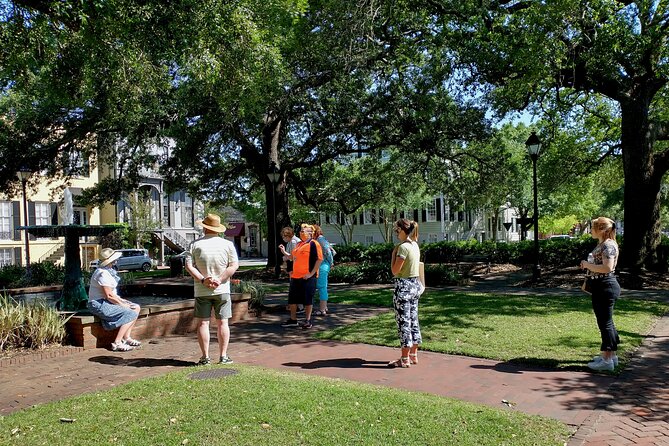
After the squares and the house garden, the tour moves into the “so where do the plants live?” part of Savannah. Along Jones Street, you’ll get guidance on additional plant life under live oak canopy and see views into private gardens. You’ll also hear about ironworks—another recurring theme that connects the city’s craft to its outdoor spaces.
Jones Street is also cited as being voted by Better Homes and Gardens as the prettiest neighborhood to live in the country. You don’t need to hunt for that title; just use it as a cue for what to expect: gorgeous residential views, a leafy feel, and enough visual detail to keep a plant lesson from turning into a lecture.
Then you’ll reach Monterey Square, where the botanical theme shifts again. The tour focuses on Georgia’s olives, plus juniper and gardenias, and you’ll also see more local ironwork examples. This is the kind of stop that makes you realize Savannah’s plant palette isn’t random. It’s a set of choices that fits the climate, the landscaping style, and the way people built around nature.
If you’re the type who likes to return to places later and recognize details, this section does a great job. You’ll start spotting the same iron patterns and plant forms as you walk the city on your own afterward.
Forsyth Park Finale: Live Oaks, Resurrection Fern, and the Scent Garden
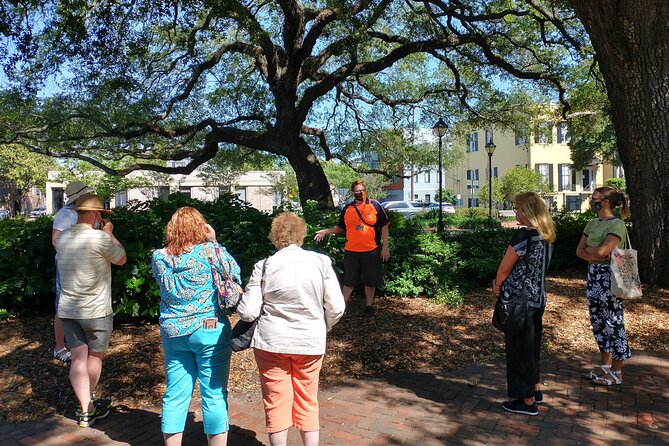
Forsyth Park wraps everything into one big, open payoff. As the tour concludes, the guide points out the oldest live oak in downtown Savannah and introduces the Savannah Scent Garden for the Blind. Even if you’re not familiar with the Scent Garden concept, you’ll get the idea quickly once you’re there—Forsyth Park isn’t just for views, it’s designed with sensory access in mind.
You’ll also learn about live oaks and resurrection fern before you move on. Resurrection fern is one of those plant types that sparks curiosity because of how it behaves—so it tends to stick with people. Pair that with the park’s open layout, and the tour ends on a different note than the dense squares and cemetery paths.
This final stop is a good moment to slow down and just observe. If you’ve spent the last hour identifying plants, you’ll feel more confident looking at the park’s greenery in context instead of as separate “things to photograph.”
Price, Pace, and Value for $40
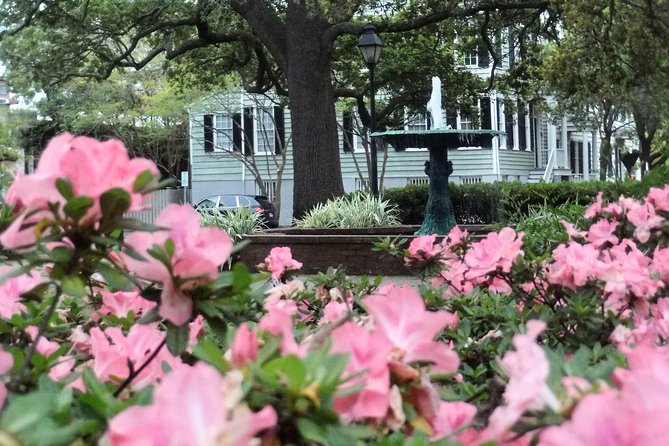
$40 per person for a 2-hour guided walking tour in downtown Savannah is a fair deal—especially because you’re not just paying for movement. You’re paying for interpretation. The tour connects plant spotting to ironwork details, historic squares, and specific landmark sites, which makes the information more useful than a generic “trees of Savannah” stroll.
Value also comes from the small group size (max 20) and the guide’s willingness to answer questions. A couple of standout comments from the tour experience highlight guides who tailor what they point out based on what’s in bloom and who can compare it to your home growing zone. That turns the walk into something you can use, not just enjoy.
Here’s the pace reality: you will walk. The route is short enough for most people, but it’s still outdoors and downtown. Bring water and good shoes, and if you visit in warm months, plan for heat and sun. The tour notes are clear it isn’t recommended if you can’t walk/roll about 1/3 mile without resting, so be honest about your comfort.
If you’re traveling with kids, this can work well for curious types who like spotting details. But if you hate structure or dislike plant-based learning, you might find it a bit more focused than you expected—this is a botanical tour, not a casual history-only walk.
Should You Book This Botanical Walk With Me Savannah Tours?
Book it if you want Savannah in a different key. This tour is ideal for people who enjoy asking what something is and then learning why it’s there, where it came from (when discussed), and how it fits the city. I’d especially recommend it if you love historic squares, cast iron details, and hands-on learning.
Skip or research further if you have mobility limits that make a steady 2-hour walk hard, or if you know you don’t want to spend time identifying plants. Also consider that the Andrew Low House garden has a small possibility of being closed, so you’ll be relying on outside viewing for that part.
If you’re on the fence, here’s a simple decision rule: if you want to leave Savannah with your eyes trained—able to spot jasmine, camellias, crepe myrtles, fern shapes, and ironwork patterns—this tour fits. If your ideal day is mostly “sit, snack, and wander,” you may prefer something looser.
FAQ
How long is the botanical tour?
The tour lasts about 2 hours.
How much does it cost?
It costs $40.00 per person.
Where does the tour start and end?
It starts at Columbia Square in Savannah and ends at the Marine Corps Memorial on W Gaston St.
How many people are in a group?
The tour has a maximum of 20 travelers.
Can I bring a pet or service animal?
Service animals are allowed. Well-behaved pets are allowed.
What if the garden at Andrew Low House is closed?
There is a small possibility the garden is closed based on the house schedule, but everything can be seen from outside the fence.
More Tours in Savannah


More Tour Reviews in Savannah
More Savannah Squares and Historic Walking Tours


Not quite your thing? Here is more to see and do around Savannah










Savannah Squares & Historic Walking Tours, compared.
 ★ 5.0Savannah History and Haunts Candlelit Ghost Walking TourFrom $393,235 reviews
 ★ 5.0Savannah First Squares Culinary & Cultural Walking Food TourFrom $963,229 reviews
 ★ 5.0Historic Savannah Guided Walking TourFrom $302,918 reviews
 ★ 4.5Savannah’s Ghost City “Dead of Night” Walking Night TourFrom $342,482 reviews
 ★ 4.5Narrated Historic Savannah Sightseeing Trolley TourFrom $352,375 reviews
 ★ 4.5Southern Flavors Food, Pub Crawl, and History Walking TourFrom $601,623 reviews
 ★ 5.0Genteel and Bard’s Savannah Dark History and Ghost Encounter Walking TourFrom $391,546 reviews
 ★ 5.0Bonaventure Cemetery Walking Tour with TransportationFrom $481,467 reviews
Browse the lists this tour appears in